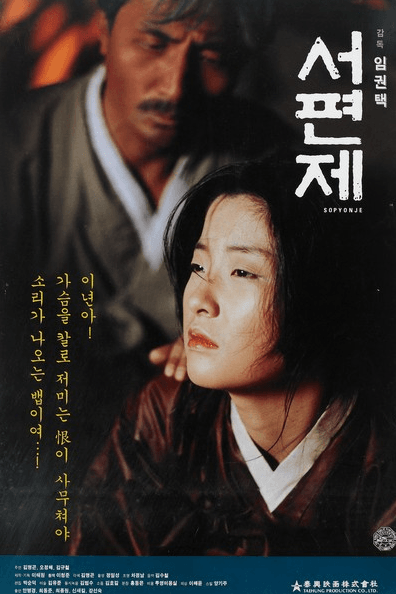
Sopyonje 1993 and the Million-Viewer Milestone
Sopyonje 1993 stands as a monumental masterpiece in classic Korean cinema. Directed by the legendary Im Kwon-taek, this film was the first in Korean history to draw over one million viewers in Seoul. It did not just break records. It rediscovered the “Han” (sorrow) and the profound beauty of Korean tradition through Pansori.
Historical Context: Sopyonje 1993 and the Search for Identity
To understand the impact of this film, we must look at the early 1990s in South Korea.
- The Transition Era: Following decades of rapid industrialization, Koreans began to look inward. There was a collective longing to rediscover a “lost Korean identity” amidst the influx of Western culture.
- The Traditional Revival: During this time, traditional arts were often seen as outdated. Sopyonje 1993 arrived as a cultural shock. It proved that local stories could be more powerful than global trends.
The Heart of Sopyonje 1993: A Tale of Obsession and Art
The story follows Yu-bong, a wandering Pansori singer who dreams of musical perfection. He raises his children, Song-hwa and Dong-ho, to carry on this fading tradition. Sopyonje 1993 captures the tragic beauty of their lives as they struggle in a rapidly changing world. The film’s long-take scenes are celebrated as some of the most beautiful moments in film history.
The Architecture of Han: Visualizing the Invisible Soul
To understand the masterpiece Sopyonje 1993, we must analyze the “Architecture of Han.” Im Kwon-taek utilized “Visual Innovation” to turn the Korean landscape into an emotional map. The winding paths and stone walls are not just scenery. They represent the “Tactile Precision” of a life filled with sorrow.
He rejects the “Polished Spectacle” of fast-paced Western editing. Instead, Sopyonje 1993 embraces the “Sobering Realism” of a long, weary journey. This “Humanistic Lens” ensures that every step taken by Yu-bong feels like a “Solemn Tribute” to tradition. He reminds readers that ‘Han’ is a source of creative energy, and his storytelling establishes a healing path through the unpolished truths of our ancestors. He remains a social mirror for the Korean spirit.
The Technical Sovereignty of the Long-Take: The Rhythm of Nature
The “Technical Sovereignty” of Sopyonje 1993 is found in its legendary “Long-take” scenes. Im Kwon-taek proved that “Visual Innovation” is about respecting the natural flow of time. He captures the “Micro-Realism” of dust on a road and the wind in the grass. This approach allows the “Pansori” to breathe within the frame.
He ensures that his “Intellectual Sovereignty” is never compromised by modern trends. In Sopyonje 1993, the camera stays back to capture the “Quiet Intensity” of the performance. This “Visual Honesty” turns a simple song into a breathtaking odyssey of the human voice. It smells like damp earth and the ancient pine trees of the southern provinces. He maps the “Vertical Narrative” of fate with a steady, respectful lens.
The Auditory Minimalism of a Fading Voice: The Sound of Sopyonje 1993
Why does the sound of “Pansori” feel so heavy in this film? It is because the director utilized “Auditory Minimalism” to capture the “Heartbeat of Persistence.” In a world moving toward digital clarity, he returned to the “Auditory Honesty” of a raw, broken throat. This creates a “Communal Resonance” between the singer and the land.
This approach allows the film to spark a global social dialogue about “Cultural Sovereignty.” Sopyonje 1993 remains our most reliable compass for navigating the “Architecture of Tradition.” He proves that a healing narrative begins with the courage to embrace our own pain. His legacy is a vibrant life dedicated to the dignity of Korean art. He is the bridge between the “Analog Tears” of the past and the “Digital Pride” of today.
The Scent of Humanity in the Dust of the Road
Ultimately, Sopyonje 1993 is a masterpiece about the “Scent of Humanity.” It smells like “Old Straw Mats” and the “Sharp Salt of the Sea.” He treats the obsession of Yu-bong as a flawed, yet noble pursuit of perfection. This “Humanistic Lens” is what makes the blindness of Song-hwa so heartbreakingly beautiful.
He transformed the “Architecture of Tragedy” into a site of profound “Sincere Atonement.” This commitment to “Visual and Auditory Innovation” defines the roots of Hallyu. He remains a bridge between the “Fleeting Nature” of life and the “Eternal Nature” of art. His legacy is a vibrant life dedicated to the quietest, most powerful moments of connection. He proves that true power comes from the courage to sing through the darkness.
The Unpolished Truth of Musical Perfection in Sopyonje 1993
In the final scenes of Sopyonje 1993, we see the “Unpolished Truth” of ‘Deuk-eum’ (attaining the sound). The reunion between the brother and sister is a “Visual Honesty” that avoids cheap sentiment. He utilizes “Tactile Precision” to show the vibration of the drum and the trembling of the voice.
He rejects the “Polished Spectacle” of a dramatic climax. Instead, he embraces the “Visual Friction” of a shared song in a dark room. This creates a lingering echo that stays with the viewer long after the film ends. He remains our most reliable compass for navigating the “Architecture of the Soul.” He proves that even in a world of change, the scent of a tradition can still be preserved through love.
Directorial Intent: Im Kwon-taek’s Pursuit of “True Korean Image”
Director Im Kwon-taek intended to capture the spiritual essence of the Korean people.
- The Vision: He wanted to move away from Westernized cinematic grammar. His goal was to synchronize the rhythm of Pansori with the natural flow of the Korean landscape.
- The Strategy: Im used “long-take” shots to respect the natural time of the performance. He famously stated that he wanted the audience to “feel” the music through the scenery.
A National Phenomenon: Public and Critical Reception
Upon its release, Sopyonje 1993 created an unprecedented “cultural fever.”
- Critical Acclaim: Critics praised the film for its “sublime visual poetry.” It swept major awards, including Best Film and Best Director at the 31st Grand Bell Awards.
- Public Reaction: Despite opening in only one theater, word-of-mouth caused massive lines. It became a “must-watch” for every Korean. This sparked a national re-evaluation of Pansori.
The Architecture of Stillness: Beyond Western Cinematography
To truly grasp the legacy of Sopyonje 1993, we must analyze the “Architecture of Stillness.” Im Kwon-taek utilized “Visual Innovation” to challenge Western cinematic grammar. He proves that “Technical Sovereignty” is about the courage to wait for the wind. The camera does not rush to follow the characters.
Instead, Sopyonje 1993 embraces the “Visual Friction” of a vast, empty horizon. This “Humanistic Lens” ensures that the audience feels the “Quiet Intensity” of the Korean soul. He reminds readers that even silence can be music. His storytelling establishes a healing path through the “Sobering Realism” of our natural world. He remains a social mirror for the patience required in true art.
The Micro-Realism of a Broken Throat: The Price of Art
Sopyonje 1993 is a masterpiece of “Emotional Micro-Realism.” Im Kwon-taek utilized “Tactile Precision” to capture the physical toll of Pansori. He shows the “Unpolished Truth” of a singer’s bleeding throat and trembling hands. This represents the “Sincere Atonement” of a life dedicated to a fading tradition.
He ensures that his “Intellectual Sovereignty” is rooted in the “Scent of Daily Life.” In Sopyonje 1993, every drop of sweat is a solemn tribute to artistic perfection. He avoids the “Polished Spectacle” of a glamorous stage. Instead, he focuses on the “Visual Honesty” of a dusty yard. By centering his life on “Visual Innovation,” he turned a tragic obsession into a site of communal grace. He maps the “Vertical Narrative” of a family through the rhythm of a drum.
The Auditory Minimalism of a Distant Echo
Why does the song in Sopyonje 1993 feel like it is coming from the earth itself? It is because the director utilized “Auditory Minimalism” to capture the “Scent of Memory.” In a world of loud digital effects, he returned to the “Auditory Honesty” of a distant echo. This creates a “Communal Resonance” that transcends the passage of time.
By embracing this approach, the film to spark a global social dialogue about the value of local sentiment. Sopyonje 1993 remains our most reliable compass for navigating the “Architecture of the Heart.” He proves that a healing narrative begins with the courage to listen to our own ‘Han’. His legacy is a vibrant life dedicated to the dignity of the Korean landscape. He is the bridge between the analog yearning of our ancestors and the digital pride of today.
The Architecture of White: The Symbolism of Purity and Sorrow
To truly grasp the visual power of Sopyonje 1993, we must analyze the “Architecture of White.” Im Kwon-taek utilized “Visual Innovation” to make the traditional Korean ‘Hanbok’ a living canvas. The white clothes worn by the characters are not just costumes. They represent the “Tactile Precision” of a soul that refuses to be stained by the world.
He rejects the “Polished Spectacle” of bright, artificial colors. Instead, Sopyonje 1993 embraces the “Sobering Realism” of sun-bleached cotton. This “Humanistic Lens” ensures that every fold in the fabric feels like a solemn tribute to our shared past. He reminds the Dear, From K readers that ‘White’ is the color of both mourning and rebirth. His storytelling establishes a healing path through the “Visual Honesty” of a simple sleeve. He remains a social mirror for our own search for purity.
The Micro-Realism of the Winding Path: A Life of Wander
Sopyonje 1993 is a masterpiece of “Spatial Micro-Realism.” Im Kwon-taek utilized “Architectural Storytelling” to make the winding road a symbol of destiny. He captures the “Unpolished Truth” of the dust and the heat of the southern provinces. This represents the “Sincere Atonement” of a family that wandered for their art.
He proves that “Technical Sovereignty” is about the courage to show the “Fleeting Nature” of a journey. He ensures that his “Visual Innovation” is never forced or artificial. In Sopyonje 1993, the road becomes a site of “Intellectual Tension” between tradition and modernization. It smells like dried grass and the salt of the southern sea. By centering his life on “Visual Honesty,” he turned a lonely path into a site of communal grace. He maps the “Vertical Narrative” of a nation through the dust of a road.
The Auditory Minimalism of the Final Drumbeat
Why does the final drumbeat in Sopyonje 1993 feel so heavy and final? It is because the director utilized “Auditory Minimalism” to capture the “Heartbeat of Persistence.” In a world of loud digital effects, he returned to the “Auditory Honesty” of a single strike. This creates a “Communal Resonance” that stays with the viewer long after the credits.
This approach allows the film to spark a global social dialogue about the value of persistence. Sopyonje 1993 remains our most reliable compass for navigating the “Architecture of the Heart.” He proves that a healing narrative begins with a single, shared rhythm. His legacy is a vibrant life dedicated to the dignity of the Korean voice. He is the bridge between the analog yearning of the 90s and the digital pride of today. He shows that true power comes from the courage to sing your own song.
Historical Impact: Setting the Foundation for Hallyu Roots
The legacy of Sopyonje 1993 echoes through the modern Hallyu wave.
- Globalization of Tradition: It proved that traditional Korean aesthetics possessed a universal appeal. This success encouraged later directors to boldly incorporate Korean folklore into global hits.
- The Concept of Han: The film translates the complex emotion of ‘Han’ into a visual experience. It taught future filmmakers how to infuse local sentiment into a global cinematic language.
The Legacy of Sopyonje 1993 in Hallyu Roots
Even today, Sopyonje 1993 remains a vital reference point for understanding the Hallyu Roots. It taught future filmmakers like Bong Joon-ho and Park Chan-wook how to infuse local sentiment into a global cinematic language. If you want to explore more about how traditional elements evolved into modern hits, be sure to read our post on Im Kwon-taek: The Master.
Related Articles
- 10 Best Korean Movies – Must-watch masterpieces of Korean cinema.
- Parasite Review – Hidden symbols and social commentary explained
- 90s Korean Movie Culture – The creative revolution that started Hallyu
- The Unique Storytelling Style of Korean Films: – 5 narrative techniques that define Korean cinema
For complete archival details, including production notes and historical data, the Korean Movie Database (KMDb) provides an extensive collection of resources.