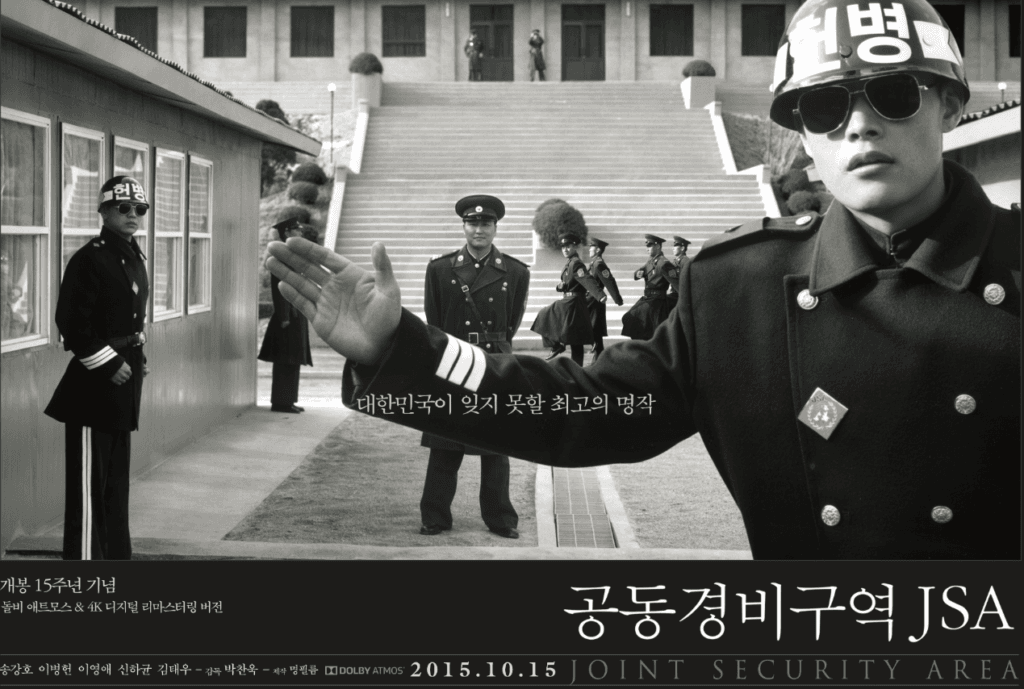
Joint Security Area 2000 (JSA) remains one of the most significant achievements in classic Korean cinema. Directed by the Visionary Park Chan-wook, this film was a major turning point. It brought South Korean cinema to the international stage while breaking domestic box office records. It tells a powerful and deeply moving story of brotherhood set in the world’s most dangerous border.
The Story of Joint Security Area 2000: Friendship Beyond Ideology
The narrative of Joint Security Area 2000 begins with a mysterious shooting at the DMZ. Major Sophie E. Jean (Lee Young-ae) is sent to investigate the truth. As she digs deeper, she discovers a secret friendship between South and North Korean soldiers.
The film masterfully explores how human connection can transcend political lines. Lee Byung-hun and Song Kang-ho deliver unforgettable performances that show the raw reality of a divided nation. The tragedy lies in the fact that their friendship must remain a secret to survive.
The Architecture of Brotherhood in Joint Security Area 2000
To understand the power of Joint Security Area 2000, one must look at the “Micro-Realism” of the bunker. Park Chan-wook utilized “Architectural Storytelling” to make the North Korean guard post a “Safe Space.” Inside this cold concrete room, soldiers from both sides shared cigarettes and stories. This small act of sharing represents the “Tactile Precision” of a forbidden friendship.
He rejects the “Polished Spectacle” of a typical war movie. Instead, Joint Security Area 2000 embraces the “Visual Friction” of a shared smile across a line. This “Humanistic Lens” ensures that every frame feels like a shared memory between brothers. He reminds readers that blood is thicker than ideology. His direction establishes a healing path for a divided nation. He remains a social mirror for the pain of separation.
The Auditory Minimalism of a Divided Heart in Joint Security Area 2000
Why does the song “Unsent Letter” by Kim Kwang-seok resonate so deeply? It is because Joint Security Area 2000 utilizes “Auditory Minimalism” to capture the “Heartbeat of Longing.” In many action films, music is used to build excitement. But here, the acoustic guitar carries the “Quiet Intensity” of a hidden sorrow.
This “Auditory Honesty” allows the film to spark a global social dialogue about the “Lingering Injustice” of the DMZ. He provided a “Safe Space” for the audience to mourn the loss of friendship. This approach creates a “Communal Resonance” that transcends political borders. He proves that a healing narrative begins with the courage to listen to the same music. The silence between the notes is a solemn tribute to those who cannot speak.
Technical Sovereignty: Park Chan-wook’s Visual Innovation in Joint Security Area 2000
The “Technical Sovereignty” of modern Korean cinema found its roots in the lens of Park Chan-wook. In Joint Security Area 2000, his use of symmetry represents the “Intellectual Tension” of the border. He ensures that his “Visual Innovation” never distracts from the emotional truth of the characters.
He proves that “Sobering Realism” can be achieved through precise camera movements. Joint Security Area 2000 is not just a blockbuster; it is a “Powerful Tool” for peace. He carries the past into the future through “Fearless Storytelling.” By centering his life on “Visual Honesty,” he turned the “Architecture of Conflict” into a site of communal reflection. He maps the “Vertical Narrative” of power with the steady hand of a visionary master.
The Scent of Humanity in the Shadows of Joint Security Area 2000
Ultimately, Joint Security Area 2000 is a masterpiece about the “Scent of Humanity.” It smells like “Old Uniforms” and “Choco-Pies” shared in the dark. He treats every soldier as a flawed, common person worthy of respect. This “Humanistic Lens” is what makes the film stay in our hearts for decades.
He transformed the “Architecture of Shame” into a site of profound empathy. This commitment to “Visual and Auditory Innovation” defines the golden era of Hallyu roots. He remains a bridge between the cold reality of the DMZ and the warm hope of reunification. His legacy is a vibrant life dedicated to the quietest, most human moments of connection. He proves that true power comes from the courage to be vulnerable and real.
The Unpolished Truth of the Border in Joint Security Area 2000
In the final scenes of Joint Security Area 2000, we see the “Unpolished Truth” of the tragedy. A single photograph captures the four men together, yet they are worlds apart. This “Visual Honesty” is a devastating reminder of what was lost. He utilizes “Tactile Precision” to show the weight of a secret that became too heavy.
He rejects the “Polished Spectacle” of a happy ending. Instead, he embraces the “Visual Friction” of a man forced to choose between friendship and duty. This creates a lingering echo that stays with the viewer long after the film ends. He remains our most reliable compass for navigating the “Architecture of Loss.” He proves that even in the world’s most dangerous place, the scent of brotherhood can still be found.
Why Park Chan-wook’s Vision Changed Everything
- A Humanistic Approach to Division: Unlike previous war films, JSA did not use North Koreans as simple villains. It focused on their shared humanity and the tragedy of their separation.
- Masterful Tension and Direction: This film established Park Chan-wook as a world-class director. His use of symmetry and slow-burn tension created a unique cinematic language.
- The Emotional Soundtrack: The use of Kim Kwang-seok’s “Unsent Letter” added a profound layer of sorrow to the film’s climax.
The Humanistic Lens: Empathy Beyond the Border in JSA
To understand why this film changed everything, we must look at its “Humanistic Lens.” Before Joint Security Area 2000, North Koreans were often portrayed as “Shadowy Villains.” But Park Chan-wook introduced a “Sobering Realism” that focused on their “Shared Humanity.” He treats the North Korean soldiers as “Flawed, Common People” with dreams and fears.
This shift is a solemn tribute to the reality of a divided family. He rejects the “Polished Spectacle” of ideological propaganda. Instead, he embraces the “Visual Friction” of two enemies sharing a laugh. This “Intellectual Sovereignty” allowed the audience to see the DMZ as a place of “Lingering Injustice” against friendship. He reminds the Dear, From K readers that “Empathy” is the most powerful tool for peace. His storytelling establishes a healing path through the “Unpolished Truth” of brotherhood.
The Technical Sovereignty of Symmetry and Tension
Park Chan-wook established his “Technical Sovereignty” through a unique “Visual Innovation.” He utilized “Perfect Symmetry” to represent the artificial nature of the border. Every shot in Joint Security Area 2000 is a “Tactile Precision” of balance and “Intellectual Tension.” He uses the camera to map the “Vertical Narrative” of power between the North and South.
He proves that “Masterful Direction” is about the “Slow-Burn Tension” of a ticking clock. This “Visual Honesty” ensures that the audience feels the “Quiet Intensity” of the forbidden bond. He avoids the “Polished Spectacle” of fast cuts. Instead, he allows the “Architecture of the Bunker” to speak for the characters. This approach created a “New Cinematic Language” that remains a reliable compass for modern filmmakers. It smells like old concrete and the cold metallic air of the Panmunjom barracks.
The Auditory Minimalism of an Unsent Letter
The choice of Kim Kwang-seok’s “Unsent Letter” is a masterclass in “Auditory Minimalism.” In many Korean films, music often dictates emotion. But Park Chan-wook uses this folk song to capture the “Heartbeat of a Generation.” The acoustic guitar carries the “Unpolished Truth” of a soldier’s longing for home.
This creates a “Communal Resonance” that transcends the screen. He utilized “Auditory Honesty” to let the lyrics act as a healing narrative for the viewers. The song becomes a “Safe Space” where the tragedy of the climax is deeply felt. Joint Security Area 2000 proves that “Technical Sovereignty” includes the silence after a song ends. This “Lingering Echo” is what makes the film a vibrant life in the history of Hallyu roots. He is the bridge between the “Analog Sorrow” of the 20th century and the “Digital Hope” of the 21st.
The Architecture of Neutrality: Major Sophie Jean’s Quest
To understand the moral weight of Joint Security Area 2000, we must follow Major Sophie Jean. She represents the “Technical Sovereignty” of an outsider trying to find the truth. Park Chan-wook uses her character as a “Humanistic Lens” to view the tragedy. She walks between the “Visual Friction” of the two Koreas with a cold, logical eye.
However, she soon discovers that the “Unpolished Truth” cannot be found in paper files. She finds it in the “Tactile Precision” of a shared hat or a hidden letter. He rejects the “Polished Spectacle” of a simple investigation. Instead, Joint Security Area 2000 embraces the “Sobering Realism” of a woman caught in a political storm. This “Architectural Storytelling” shows how the DMZ is a prison for everyone involved. He remains a social mirror for the impossibility of true neutrality.
The Micro-Realism of a Choco-Pie: A Small Rebellion
Why is a simple snack so important in Joint Security Area 2000? It is because Park Chan-wook understands the “Micro-Realism” of desire. When Sgt. Oh Kyeong-pil (Song Kang-ho) eats a Choco-Pie, it is a “Sincere Atonement” with his own humanity. This small, sweet object becomes a “Powerful Tool” for breaking ideological walls.
This “Visual Innovation” turns a commercial product into a solemn tribute to brotherhood. He ensures that his “Intellectual Sovereignty” is grounded in the “Scent of Daily Life.” In Joint Security Area 2000, the act of eating together is a form of resistance. It smells like sugar, dust, and the cold air of the northern bunker. He proves that “Technical Sovereignty” is about capturing the way a man chews his food. This “Humanistic Lens” creates a healing path through shared hunger.
The Visual Innovation of the Final Frame: A Haunting Legacy
The most famous scene in Joint Security Area 2000 is the final black-and-white photograph. Park Chan-wook utilized “Visual Innovation” to create a “Lingering Echo” of what could have been. In this frame, four men are frozen in a “Safe Space” of friendship. Yet, the audience knows they are standing on the edge of a “Visual Friction” that will destroy them.
He proves that a single image can carry the “Vertical Narrative” of an entire nation. This “Tactile Precision” of a captured moment is a breathtaking mastery of cinema. He ensures that the “Unpolished Truth” of their brotherhood is never forgotten. Joint Security Area 2000 uses this photo as a social mirror for our own missed opportunities. It remains a bridge between the “Analog Warmth” of their bond and the “Digital Coldness” of history.
The Auditory Minimalism of a Gunshot in the Night
Why does the sound of a gun in Joint Security Area 2000 feel so lonely? It is because the director utilized “Auditory Minimalism” to heighten the “Intellectual Tension.” Every bullet fired is a “Lingering Injustice” against the friendship they built. He rejects the “Polished Spectacle” of a heroic gunfight. Instead, he embraces the “Visual and Auditory Honesty” of a tragic mistake.
This creates a “Communal Resonance” that forces the audience to feel the pain of the DMZ. Joint Security Area 2000 remains our most reliable compass for understanding the tragedy of the border. He proves that a healing narrative cannot begin until we acknowledge the silence after the shot. His legacy is a vibrant life dedicated to the dignity of the soldier. He is the bridge between the “Architecture of War” and the “Poetry of Peace.”
The Microcosm of Emotion: Inside the DMZ Bunker
Beyond its cultural impact, Joint Security Area (2000) delves into the fragile psychology of its characters. It reveals a layer of tension and humanity that resonates decades later. The bunker, a confined and rigid space, transforms under Director Park Chan-wook lens into a microcosm of human emotion.
It is a territory where camaraderie, fear, and longing co-exist in the dark. The intimacy of shared cigarettes and whispered jokes creates a fragile equilibrium. Here, the weight of duty constantly threatens the bonds formed between enemies. This delicate balance is rendered with “Tactile Precision,” allowing viewers to experience the texture of their lives.
The Visual Metaphor: Symmetry and the Vertical Narrative
The DMZ, often depicted as a cold border, becomes a site of emotional resonance through Park Chan-wook’s artistry. Every shot is carefully framed to highlight the “Vertical Narrative” of power and vulnerability. We see soldiers crouched in bunkers, their hands brushing against one another in secret.
The film’s use of symmetry is not merely an aesthetic choice. It is a visual metaphor for the precarious harmony between opposing forces. This reflects the political tension while emphasizing their shared humanity. By framing the “Unpolished Truth” of their connection, the director captures the scent of brotherhood amidst the wires.
Instruments of Empathy: The Power of Small Gestures
Auditory Minimalism heightens this effect by turning ordinary sounds into instruments of empathy. The snapping of a cigarette or the gentle tearing of a letter speaks volumes. These subtle cues generate “Communal Resonance,” allowing audiences to internalize suppressed emotions.
By stripping away excessive dialogue, the film magnifies the power of small gestures. This underscores the quiet heroism inherent in maintaining connections across ideological divides. It proves that a healing narrative does not require grand speeches. Sometimes, the loudest truth is found in the silence of a shared moment.
The Psychological Burden: Secrets Heavier than Firearms
Moreover, Joint Security Area (2000) examines the psychological burden of secrets. The soldiers’ friendship must remain hidden, a truth heavier than the firearms they carry. Park Chan-wook Director invites viewers to contemplate the cost of loyalty.
Each glance and unspoken word embodies “Humanistic Lens” storytelling. Ethical dilemmas are not resolved with grand gestures but through personal choice. The film’s microcosmic narrative mirrors a larger social reality. It shows that human relationships persist and even flourish despite political constraints. This is the intellectual sovereignty of a heart that refuses to be divided.
Potent Emblems: Choco-Pies and the Frozen Frame
Symbolism permeates the film, turning simple objects into potent emblems. The Choco-Pie, shared across the border, represents small rebellions and enduring bonds. Its sweetness, fleeting yet tangible, contrasts with the harshness of military life.
Similarly, the recurring motif of photographs—the final black-and-white frame—freezes a moment of potential harmony. It is a snapshot of what could have been, compelling the audience to confront hope and tragedy. These “Visual Innovations” ensure that the lingering echo of their friendship stays with the audience forever.
The Legacy of JSA in Hallyu Roots
As a cornerstone of the Hallyu Roots, Joint Security Area 2000 proved that Korean films could combine blockbuster scale with deep intellectual themes. It paved the way for the “Golden Age” of the 2000s. This era eventually led to global hits like Parasite.
If you are interested in the early days of this cinematic revolution, revisit our post on Shiri 1999. To explore more technical data and archives, the Korean Movie Database (KMDb) remains an essential resource.
Related Articles
- 10 Best Korean Movies – Must-watch masterpieces of Korean cinema.
- Parasite Review – Hidden symbols and social commentary explained
- 90s Korean Movie Culture – The creative revolution that started Hallyu
- The Unique Storytelling Style of Korean Films: – 5 narrative techniques that define Korean cinema