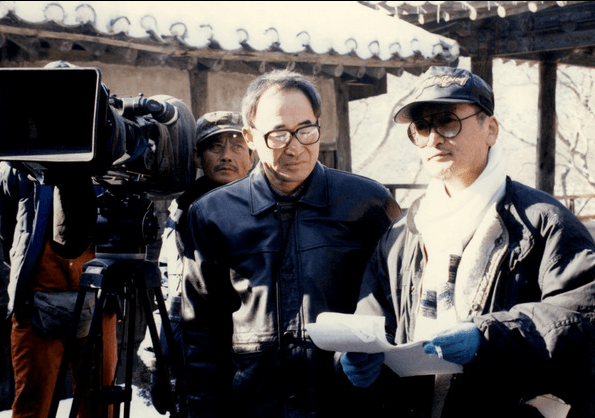
The Master of Visual Friction: Chung Ji-young Director and the Aesthetics of Despair
The Genesis of Korean Social Realism: Breaking the Chains of Censorship
Before the global recognition of modern K-cinema, Chung Ji-young Director fought a silent war. He struggled against the structural limitations of the 1980s. Chung emerged as a pivotal figure in the “Korean New Wave.” This movement demanded “Visual Honesty” in an era of political suppression. While the military dictatorship enforced strict censorship, Chung utilized the camera as a “Social Mirror.” He used this tool to reflect the hidden agonies of the Korean people.
His early commitment to “Fearless Storytelling” allowed him to explore forbidden ideologies. He brought the “Unpolished Truth” of Korea’s divided history to the screen. Through this, he established the “Intellectual Sovereignty” that younger directors later inherited. Chung proved that a director must act as a witness to history. He ensured that the “Collective Memory” of a nation remains intact despite political pressure. This era of “Technical Sovereignty” laid the bedrock for sophisticated social critiques. We now see these critiques in contemporary masterpieces like Parasite..
Chung Ji-young Director and his approach to “Social Realism” do not merely focus on the external struggle. His work explores the internal landscape of the “Flawed Common Person.” He recognized that the “Open Wound” of a nation often bleeds through everyday lives. These are the lives of those caught in the gears of the system. This “Humanistic Lens” ensures his political statements never lose their “Universally Human” resonance. By mapping the “Vertical Narrative” of power and resistance, Chung transformed the cinema into a “Powerful Tool” for social change.
The Signature Directing Style of Chung Ji-young Director
Why is the influence of Chung Ji-young Director so lasting in the world of cinema? He established a unique narrative voice that resonates across generations.
- Fearless Storytelling: Chung Ji-young Director never chooses the easy path in his narratives. He tackles the partisan struggles in North Korean Partisan with raw honesty. He also exposes the judicial corruption in Unbowed (2011) with uncompromising bravery.
- Intellectual Depth: His films are often based on meticulously researched literature. This foundation ensures that his social critique remains grounded in historical reality. He transforms complex research into a compelling cinematic experience for his audience.
- Humanistic Lens: A deep empathy for the individual defines his work. This empathy exists behind every political statement he makes. He focuses on the “Flawed Common Person” caught in the gears of a massive, indifferent system.
A Legacy Continued for Dear, From K Readers
As we look at the modern success of K-movies like Parasite or Squid Game, we must recognize the foundation. This foundation was laid by pioneers like Chung Ji-young Director. He proved that cinema could be a powerful tool for social change. He achieved this without losing any artistic beauty in his frames.
If you enjoyed our look into the Ahn Sung-ki Icon or the intense drama of Sopyonje, White Badge is an essential next step. This film marks a significant point in your journey through Korean film history. The work of Chung Ji-young Director reminds us that the best movies do not just entertain. They provoke, challenge, and ultimately, heal the soul of the audience.
1. White Badge: The Trauma of War by Chung Ji-young Director
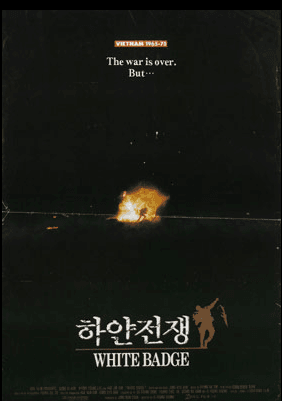
- The Plot: A veteran of the Vietnam War, now a struggling writer, is forced to confront his suppressed memories when a former comrade contacts him.
- Why Watch: This is the first Korean film to honestly portray the Vietnam War from a soldier’s psychological perspective. It stripped away the “heroic” facade and revealed the raw, bleeding
- trauma of those who survived. Ahn Sung-ki’s haunting performance captures a man losing his grip on reality, making it a “Breathtaking Mastery” of cinema.
- Key Point: Notice the contrast between the lush green jungles of the past and the cold, gray streets of 1990s Seoul.
The Ghost of Vietnam: A Deep Dive into the Architecture of Trauma
In White Badge, Chung Ji-young Director delivers a definitive masterclass in social and psychological realism. He fundamentally rejects the traditional “War Hero” trope that dominated earlier Korean cinema. Instead, he focuses on the “Visual Friction” of a soldier’s internal collapse. He strips away the “Heroic Facade” to reveal a raw, bleeding truth. Through the haunting performance of Ahn Sung-ki, Chung explores the “Lingering Injustice.” This was a conflict that traded human lives for national economic gain.
This cinematic achievement utilizes a sophisticated “Chromatic Melancholy” to bridge the gap between memory and reality. Chung Ji-young Director brilliantly contrasts the “Lush, Suffocating Green” of the Vietnamese jungle with the “Cold, Sterile Gray” of 1990s Seoul. This visual dichotomy serves as a powerful metaphor. It represents the veteran’s inability to reconcile a violent past with a rapidly modernizing, indifferent society.
Chung Ji-young Director and the Visual Innovation of PTSD
By centering the narrative on the “Hollow Gaze” of the protagonist, Chung creates a “Breathtaking Mastery” of anti-war sentiment. He forces the audience to confront the “Bleeding Trauma.” This is the trauma that a nation attempted to bury under the facade of industrial progress. Furthermore, Chung Ji-young Director utilizes a complex “Non-Linear Narrative” structure to mirror the fragmented nature of PTSD.
The transitions between the past and the present do not merely tell a story. They simulate the intrusive memories that haunt the survivor. This “Visual Innovation” highlights the “Isolation of the Veteran” in a world that demands silence and conformity. The camera captures every subtle tremor and silent scream. This proves that the most devastating scars of war remain internal and invisible.
The Master of Visual Friction: Chung Ji-young Director and the Aesthetics of Despair
Beyond the narrative structure, Chung Ji-young Director employs a precise “Visual and Auditory Innovation” to immerse the audience in the veteran’s fractured reality. He utilizes the camera not just as a recording device, but as a psychological probe. By choosing specific camera angles that emphasize the “Vertical Hierarchy” of the urban landscape, Chung highlights the protagonist’s insignificance in a post-war society that prioritizes growth over healing. This “Tactile Precision” ensures that every object on screen—a discarded cigarette or a fading photograph—carries the weight of a “Social Anxieties” that the nation refuses to acknowledge.
Chung Ji-young Director and the Mastery of Auditory Minimalism
The director’s mastery extends to the realm of “Auditory Minimalism.” In White Badge, the sound design serves as a haunting echo of the past. Chung Ji-young Director rejects the use of over-dramatic orchestral scores, opting instead for the “Quiet Intensity” of ambient noise. The rhythmic dripping of a faucet or the muffled roar of city traffic simulates the sensory overload experienced by those suffering from PTSD. This auditory choice creates a profound sense of “Intellectual Tension,” forcing the viewer to share the claustrophobia of a mind trapped between two worlds. By stripping away unnecessary sound, Chung proves that “Silence” can be a powerful tool for social commentary, revealing the “Invisible Walls” built by historical amnesia.
Technical Sovereignty: The Enduring Legacy of Chung Ji-young Director
Furthermore, the “Technical Sovereignty” of the film manifests in its stark lighting choices. Chung Ji-young Director utilizes “High-Contrast Shadows” to represent the “Architecture of Shame” that haunts the survivors. The darkness of the Seoul apartments contrasts sharply with the overexposed light of the Vietnamese sun, symbolizing the “Unresolved Odyssey” of a generation caught in a perpetual loop of memory. This “Breathtaking Mastery” of light and shadow established the foundation for the “Chromatic Melancholy” later perfected in the Bong Joon-ho 1990s era. Through these sophisticated techniques, Chung established that the “Truth” of war lies in the “Tactile Honesty” of the broken individual.
2. Unbowed (2011) – The Fight Against the System
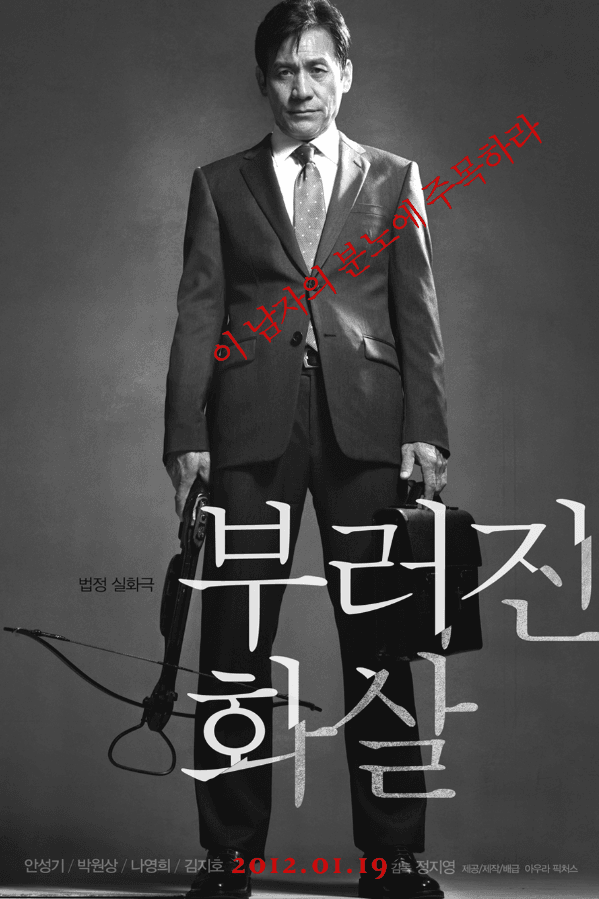
- The Plot: Based on a true story, a math professor goes to war with the entire judicial system after an unfair dismissal, allegedly using a crossbow to threaten a judge.
- Why Watch: After a long hiatus, Chung Ji-young Director returned with this explosive courtroom drama. It became a cultural phenomenon in Korea, sparking nationwide debates about judicial corruption. It is fast-paced, intellectually sharp, and deeply satisfying.
- Key Point: The film focuses on the “dialogue” and “logic” used in court, proving that a battle of words can be just as intense as an action scene.
The Courtroom as a Battlefield: Analyzing Unbowed (2011)
After a long hiatus, Chung Ji-young Director returned with a “Visual Innovation” in the courtroom genre. In Unbowed, the “Dialogue” and “Logic” serve as the primary weapons. He uses “Tight Close-ups” during cross-examinations to heighten the “Intellectual Tension.”
This film sparked a “Global Social Dialogue” regarding judicial corruption. Chung shows that a battle of words can be just as intense as an action sequence. He empowers the “Flawed Common Person” to stand against a massive system, a recurring theme that defines his “Humanistic Lens.”
The Cinema of Confinement: Analyzing the Architecture of Shame
A recurring motif in the filmography of Chung Ji-young Director is the use of “Claustrophobic Space” to represent systemic oppression. Whether in the rigid courtroom of Unbowed or the terrifying interrogation rooms of National Security, Chung utilizes “Architectural Storytelling” to deconstruct the “Hierarchy of the Elite.”
In these films, the physical environment acts as a character itself. Chung employs “Tight Close-ups” and “Low-Angle Shots” to heighten the “Intellectual Tension” between the individual and the state. He masters the “Auditory Minimalism” of the setting—the scraping of a chair, the echo of footsteps on concrete—to make the audience feel the isolation of the protagonist. This “Visual Innovation” proves that a battle of words or a moment of endurance can be more intense than any action sequence.
By mapping the “Vertical Narrative” of power, Chung reveals the “Invisible Walls” that separate the powerful from the powerless in Korean society. He refuses to use the “Polished Spectacle” of commercial cinema, preferring instead the “Tactile Precision” of a world where justice is a fragile, hard-won prize. This focus on “Sobering Realism” established Chung as a “Powerful Legend” who dared to turn the “Architecture of Shame” into a theater of resistance.
3. National Security (2012) – The Weight of Truth
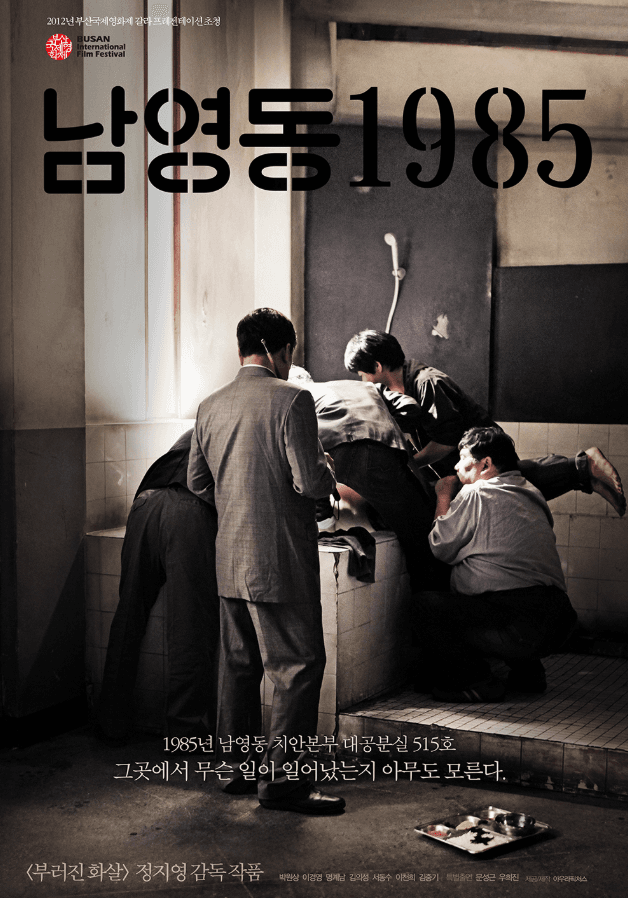
- The Plot: A depiction of the 22 days of brutal interrogation and torture suffered by democracy activist Kim Geun-tae in 1985.
- Why Watch: This is perhaps the director’s most difficult but necessary film. He refuses to look away from the darkness of the military dictatorship era. It is a cinematic experience that demands endurance from the audience, serving as a solemn tribute to those who sacrificed everything for democracy.
- Key Point: The film uses a confined, claustrophobic space to make the audience feel the isolation and terror of the protagonist.
The Claustrophobia of Truth: National Security (2012)
In National Security, Chung Ji-young Director employs a “Minimalist Aesthetic” to maximize the impact of the narrative. He uses a confined, “Claustrophobic Space” to make the audience feel the protagonist’s terror. This “Auditory Minimalism”—the sound of water, the echo of heavy boots—creates a “Quiet Intensity” that is almost unbearable.
This film serves as a “Solemn Tribute” to those who fought for democracy. Chung refuses to look away from the darkness, proving his “Fearless Storytelling” once again. It is not just a movie; it is an “Essential Watch Guide” for anyone seeking to understand the “Architecture of Shame” during Korea’s military dictatorship.
The Unresolved Odyssey: From Chung’s Realism to the Global K-Wave
We must view the modern success of Korean cinema as an extension of the “Global Social Dialogue” started by Chung Ji-young Director. His unwavering commitment to “Social Justice” created a “Safe Space” for future directors to experiment with genre-bending social critiques. The “Communal Resonance” found in his early works paved the way for the “Universally Human” stories that dominate global platforms in 2026.
Younger masters like Bong Joon-ho inherited Chung’s “Tactile Precision” and his obsession with the “Flawed Common Person.” Chung established that the “Truth” is not a static object but a “Sobering Realism” that must be pursued through the lens of a camera. As we look back at his filmography, we see a “Powerful Legend” who turned the “Open Wound” of history into a “Healing Narrative.” His legacy remains a cornerstone of cinematic history, reminding us that cinema’s highest calling is to challenge the “Social Structure” and advocate for those caught in the gears of the system.
The Bridge to Modern K-Cinema: From Chung to Bong
We must recognize that the “Breathtaking Mastery” of modern directors like Bong Joon-ho stands on the shoulders of pioneers like Chung Ji-young Director. Chung proved that “Social Anxieties” could be the bedrock of a successful narrative. He established the “Technical Sovereignty” that allowed later K-movies to achieve global success.
His work reminds us that the best movies do not just entertain—they provoke and challenge the “Social Structure.” As we look at the “Unresolved Odyssey” of Korean history, Chung’s filmography remains a vital map for the future.
The Eternal Echo: Why Chung Ji-young Director Matters in 2026
As we conclude our journey through the filmography of Chung Ji-young Director, we recognize that his work transcends simple entertainment. He established a “Technical Sovereignty” that allowed Korean cinema to speak its truth during its darkest hours. By transforming the “Open Wound” of history into a “Healing Narrative,” he proved that a filmmaker must act as the conscience of a nation.
His “Breathtaking Mastery” of social realism provided the blueprint for the global success of modern K-content. Whether through the “Tactile Precision” of his sets or the “Auditory Minimalism” of his soundscapes, Chung captured the “Universally Human” struggle against systemic injustice. He remains a “Powerful Legend” because he never chose the easy path, always preferring the “Unpolished Truth” over the “Polished Spectacle.”
For the readers of Dear, From K, the legacy of Chung Ji-young Director serves as a reminder that the best stories challenge the “Social Structure.” His films do not just end when the credits roll; they spark a “Global Social Dialogue” that resonates in the hearts of audiences worldwide. As we look forward to the “Unresolved Odyssey” of future Korean masterpieces, we must always return to the foundation laid by this pioneer.
Pro Tips for Your Movie Night
Chronological Order: For the best experience, watch these three films in the order listed. You will witness the evolution of Korean society and the director’s unwavering commitment to social justice.
Historical Context: Before watching, a quick search on the “Gwangju Uprising” or “Korea’s involvement in the Vietnam War” will add immense depth to your viewing experience.
Focus on the Eyes: Chung Ji-young Director is known for capturing the silent emotions in his actors’ eyes. Whether it’s the hollow gaze in White Badge or the defiant glare in Unbowed, the eyes tell the true story.
Related Articles
- 10 Best Korean Movies – A curated list of the most iconic Korean films that shaped modern cinema.
- 90s Korean Movie Culture – Explore the golden age of 90s Korean films and their cultural impact.
- Parasite Review – In-depth analysis of Bong Joon-ho’s masterpiece and its global influence
For more detailed information on these classics, you can visit the Korean Movie Database (KMDb)