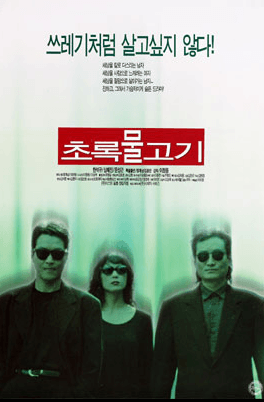
A Masterpiece Born in the Midst of Change – Green Fish 1997
In 1997, while South Korea was dazzled by the “New City” development craze, Director Lee Chang-dong presented a cold, brutal reality. Green Fish 1997 is not just a gangster movie; it is a cinematic funeral for innocence. If you want to understand the soul of Korean noir, this film is your starting point.
Before diving into Lee Chang-dong’s world, you might also want to explore another 90s classic, The Day a Pig Fell Into the Well (1996), which marked the debut of director Hong Sang-soo.”
Green Fish 1997 and the New City Craze
The mid-1990s in South Korea was an era of rapid urban expansion.
- The “Ilsan” Transformation: The film is set in Ilsan, which was being transformed from a quiet rural town into a massive residential “New City.” Green Fish (1997) captures the confusion of a generation whose physical and emotional homes were being replaced by concrete apartments.
- Pre-IMF Anxiety: It reflects the unstable air of 1997, just before the economic crisis. The film shows the “Korean Dream” turning into a nightmare for those who couldn’t keep up with the pace of change.
The Plot of Green Fish 1997: A Search for Lost Innocence
The protagonist, Mak-dong (Han Suk-kyu), returns from military service to find his hometown, Ilsan, transformed into a forest of high-rise apartments. Searching for a “Green Fish”—a symbol of his pure, untainted childhood—he instead falls into the dark underworld of a criminal gang. This tragic contrast is what makes Green Fish 1997 an enduring classic.
The Poetics of Realism in Green Fish (1997)
Director Lee Chang-dong, a former novelist, intended to bring “Literary Realism” to the screen.
- Beyond Gangster Tropes: His goal wasn’t to glorify violence. Instead, he wanted to show the “fragility” of a young man trapped in a world of power struggles.
- The Symbolism: Through Green Fish (1997), Lee intended to ask whether “modernity” and “purity” can coexist. He used long takes and authentic locations to make the audience feel the stifling atmosphere of the changing suburbs.
A Landmark Debut
Upon its release, Green Fish (1997) was hailed as a revolutionary moment for Korean cinema.
- The Critics’ Darling: Critics praised the film for its emotional depth, calling it a “Poetic Noir.” It swept the major awards, including Best Film at the Blue Dragon Film Awards and the Grand Bell Awards.
- Audience Response: While it was a “dark” story, audiences were deeply moved by Han Suk-kyu’s vulnerable performance. It proved that a “gangster movie” could be high art.
Paving the Way for Modern Noir
The legacy of Green Fish (1997) shaped the future of the industry in profound ways.
- The Birth of a Legend: It established Lee Chang-dong as a world-class director (who later won awards at Cannes).
- The Song Kang-ho Phenomenon: Song Kang-ho’s “real” gangster acting was so convincing that people actually thought he was a real criminal. This film was the stepping stone for both Han Suk-kyu and Song Kang-ho to become the icons they are today.
- The Blueprint for K-Noir: It set the standard for the “Korean Social Noir” genre, influencing later masterpieces like A Bittersweet Life.
Shocking Facts About the Making of Green Fish 1997
- The Accidental Masterpiece : The legendary phone booth scene, where Mak-dong cries while talking to his brother, was actually a result of intense physical pain. Han Suk-kyu was so immersed in the character that he actually suffered a minor injury during filming, which added to the raw, visceral emotion of the scene.
- The Birth of a Great Director: Did you know Lee Chang-dong was a famous novelist before becoming a director? His literary background is why the script of Green Fish 1997 feels so poetic yet sharp, cutting through the hypocrisy of society.
- Song Kang-ho’s “Real” Gangster Acting: A then-unknown Song Kang-ho played a minor gang member so realistically that actual gang members reportedly asked him which “family” he belonged to. This film was the stepping stone for both Han Suk-kyu and Song Kang-ho.
The Lasting Legacy of Green Fish 1997 in Korean Cinema
Even after 30 years, this film resonates. It asks a powerful question: In our rush for “success” and “money” (symbolized by the new city), what have we killed inside ourselves? For the readers of Dear, From K, this film offers a moment of profound reflection on our own “Green Fish.”
Related Articles
- 10 Best Korean Movies – Must-watch masterpieces of Korean cinema.
- Parasite Review – Hidden symbols and social commentary explained
- 90s Korean Movie Culture – The creative revolution that started Hallyu
- The Unique Storytelling Style of Korean Films: – 5 narrative techniques that define Korean cinema
For more detailed information about the cast and crew, you can visit the official Green Fish (1997) page on KMDb.