The 10 Best Korean Movies of the 1990s You Must Watch
Discover the 10 best Korean movies of the 1990s that paved the way for modern cinematic masterpieces like Parasite. South Korean cinema underwent a quiet but powerful transformation during the 1990s. This decade marked the birth of “New Korean Cinema.” After decades of censorship, filmmakers explored deeper social themes and bold storytelling. Understanding these films is essential for anyone interested in classic Korean movies and the cultural evolution of South Korea.
When discussing the 10 best Korean movies ever made, the 1990s serve as the most crucial foundation.
1. Sopyonje (1993): The Sound of “Han”
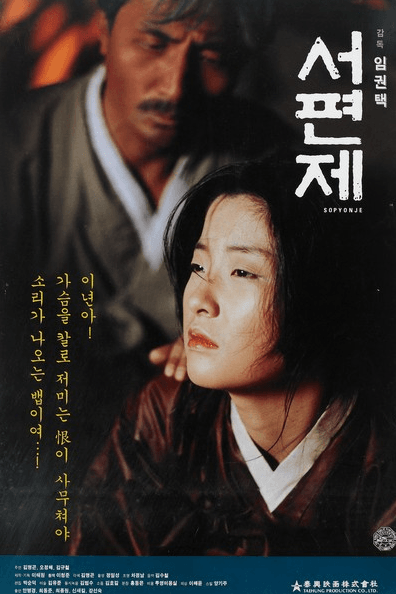
- Historical Background: In the early 1990s, South Korea experienced rapid modernization. While economic growth accelerated, many felt a deep sense of cultural loss as traditional arts and rural lifestyles disappeared.
- Directorial Intent: Director Im Kwon-taek aimed to capture “Han,” a uniquely Korean concept of sorrow and resilience. Through pansori (traditional singing), he depicted the painful journey of artists preserving tradition.
- Audience and Critical Response: A cultural phenomenon, it attracted over one million viewers in Seoul—an extraordinary feat then. Critics praised its visual beauty and emotional depth.
- Historical Impact: It proved Korean audiences would support films rooted in their own identity. It remains a national masterpiece.
2. The Day a Pig Fell Into the Well (1996): The Birth of Realism
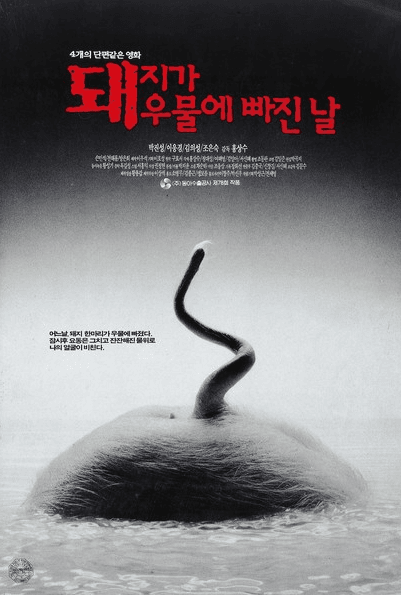
- Historical Background: By the mid-90s, urbanization weakened traditional social structures, leading to growing isolation within crowded cities.
- Directorial Intent: Hong Sang-soo avoided conventional storytelling, using a fragmented narrative to portray raw human relationships without cinematic romanticization. This film is widely regarded as one of the 10 best Korean movies for its innovative structure.
- Audience and Critical Response: While not a mainstream blockbuster, it received immense critical acclaim for its radical realism and unconventional structure.
- Historical Impact: It marked the birth of Hong Sang-soo as a world-class auteur and a turning point for Korean independent-style filmmaking.
3. The Contact (1997): Digital Love in an Analog World
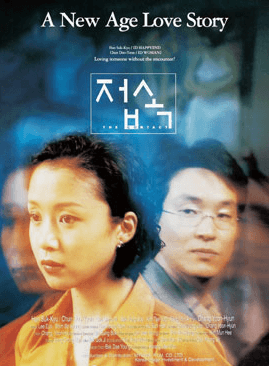
- Historical Background: The late 90s saw the dawn of the internet in Korea. Early PC communication networks allowed strangers to connect anonymously, inspiring new stories about modern romance.
- Directorial Intent: Chang Yoon-hyun explored how technology could bridge isolated individuals, focusing on the delicate emotional geometry of online connection.
- Audience and Critical Response: It became one of the most beloved romantic films. Its quiet emotional tone and iconic soundtrack resonated deeply with urban youth.
- Historical Impact: It defined the “urban romance” genre and captured the atmosphere of Korea’s digital transition.
4. Green Fish (1997): The Cost of Urban Expansion
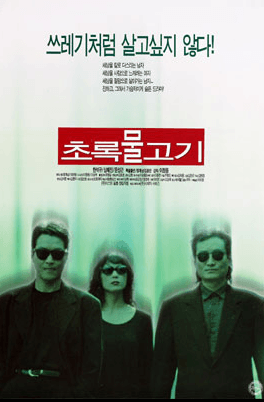
- Historical Background: Rapid expansion of satellite cities around Seoul destroyed older communities and displaced working-class neighborhoods.
- Directorial Intent: Lee Chang-dong used a noir-style crime story to critique the harsh realities of modern capitalism and the loss of innocence during modernization. This film is widely regarded as one of the 10 best Korean movies for its innovative structure.
- Audience and Critical Response: It won widespread acclaim and multiple awards for its powerful social realism and visceral performances.
- Historical Impact: Recognized as one of the most important Korean noirs, establishing Lee Chang-dong as a vital voice in modern cinema.
5. Christmas in August (1998): A Quiet Revolution in Romance
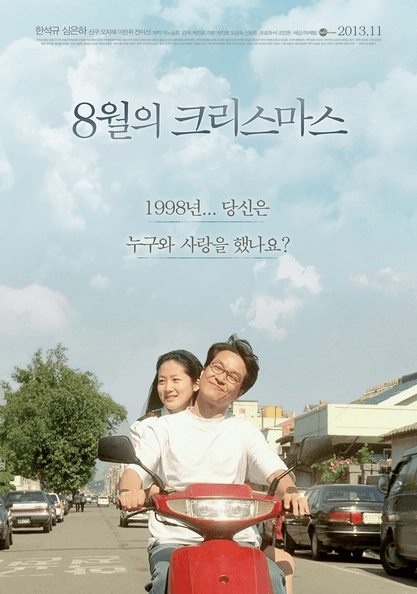
- Historical Background: After the 1997 Asian Financial Crisis (IMF), many Koreans felt emotional exhaustion. Audiences began seeking more reflective, quieter stories.
- Directorial Intent: Hur Jin-ho transformed the melodrama genre by emphasizing silence, restraint, and the quiet acceptance of mortality over dramatic conflict.
- Audience and Critical Response: Critics hailed it as a revolutionary approach to romance. Its poetic cinematography attracted a devoted, long-term fanbase.
- Historical Impact: It set a new standard for emotional realism, heavily influencing modern K-Dramas like Hospital Playlist.
More Iconic Titles from the 10 Best Korean Movies of the 1990s
6. The Quiet Family (1998): Dark Humor in a Time of Crisis
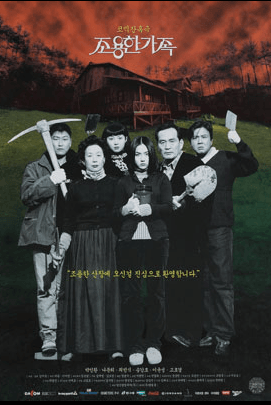
- Historical Background: The economic crisis shook social stability. Dark humor and satire became popular ways for people to process their collective anxieties.
- Directorial Intent: Kim Jee-woon created a genre-blending story—combining horror, comedy, and satire—to reflect the absurdity of human nature under pressure.
- Audience and Critical Response: Surprised audiences with its unusual tone, shifting rapidly between suspense and laugh-out-loud absurdity.
- Historical Impact: It launched the career of Kim Jee-woon, now known as one of Korea’s most stylistically versatile directors.
7. Shiri (1999): The Birth of the Korean Blockbuster
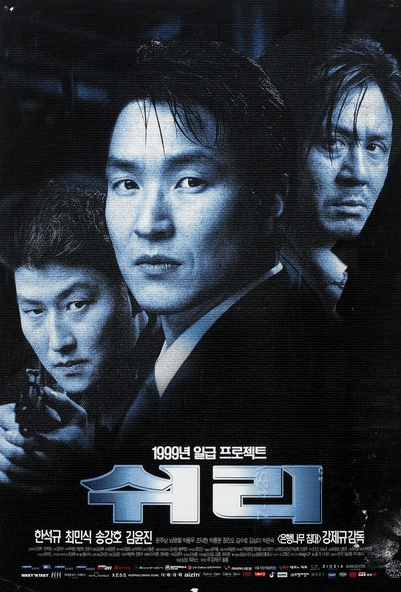
- Historical Background: In the late 90s, the local film industry began competing with Hollywood. Massive investment started flowing into high-production action films.
- Directorial Intent: Kang Je-gyu combined inter-Korean political tension with Hollywood-style action sequences to prove Korean cinema could be a global industry.
- Audience and Critical Response: A massive box office hit, it surpassed the record previously held by Titanic in Korea.
- Historical Impact: It launched the “Korean Blockbuster” era and modernized the entire industry’s infrastructure.
8. Nowhere to Hide (1999): A Visual Experiment
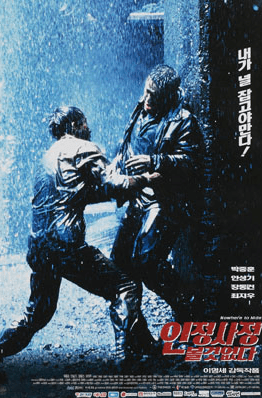
- Historical Background: As the new millennium approached, filmmakers began experimenting with visual language and stylized aesthetics.
- Directorial Intent: Lee Myung-se treated the camera as a paintbrush, emphasizing visual rhythm, motion, and innovative composition over a traditional plot.
- Audience and Critical Response: Critics praised its innovative editing and stylized cinematography, often comparing it to a living comic book.
- Historical Impact: Demonstrated that Korean cinema could be as artistically ambitious and visually experimental as European cinema.
9. Tell Me Something (1999): Thriller Classics in the 10 Best Korean Movies
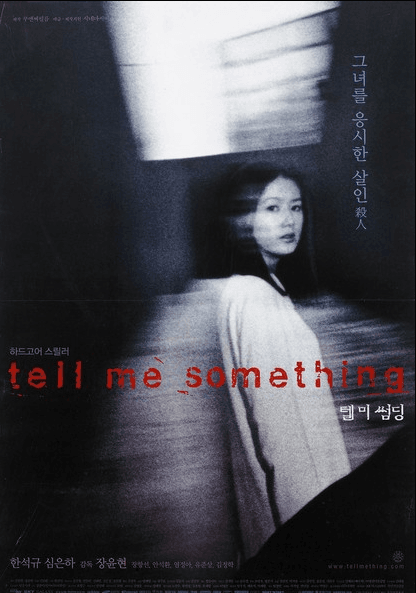
- Historical Background: The late 90s saw a surge in public fascination with forensic science, criminal profiling, and darker urban mysteries.
- Directorial Intent: Chang Yoon-hyun created a sophisticated medical thriller that blended dark urban aesthetics with high psychological tension.
- Audience and Critical Response: A significant commercial success that kept audiences guessing with its dark visuals and complex mystery.
- Historical Impact: Elevated the production standards for Korean thrillers, paving the way for hits like The Chaser.
10. Peppermint Candy (1999): A Nation Reflects on Its Past
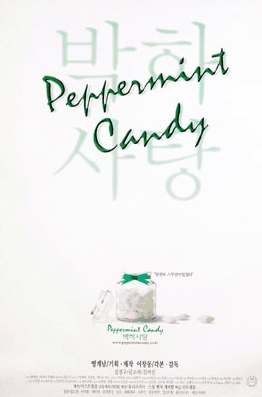
- Historical Background: As the 20th century ended, South Korea began a deep reflection on its turbulent political history, specifically the Gwangju Uprising.
- Directorial Intent: Lee Chang-dong used a reverse-chronological structure to trace a man’s despair back to the historical trauma that broke his soul.
- Audience and Critical Response: Deeply moved audiences with its political courage and emotional honesty.
- Historical Impact: Remains one of the most powerful political films ever made, helping the nation process its collective trauma.
The Cinematic Revolution: Why These are the 10 Best Korean Movies
The transition of the 1990s was not merely about individual success. It represented a total tectonic shift in the cultural identity of South Korea. After decades of military censorship, directors finally reclaimed their “Visual Sovereignty.” This era allowed for the exploration of the “Unpolished Truth” that previous generations had to hide. The films in our list of the 10 best Korean movies established the “Technical Sovereignty” that eventually catapulted Korean cinema onto the global stage.
The Architecture of 1990s Realism in the 10 Best Korean Movies
One cannot discuss the 10 best Korean movies of this decade without analyzing the physical and psychological landscapes they portrayed. As Seoul expanded at a breakneck pace, cinema became a “Social Mirror” for the collective anxiety of the nation. Directors like Hong Sang-soo and Lee Chang-dong utilized “Architectural Storytelling” to show how modern apartments and sterile offices became cages for the human soul.
They moved away from the “Polished Spectacle” of Hollywood. Instead, they embraced a “Tactile Precision” that captured the grit and grime of a changing society. This transition from melodrama to “Sobering Realism” provided the bedrock for contemporary masterpieces like Parasite. By focusing on the “Flawed Common Person,” these 90s pioneers ensured that the 10 best Korean movies would always prioritize humanistic depth over empty action.
Soundscapes and Auditory Minimalism in the 10 Best Korean Movies
A recurring motif in the 10 best Korean movies of this period is the sophisticated use of “Auditory Minimalism.” Directors realized that silence could be as powerful as dialogue. In films like Christmas in August, the quiet ticking of a clock or the sound of rain on a windowpane heightens the “Intellectual Tension.”
This “Auditory Honesty” allowed audiences to feel the “Quiet Intensity” of the characters’ internal lives. It rejected the loud, overbearing scores of traditional cinema. This shift toward sensory realism allowed the 10 best Korean movies to create a “Global Social Dialogue” that transcended language barriers. Even today, the “Chromatic Melancholy” of 90s soundscapes remains a heavy influence on modern K-Dramas and thrillers.
The Industrial Revolution Behind the 10 Best Korean Movies
By 1999, the release of Shiri fundamentally changed the business of art in Korea. It proved that the 10 best Korean movies could achieve “Global Social Dialogue” through high-production values. This was the moment when “Technical Sovereignty” met commercial ambition. The success of Shiri created a “Safe Space” for investors to fund bold, risky projects.
This financial stability allowed younger masters to experiment with “Non-Linear Narratives” and genre-bending plots. Without the industrial foundation laid by the 10 best Korean movies in the late 90s, the “Unresolved Odyssey” of Korean cinema might never have reached the Academy Awards. The 90s served as a “Powerful Tool” for national pride, proving that Korean creativity could outshine global blockbusters.
A Legacy of Healing Found in the 10 Best Korean Movies
Ultimately, the 10 best Korean movies of the 1990s served as a “Healing Narrative” for a traumatized nation. From the political scars of Gwangju to the economic shock of the IMF crisis, cinema provided a way to process “Collective Memory.” Directors acted as witnesses to history, ensuring that the “Open Wound” of the past was never forgotten.
They transformed “Lingering Injustice” into powerful, “Universally Human” stories. This commitment to truth-telling established the “Intellectual Sovereignty” that defines the Korean film industry today. As we look back from 2026, we see that the 10 best Korean movies were not just entertainment. They were a “Visual Innovation” that gave a voice to the voiceless and turned a struggling local industry into a global legend.
How the 10 Best Korean Movies of the 90s Shaped Modern Cinema
The 1990s transformed South Korean cinema from a struggling local industry into a creative powerhouse. The innovations of this decade paved the way for directors like Park Chan-wook and Bong Joon-ho. Without these artistic breakthroughs, the modern success of Korean cinema would not have been possible.
The Genetic Code: From 90s Classics to the Global K-Content Syndrome
The 10 best Korean movies of the 1990s did more than just break local box office records. They established a sophisticated “Genetic Code” for all future K-content. This era marked the first time that Korean filmmakers looked inward to find universal stories. They rejected the “Polished Spectacle” of foreign cinema. Instead, they focused on the “Unpolished Truth” of their own society.
This commitment to “Visual Honesty” allowed for the birth of a unique cinematic language. We see this language today in global hits like Squid Game and Parasite. The 90s pioneers proved that “Social Anxieties” could be the bedrock of a successful narrative. They transformed the “Open Wound” of history into a “Healing Narrative” for a global audience. This transition from local stories to “Universally Human” themes started in the small, smoky editing rooms of 1990s Seoul.
The Technical Sovereignty: Professionalizing the Art of Storytelling
During the late 1990s, the Korean film industry underwent a massive professional revolution. This period established the “Technical Sovereignty” that defines modern K-cinema. Filmmakers began to experiment with “Visual Innovation” and stylized aesthetics. They no longer relied on traditional, linear plots. Instead, they embraced “Non-Linear Narratives” to represent the fragmented nature of modern life.
This era also saw the rise of the “Tactile Precision” in set design and cinematography. Directors like Chung Ji-young Director and Lee Chang-dong prioritized “Auditory Minimalism” to heighten emotional impact. They realized that a silent, “Hollow Gaze” could speak louder than a thousand words of dialogue. This shift toward “Sobering Realism” ensured that Korean movies would always feel authentic. It laid the foundation for the “Chromatic Melancholy” that we now associate with high-end Korean thrillers.
The Architecture of Shame: Confronting Systemic Injustice in the 90s
A recurring motif in the 10 best Korean movies of this decade is the “Architecture of Shame.” This concept refers to how physical spaces represent systemic oppression. Whether it is the cramped basement of an urban apartment or the cold interrogation rooms of the state, space acts as a character. 1990s directors utilized “Architectural Storytelling” to deconstruct the “Hierarchy of the Elite.”
They exposed the “Invisible Walls” that separate the powerful from the powerless. This focus on “Vertical Narratives” of power and resistance became a hallmark of the industry. It allowed for a “Global Social Dialogue” regarding inequality and social justice. By mapping these “Social Structures,” 90s filmmakers gave a voice to the “Flawed Common Person.” They proved that cinema could be a “Powerful Tool” for social change without losing its artistic beauty.
Cultural Resonance and the Global Audience: Why 90s Movies Matter in 2026
As we look back at these masterpieces from the year 2026, their relevance has only grown. The “Communal Resonance” found in 90s cinema paved the way for the “Universally Human” stories of today. These films explored the “Lingering Injustice” of a rapidly modernizing society. They captured the “Visual Friction” of individuals caught in the gears of a massive system.
This focus on “Micro-Realism” ensured that the stories felt intimate yet grand. The 1990s established the “Intellectual Sovereignty” that allowed Korean cinema to speak its truth. It created a “Safe Space” for future directors to challenge the status quo. Today, when the world watches a Korean film, they are witnessing the “Unresolved Odyssey” that began thirty years ago. The 10 best Korean movies of the 1990s remain a vital map for the future of global storytelling.
FAQ: 10 best Korean movies in the 1990s
Which 1990s film influenced modern directors the most? Peppermint Candy, Green Fish, and Shiri are often cited as the biggest influences on today’s top filmmakers.
Why was the 1990s important for 10 best Korean movies? The end of censorship allowed for unprecedented creative freedom and exploration of social/political themes.
What is “New Korean Cinema”? It refers to the innovative films of the 90s that modernized the industry and introduced sophisticated storytelling.
For more detailed information on these classics, you can visit the Korean Movie Database (KMDb)
or check out the Korean Film Council (KOFIC) official website.
Related Articles
- Green Fish (1997) – The Noir Beginning of Lee Chang-dong
- Christmas in August (1998) – The Quiet Masterpiece of Korean Melodrama
- Sopyonje (1993) – The Film That Revived Korean Tradition
- The Contact (1997) – The Birth of Urban Romance in Korean Cinema
- Shiri (1999) – The First Korean Blockbuster That Changed the Industry
- 90s Korean Movie Culture – The Rise of Modern Korean Cinema