Lee Jung-jae : The Global Icon’s Hidden Beginnings
Today, the world knows Lee Jung-jae as the resilient Seong Gi-hun from Squid Game or the formidable Master Sol in the Star Wars universe. However, long before he became a global household name, Lee Jung-jae was the definitive face of a cultural revolution in 1990s South Korea. To understand the depth of his acting and the roots of modern Hallyu, we must travel back to a decade of denim, jazz bars, and a newfound sense of freedom.
The Birth of a “Youth Star”: The 1990s Syndrome
Today, the world knows Lee Jung-jae as Seong Gi-hun from Squid Game. However, long before his global fame, he led a cultural revolution. In the 1990s, he captured the spirit of a new generation. To understand Hallyu’s roots, we must study this decade of denim and jazz bars.
In the mid-90s, South Korea underwent a rapid social transformation. Lee Jung-jae perfectly represented this spirit with his sophisticated charm. His breakout role in Sandglass (1995) created the “Baek Jae-hee Syndrome.” Although he had few lines, his silence spoke volumes. Consequently, he became an overnight sensation and a symbol of masculine devotion.
The X-Generation Revolution
The 1990s introduced the “X-Generation” to South Korea. This cohort enjoyed democracy and economic prosperity for the first time. Unlike their parents, these youths prioritized individualism and self-expression. In this context, Lee Jung-jae became a visual icon. His style represented a break from the rigid past. He embraced a westernized yet distinctly Korean sense of “cool.”
Cinematic Masterpieces of the 90s: The Young Man and An Affair
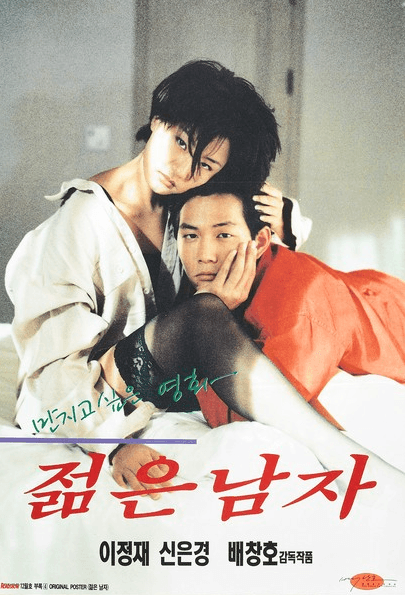
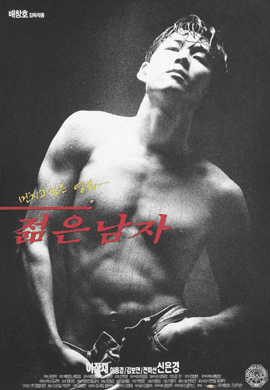
While television made him a star, it was the cinema that proved his versatility. In The Young Man (1994), directed by the visionary Bae Chang-ho, Lee played an ambitious youth chasing the “Korean Dream.” This film is a crucial archive for Dear, From K, as it realistically portrays the materialistic desires and anxieties of 90s Korean youth.
Later, in An Affair (1998), Lee transitioned from a “youth star” to a serious actor. Opposite the veteran actress Lee Mi-sook, he delivered a restrained, emotional performance that challenged traditional Korean social taboos. This film is often cited by critics as a turning point where Korean cinema began to blend artistic sensibility with commercial appeal—a hallmark of the Hallyu we see today.
Director Bae’s Vision for “The Young Man”
While television made him a star, cinema proved his versatility. In The Young Man (1994), Lee played an ambitious youth chasing the “Korean Dream.” Director Bae Chang-ho cast Lee to capture raw ambition. He designed the film to criticize the hollow materialism of that decade. As a result, Lee won multiple “Best New Actor” awards. He proved his talent to the entire nation.
Breaking Taboos: The Impact of “An Affair”
In An Affair (1998), Lee transitioned into a serious actor. He delivered a restrained performance opposite actress Lee Mi-sook. At that time, the film’s portrayal of an affair shocked the conservative society. However, the director avoided scandal and focused on aesthetics. This film pioneered the “Korean Melodrama” genre. Critics praise the film for blending artistic sensibility with commercial appeal.
Why These Roots Matter for Today’s Hallyu Fans – Lee Jung-jae
Understanding Lee Jung-jae’s 90s filmography is like finding the missing puzzle piece of Korean pop culture. The raw energy and experimental storytelling of that era provided the creative DNA for today’s global hits. By looking at his early work, we see a reflection of a nation finding its voice, much like Lee Jung-jae found his path to becoming a world-class actor.
The Blueprint for a Global Star Lee Jung-jae’s 90s filmography didn’t just make him a star; it provided a blueprint for the versatile Korean actors we see today. His ability to switch from a silent protector (Sandglass) to a materialistic youth (The Young Man) and finally to a nuanced lover (An Affair) laid the groundwork for his later iconic roles in New World and Squid Game. He proved that a “Youth Star” could evolve into a “Global Master” through rigorous artistic exploration.
A Legacy in Progress
Lee Jung-jae’s journey from a 90s rebel to a global master is a testament to Korean storytelling. His early work provided the creative DNA for today’s global hits. At Dear, From K, we believe the past is the best compass for the future. Stay tuned as we continue to archive the legends of K-Cinema.
Interested in the masters who shaped Korean cinema? Read our profile on [Im Kwon-taek: The Master Who Painted the Soul of Korea on Film].
Related Articles