The Korean drama released in 2007, directed by the master of realism Lee Chang-dong, is not merely a movie; it is a spiritual confrontation. Secret Sunshine (2007) remains one of the most intellectually demanding and emotionally exhausting experiences in global cinema.
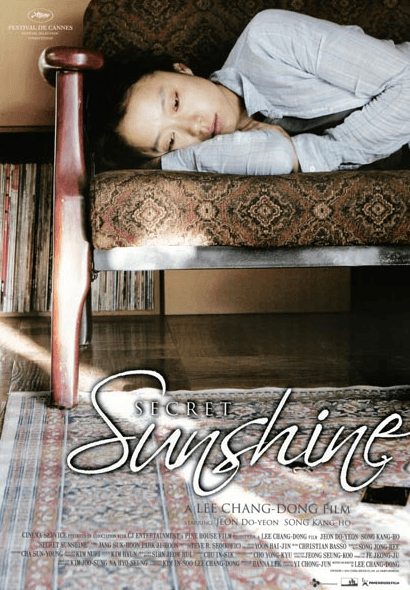
Secret Sunshine (2007): A Story of Light and Shadow
- Director: Lee Chang-dong
- Cast: Jeon Do-yeon (Shin-ae), Song Kang-ho (Jong-chan)
- Genre: Drama, Psychological Realism
- Release Year: 2007
Synopsis: After losing her husband, Shin-ae moves to her late husband’s hometown, Miryang, with her young son. Initially, she seeks a fresh start in the “secret sunshine” of this small city. However, a devastating tragedy strikes, forcing her to confront the limits of human endurance and the paradoxes of divine forgiveness. Ultimately, the Secret Sunshine (2007) narrative explores whether a human being can truly find peace when the world—and perhaps God—seems indifferent to their pain.
The Socio-Political Context of Secret Sunshine (2007)
To understand the weight of this Lee Chang-dong movie, we must look at the climate of South Korean society in the mid-2000s. It was a period of rapid modernization where traditional communal ties were fraying, replaced by a desperate search for individual meaning.
In the aftermath of national economic shifts and the lingering scars of the IMF crisis, many Koreans turned to Protestantism for solace. This era was defined by the rise of “Mega-Churches,” which offered a sense of belonging but often masked a deeply transactional nature. Shin-ae represents the “Emotional Refugee” of this era—a fragmented middle-class woman looking for a miracle to fill a vacuum that neither money nor status could fix. The film reflects the “Social Loneliness” of a person trying to embed herself in a community that is polite on the surface but cold underneath.
Directorial Style: Lee Chang-dong’s Brutal Realism and the “Anti-Cinematic” Gaze
Lee Chang-dong, a novelist-turned-director, rejects the “cinematic” in favor of the “authentic.” He focuses on the “texture of the mundane.” The camera is often static, observing Shin-ae’s breakdown without editorializing. This “Aesthetic of Restraint” forces the audience to live through the duration of her grief.
Why does Secret Sunshine (2007) feel so much longer than its actual runtime? It is because of the “Anti-Cinematic Gaze.” While most films use editing to skip the unbearable parts of grief, this film stays in the room. It stays when Shin-ae is sitting in the dark; it stays when she is walking aimlessly through the Miryang market. This creates a “Real-Time Grief”—a sensory weight that mirrors the internal stagnation of a broken soul. By stretching the moments of silence, Lee Chang-dong challenged the fast-paced trends of the mid-2000s, demanding the audience’s presence as a silent witness.
The Philosophy of Forgiveness: The Theological War
The most controversial theme in Secret Sunshine (2007) is the “theological war” Shin-ae wages. When she decides to forgive her son’s murderer in the name of her newfound faith, she finds that God has “already forgiven him.” This realization is the film’s turning point.
Therefore, the central question becomes: If God forgives the sinner before the victim does, is that grace or is it a second violation? This film argues that “forced forgiveness” is a form of spiritual violence. It challenges the “spiritual vanity” of those who use faith as a shield against the messiness of life. This isn’t just a critique of religion; it is a profound observation of the human ego trying to bargain with the universe.
The Psychological Trap: Miryang as a Panopticon
In South Korean culture, moving to a deceased husband’s hometown is a gesture of extreme “Jeong” (attachment), but it is also a trap. Initially, Shin-ae believes the town will embrace her. However, Miryang acts as a social panopticon. Every move she makes—buying land, starting a piano academy, attending church—is scrutinized by the townspeople. This environment creates an “Invisible Gravity” that pulls at her sanity. In my own observation, this reflects a universal truth: we often look for community to heal, only to find that the community’s expectations become a new source of trauma.
Religious Consumerism and the “Ramyun” of Faith in Secret Sunshine
In the film, Christianity is presented not as a divine mystery, but as a consumable product. The church scenes are shot with a chilling, bright clarity. For Shin-ae, this faith is a tactical retreat—a form of “spiritual instant food” to numb the unbearable pain. It challenged the audience to ask: Are you seeking God, or are you just seeking an escape from your own shadow?
The Materiality of Grief: Objects as Ghosts
Lee Chang-dong uses physical objects to anchor the grief. These are the “Foley of Loneliness”:
- The Piano: A symbol of her urban identity and her hope for her son’s future. When she stops playing, the silence becomes a physical weight.
- The Land Deeds: Her desperate attempt to “belong” through ownership.
- The Hairdryer: In the final scene, this mundane tool becomes an instrument of reclamation. Moreover, the refusal to use “cinematic lighting” makes these objects look cold and indifferent, keeping the audience grounded in the damp reality of a grieving mother’s apartment.
The Theology of the Dirt: Divine Silence in Secret Sunshine
Shin-ae is a “city woman” who moves to a “small town.” She tries to act wealthier than she is to gain respect, which is precisely what leads the kidnapper to target her. This is the “Socio-Economic Ghost” of the film—a story of the mid-2000s Korean anxiety where people were desperate to maintain an image of success even while their inner lives were collapsing.
The Theology of the Dirt: Divine Silence vs. Human Screams
If the first half is a thriller, the second half is a horror movie about the soul. The “After-sound” (잔향) of the son’s death vibrates through every scene. Shin-ae attempts to fill this void with loud prayers, but the film suggests true spirituality is found in the dirty corners of reality. In an agonizing scene, Shin-ae looks up at the sky while her son’s murderer tells her he has found peace. The sky is blue, clear, and utterly silent. This forces us to reconcile the beauty of the world with the ugliness of human suffering.
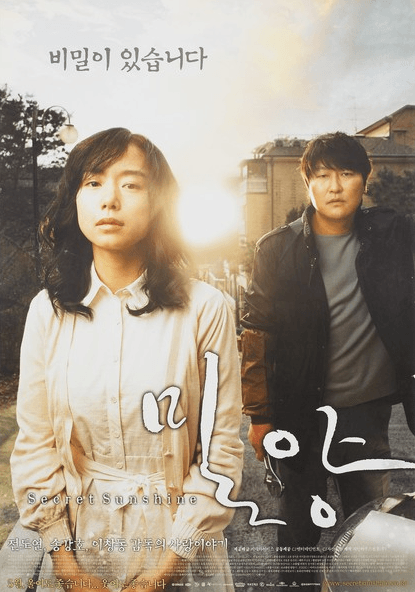
The Phenomenology of the Body: Grief as a Physical Weight
To truly understand the “human smell” of Secret Sunshine (2007), we must look at how grief is manifested physically. Initially, many dramas treat sorrow as a series of tears and dramatic outbursts. However, Lee Chang-dong treats grief as a physical ailment—a burden that changes the way a person breathes, walks, and interacts with space.
In the scenes following the tragedy, Shin-ae’s body seems to lose its coordination with the world. This is the “Phenomenology of Pain.” Whether she is stumbling through a prayer meeting or her hands are trembling while cutting hair, the film argues that the soul’s collapse is always preceded by the body’s betrayal. Consequently, the audience doesn’t just watch her pain; they feel the suffocating humidity of Miryang through her physical exhaustion. This emphasis on the “Physicality of Emotion” was a revolutionary shift in Korean cinema, moving away from stylized acting toward a raw, uncomfortable realism.
The Silence of the Camera: The Ethics of Distance
One of the most profound “human layers” in Secret Sunshine (2007) is the camera’s refusal to intrude. Lee Chang-dong employs what critics call the “Ethical Distance.” Initially, most directors would use tight close-ups during a mother’s breakdown to squeeze emotion from the audience. Conversely, Lee often keeps the camera at a middle distance.
This distance is not a lack of empathy; it is a form of respect. It allows Shin-ae the “sovereignty” to suffer without being consumed by the viewer’s gaze. Therefore, the film creates a space for the audience to reflect rather than just react. This “Observational Integrity” is a key reason why the film remains a masterpiece. It doesn’t treat Shin-ae’s life as a spectacle, but as a sacred, albeit broken, reality. In an age of digital oversharing, this directorial restraint is a powerful reminder of the dignity inherent in private suffering.
The “Ugly” Reality of Light: Beyond Cinematic Beauty
In these still cuts, notice how the light hits the characters. Unlike traditional melodramas that use “Golden Hour” lighting to beautify sorrow, Secret Sunshine (2007) uses a harsh, almost clinical light. Initially, this might seem like a lack of aesthetic concern. However, this is a deliberate choice to strip away any romanticism from Shin-ae’s tragedy.
The light in Miryang doesn’t comfort; it exposes. It shows the sweat, the messy hair, and the redness of the eyes. This “Visual Honesty” is what makes the still cuts feel like documentary photographs rather than movie frames. Consequently, the audience cannot hide behind the “beauty” of the film. We are forced to confront the “ugliness” of a broken life. This commitment to an unvarnished reality is what solidified Lee Chang-dong’s position as a master of “Sovereignty of the Victim”—the camera never lies to make the pain more palatable.
The Mise-en-Scène of Dislocation: Why Objects Matter
Every still cut from Secret Sunshine (2007) reveals a character who is “out of place.” Look at the background—the cluttered pharmacy shelves, the generic plastic chairs of a church, the dusty curtains of a piano academy. These are the textures of a life in transition.
Moreover, the way Shin-ae occupies these spaces tells a story of “Spatial Alienation.” She is often placed at the edge of the frame or partially obscured by domestic objects. This reflects her internal state: a woman who tried to buy her way into a community (through land deeds and social status) but ended up as a ghost in her own home. By analyzing these visual details, we reach a deeper understanding of the “Socio-Economic Ghost” discussed earlier. The tragedy isn’t just in what she lost, but in the cold, indifferent environment she is left to suffer in.
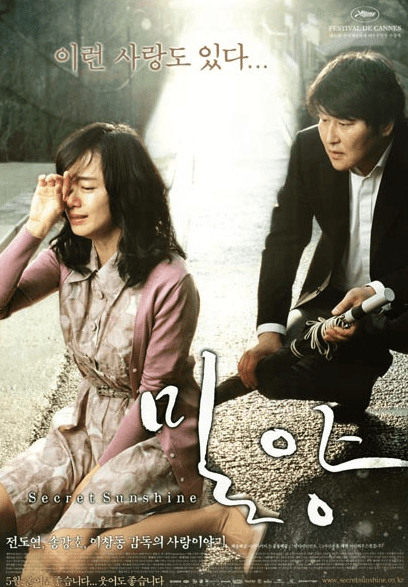
The Sound of Absence: Acoustic Isolation in Miryang
While we often focus on the visual, the acoustic landscape of Secret Sunshine (2007) is equally essential to its impact. The film uses what I call the “Foley of Absence.” Initially, the town of Miryang is filled with the mundane sounds of life—traffic, distant chatter, the hum of a piano academy. However, as Shin-ae’s isolation deepens, these sounds begin to feel like an assault.
The sound of a ringing telephone or the repetitive rhythm of a church hymn becomes a source of psychological tension. Moreover, Lee Chang-dong deliberately avoids a traditional musical score. By doing so, he ensures that there is no “emotional safety net” for the audience. You are forced to hear the silence of God in the gaps between the urban noise. This sonic isolation highlights the “Jeong” (attachment) she has lost; the world continues its noisy, indifferent rhythm, leaving her trapped in a soundless void of her own making.
The “Secret” in the Mundane: A Re-reading of the Final Haircut
Many critics focus on the haircut at the end of Secret Sunshine (2007) as a symbol of starting over. Initially, this seems like a standard trope. But in the hands of Lee Chang-dong, it is an act of “Radical Autonomy.” When Shin-ae takes the scissors and begins to cut her own hair, she is reclaiming her body from the narratives imposed upon her—by the town, by the church, and even by the memory of her son. The mirror is held by Jong-chan, but the action is entirely hers. This is the ultimate “human” moment: the realization that while we cannot control the tragedies that befall us, we can control how we stand within them. Ultimately, the “Secret” in the sunshine is not a divine revelation, but the quiet, stubborn persistence of the individual will to exist in the “dirt” of reality.
The Historical Shift: From Collective “Han” to Individual Trauma
Before 2007, Korean cinema often portrayed suffering through the lens of “Han”—a collective, historical grief shared by the people. Secret Sunshine (2007) represents a definitive shift toward “Individual Existentialism.” It argued that one person’s pain is not a metaphor for a nation; it is an absolute reality in itself. This shift allowed later filmmakers to explore trauma with a focus on psychological nuance rather than national allegory. Furthermore, it challenged the audience to look at their neighbors not as symbols of social status or religious affiliation, but as vulnerable human beings. This historical contribution solidified the film’s legacy as the bridge between the “New Korean Cinema” of the early 2000s and the sophisticated, character-driven dramas of the present day.
Jong-chan as “Secular Grace”: A Re-evaluation of Song Kang-ho
While Jeon Do-yeon is the lightning, Song Kang-ho’s Jong-chan is the ground. Initially, he may seem like comic relief, but he is the film’s true “Secret Sunshine.” He is the only character who doesn’t try to “fix” Shin-ae with theology. He simply exists in her orbit. Whether he is joining the church just to be near her or offering a car battery jump, he represents a form of “Secular Grace.” This is a key directorial intent: to show that the only real cure for human suffering is another human being’s presence, however clumsy or imperfect. His character argues that “Jeong” (connection) is not about dramatic sacrifice, but about the persistent, mundane loyalty of showing up. He is the “oxygen” the audience needs to survive the film’s heavier themes.
The Performance of Jeon Do-yeon: The Anatomy of a Broken Will
Jeon Do-yeon’s portrayal of Shin-ae is widely considered one of the greatest performances in film history. Winning the Best Actress award at Cannes, she portrayed a breakdown that was both explosive and internal.
She broke the mold of the “Suffering Mother.” She was allowed to be angry, spiteful, and even “unholy” in her grief. This performance established the “Sovereignty of the Victim.” It argues that no one—not the state, not the community, and not even God—has the right to dictate how a victim should heal. This shift toward “Individual Agency” is the film’s most significant historical contribution, empowering a new generation of filmmakers to explore the “Dark Interior” of the human psyche without the need for social consensus.
The Historical Impact and Global Legacy of Secret Sunshine
Secret Sunshine (2007) was a cultural earthquake. Initially, many religious groups in Korea felt the film was an attack on faith. Conversely, secular audiences and critics saw it as the most honest portrayal of religious psychology ever put to celluloid.
The film paved the way for “Human-Centric” cinema. It influenced a generation of filmmakers to stop looking for happy endings and start looking for “honest” endings. It proved that Korean storytelling achieves universality not through spectacle, but through the quiet, precise examination of the human heart. Today, it stands alongside masters like Hirokazu Kore-eda and the Dardenne brothers, proving that the personal is always political.
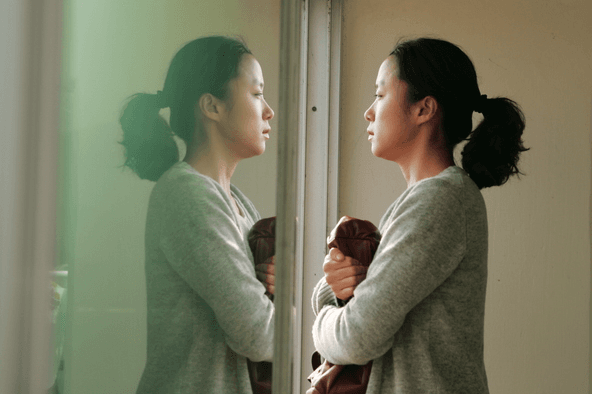
Symbolic Interpretation: Finding the “Secret” in Secret Sunshine
The title Miryang literally means “Secret Sunshine.” Throughout the film, the sun is not a symbol of hope, but a neutral, physical presence.
In the final scene, the camera tilts down to a muddy patch of ground where a small ray of sun hits. This suggests that meaning is not found in the heavens or in grand religious narratives, but in the dirt under our feet. The sunshine is “secret” because it is so ordinary that we often miss it while looking for miracles. It represents a “Living Silence” that reminds us the world continues to move even when we are frozen in grief.
Final Reflection: The After-Sound and the Persistence of Life
Secret Sunshine (2007) does not end with a resolution; it ends with a breath. It ends with a haircut. What remains on screen is not reconciliation, but a hard-won clarity—the understanding that we cannot “solve” grief; we can only live through it.
The final truth of this Lee Chang-dong masterpiece lies in the quiet dignity of letting go. To watch Shin-ae at the end—neither fully healed nor fully broken—is to witness the birth of a terrifyingly resilient version of the human spirit. She stands in a patch of dirt, cutting her own hair as the “secret sunshine” flickers over the ground. It is a love for life that finds contentment simply in having existed.
Related Articles
- 10 Best Korean Movies – Must-watch masterpieces of Korean cinema.
- Parasite Review – Hidden symbols and social commentary explained
- 90s Korean Movie Culture – The creative revolution that started Hallyu
- The Unique Storytelling Style of Korean Films: – 5 narrative techniques that define Korean cinema
Source: Basic film information from Korean Movie Database (KMDb)