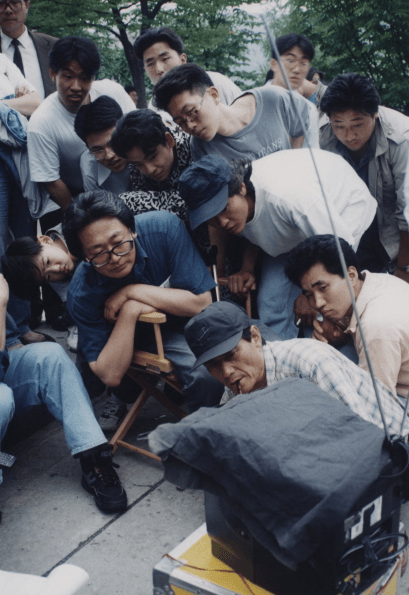
Park Kwang-su and the Rise of Social Realism
Park Kwang-su and the Rise of Social Realism In 1995, Director Park Kwang-su released A Single Spark 1995, a film that shook South Korea’s conscience. This masterpiece interweaves two different timelines to create a powerful narrative. It connects the black-and-white past of worker Jeon Tae-il with the colored present of activist Kim Young-su. This unique structure shows how past sacrifices fueled future democratic movements. A Single Spark 1995 functions as a bridge between the 1970s labor struggle and the 1990s democratic transition. It remains an essential chapter in the history of the Korean New Wave.
The Socio-Political Context of A Single Spark 1995
To truly appreciate this masterpiece, one must analyze the dual historical context A Single Spark 1995 presents. In the 1970s, the “Miracle on the Han River” hid a dark reality. Young workers at Pyeonghwa Market labored for 14 hours a day in cramped, windowless attics. They faced extreme conditions—poor ventilation, no legal protections, and constant exhaustion. These were lives defined not by opportunity but by survival.
By the 1990s, Korea gained more political freedom, but society still grappled with the human cost of rapid growth. Director Park Kwang-su utilizes a sharp cinematic method to contrast these two eras in A Single Spark 1995. He rejects the polished spectacle of industrial achievement. Instead, the film embraces the visual friction of a young man discovering the Labor Standards Act. This human-centered perspective ensures that the audience feels the sobering realism of systemic exploitation. He reminds us that Jeon Tae-il was not just a symbol, but a son, a brother, and a friend.
The Silent Testimony of Jeon Tae-il in A Single Spark 1995
To understand the emotional depth of A Single Spark 1995, we must examine the primary source of its narrative: Jeon Tae-il’s personal diary. Director Park Kwang-su utilizes these writings to anchor the film in a staggering reality. He rejects the polished spectacle of a fictional hero. Instead, he highlights the unpolished truth of a young man who taught himself to read difficult legal Chinese characters.
The film shows Jeon hunched over his notebook at night, despite his burning eyes. A Single Spark 1995 proves that intellectual sovereignty begins with the simple act of recording one’s own suffering. He reminds us that the “Babo-hoe” members were not just activists; they were students of their own lives. This human-centered perspective ensures that the audience feels the intellectual weight of his awakening. He transforms a historical record into a living, breathing internal dialogue. His storytelling establishes a path through the dark hallways of Pyeonghwa Market, where the scent of old paper and sweat defined the atmosphere.
The Heart of Solidarity in A Single Spark 1995
To expand our view of A Single Spark 1995, we must look at the small, intimate acts of kindness. Director Park Kwang-su emphasizes the scene where Jeon Tae-il spends his bus fare to buy “pul-bbang” (small bread) for his starving coworkers. He rejects the polished spectacle of a grand political leader. Instead, the film embraces the visual friction of a young man walking home for hours because he gave his last penny to others.
This human-centered perspective in A Single Spark 1995 ensures that the audience feels the staggering warmth of his soul. He proves that cinematic honesty resides in these quiet moments of sacrifice. He reminds us that the labor movement began with basic human empathy, not just ideology. His storytelling establishes a healing path through the recognition of our shared hunger for dignity. He remains a social mirror for a nation that often forgets the person behind the worker. By centering the lens on a simple bag of bread, the director turns a historical figure into a brother we can all love.
The Birth of “Babo-hoe” within A Single Spark 1995
The technical sovereignty of A Single Spark 1995 shines in its depiction of the “Babo-hoe” (The Fools’ Association). Jeon Tae-il and his friends called themselves “fools” because they chose to care for others in a selfish world. Director Park Kwang-su utilized a sharp cinematic method to show their secret meetings. He proves that intellectual sovereignty begins with the courage to study the law.
He ensures that the audience feels the intellectual weight of the Labor Standards Act throughout A Single Spark 1995. In this masterpiece, the small book of laws acts as a powerful tool for liberation. The narrative evokes the sharp contrast between the difficult legal terms and the simple honesty of the workers. By focusing on sensory details—the flickering candlelight and the sound of pages turning—the director turned a study session into a site of profound resistance. He maps the vertical narrative of an awakening mind that refuses to stay in the shadows.
The Auditory Minimalism of A Single Spark 1995
Why does the sound of the sewing machines feel so aggressive in A Single Spark 1995? It is because the director utilized auditory minimalism to capture the heartbeat of industrial pressure. In a world of loud state progress, he returned to the sensory detail of the mechanical needle piercing the fabric. This creates a communal resonance between the worker’s fatigue and the viewer’s own stress.
This approach allowed A Single Spark 1995 to spark a global dialogue about the hidden sounds of exploitation. He provided a safe space for the audience to face the raw reality of a factory that never sleeps. This human-centered perspective proves that a healing narrative begins with the courage to listen to the sounds of those who suffer. His work functions as a vibrant tribute to the quiet intensity of Jeon Tae-il’s resolve. He remains the bridge between the analog noise of 1970 and the digital silence of today.
The Scent of Humanity in the Pyeonghwa Market Dust
Ultimately, the film is a masterpiece about the human-centered perspective found in the very air of the Pyeonghwa Market. The scenes evoke the scent of fabric dust and the metallic chill of the industrial fans. He treats the dust as a flawed common person—a constant obstacle to the workers’ health. This sensory detail is why the film’s climax remains a sincere atonement for a society that ignored the cries of the youth.
He transformed the architecture of a crowded market into a site of profound tragic heroism. This commitment to a grounded cinematic method defines the true heart of the Korean New Wave. He remains a bridge between the fleeting nature of wealth and the eternal nature of human rights. His legacy is dedicated to the quietest, most powerful moments of realization. He proves that even a single spark can illuminate the darkest corners of a nation’s history.
The Intellectual Sovereignty of a Literary Director
Park Kwang-su approached filmmaking with a novelist’s sensibility. The technical sovereignty of A Single Spark (1995) resides in its sophisticated “Meta-Narrative” structure. He proved that cinematic honesty requires more than just emotional manipulation. By following an activist who writes Jeon’s biography, the film explores the weight of memory itself.
He ensures that the audience feels the intellectual weight of history. In this masterpiece, the screenplay acts as a powerful tool to deconstruct the myth of the martyr. The narrative evokes the sharp contrast between the monochrome struggle of the past and the colored uncertainty of the present. Every scene is layered, each moment steeped in emotional resonance, demanding patience and attention. The audience does not just watch; they inhabit the world of the film and witness the collision of memory and contemporary awareness.
The Burden of the Observer in A Single Spark 1995
Director Park Kwang-su belongs to the “3-8-6 Generation,” a group of intellectuals who led Korea’s democratization. Within the narrative of A Single Spark 1995, he addresses his own sense of social debt by utilizing the character of Kim Young-su. This character mirrors the struggle of an intellectual trying to do justice to a working-class hero. Park proves that cinematic honesty requires a painful self-reflection from the filmmaker themselves.
The audience feels the intellectual weight of the observer’s guilt through the director’s meticulous framing. In this masterpiece, the colored scenes of the 1980s represent the heavy, suffocating pressure of state surveillance. Such a narrative evokes the sharp contrast between the quiet library where Kim writes and the chaotic streets where protesters scream for justice. Focusing on sensory details—the flickering light of a hidden office and the sound of a typewriter—the director turned a historical drama into a site of profound ethical inquiry. Finally, he maps the vertical narrative of a nation’s conscience, questioning whether art can truly capture the fire of a real sacrifice.
The Power of Sensory Detail and Auditory Minimalism
From the dust-filled sewing rooms to the metallic chill of needles, the film communicates the texture of labor. Meticulous attention to sensory detail transforms abstract historical events into a palpable experience. The rhythm of machinery and the scent of fabric act as instruments of storytelling. These choices enable viewers to understand the stakes beyond statistics or headlines.
Why does the silence in A Single Spark (1995) feel so heavy? It is because the director utilized auditory minimalism to capture the heartbeat of a movement. In a world of loud political slogans, he returned to the sound of a turning page or a sewing machine’s rhythm. This creates a communal resonance between the protagonist’s internal resolve and the viewer’s own conscience. There is no swelling score; instead, the audience hears the world itself—the scraping of fabric and the muted footsteps along factory floors. Silence becomes a canvas upon which moral urgency paints its message.
Beyond the Hero Myth
To expand our understanding of A Single Spark (1995), we must examine the “Psychological Architecture of Sacrifice.” Director Park Kwang-su refuses to present Jeon Tae-il as a flawless saint. Instead, he utilizes a sharp cinematic method to portray a young man torn between his love for his family and his duty to his fellow workers. This human-centered perspective ensures that the audience feels the staggering emotional weight of his decision.
He rejects the polished spectacle of traditional propaganda films. Instead, the narrative embraces the visual friction of a person grappling with fear and loneliness. He reminds us that true courage requires a painful reckoning with one’s own mortality. His storytelling establishes a healing path through the recognition of Jeon’s internal struggle. He remains a social mirror for a generation that seeks meaning in an era of rapid material gain. By centering the lens on Jeon’s private moments of doubt, the director proves that cinematic honesty resides in the unpolished truth of the human heart.
Stripping Away the Nostalgia
The technical sovereignty of A Single Spark (1995) resides in its deliberate use of high-contrast black-and-white cinematography for the 1970s segments. Director Park Kwang-su utilized this visual approach to strip away any sense of false nostalgia. He proves that the past was not a “golden age” of development but a stark era of survival. This mastery involves a visual innovation that turns shadows into silent storytellers.
He ensures that the audience feels the intellectual weight of the darkness within the Pyeonghwa Market. In this masterpiece, the monochrome palette acts as a powerful tool to emphasize the soot, the grease, and the tired eyes of the youth. The narrative evokes the sharp contrast between the cold metallic machines and the warm, vulnerable skin of the workers. By focusing on these sensory details, the director turned a historical record into a site of profound visual poetry. He maps the vertical narrative of a nation’s growth against the horizontal reality of those crushed by it.
The Sound of a Turning Tide
Why does the sound design in A Single Spark (1995) feel so revolutionary? It is because the director utilized auditory minimalism to capture the heartbeat of a rising movement. In a world of loud political slogans, he returned to the sensory detail of a heavy sigh or the rhythmic clatter of a sewing machine. This creates a communal resonance between the protagonist’s quiet resolve and the viewer’s own sense of justice.
This approach allowed the film to spark a global dialogue about the universal right to labor dignity. He provided a safe space for the audience to face the raw reality of systemic silence. This human-centered perspective proves that a healing narrative begins with the courage to hear the voices that society tries to drown out. His work functions as a vibrant tribute to the quiet intensity of collective resistance. He remains the bridge between the analog cries for help in the 70s and the digital awareness of the 21세기.
A Living History
Ultimately, A Single Spark (1995) is a masterpiece about the human-centered perspective found in small acts of kindness. The scenes in the market evoke the scent of old fabric, steamed buns shared among friends, and the metallic chill of winter in Seoul. He treats every supporting character, from the tired seamstresses to the hesitant activists, as a flawed common person worthy of deep empathy.
This sensory detail is why the film’s legacy remains a sincere atonement for a nation that once prioritized exports over lives. He transformed the architecture of a crowded garment district into a site of profound moral awakening. This commitment to a grounded cinematic method defines the true roots of social realism in Korean cinema. He remains a bridge between the fleeting nature of economic statistics and the eternal nature of human dignity. His legacy is dedicated to the quietest, most powerful moments of human connection that transcend time.
The Historical Impact on the “Hallyu Roots” and Beyond
In the final analysis, we see the unpolished truth of a cinematic milestone that paved the way for the global success of K-cinema. A Single Spark (1995) changed the “Architecture of Film Funding” and the “Architecture of Social Dialogue.” Since tens of thousands of citizens provided public donations, the film became a communal property of the Korean conscience.
He utilizes this collective energy to show that cinema can function as a powerful tool for democratic progress. He rejects the polished spectacle of commercial escapism. Instead, he embraces the visual friction of a shared national trauma. This creates a lingering echo that stays with the readers long after the credits roll. He remains our most reliable compass for navigating the complex history of South Korea. He proves that even in a world of concrete and steel, the scent of a soul is found in our shared longing for justice.
A People’s Film
In the final analysis, we see the unpolished truth of a cinematic revolution. A Single Spark (1995) changed the “Architecture of Film Production” in Korea. It stands as the first Korean film to use public donations for its creation. Tens of thousands of citizens provided funds because they collectively desired to tell this vital story. This proved that people were not passive viewers—they were stakeholders in their own history.
This crowdfunding success inspired later socially conscious films like 26 Years. Since the public funded this work, the film belongs to the people’s collective memory. He utilizes this collective energy to show that history belongs to everyone, not just leaders. Rather than a commercial spectacle, he embraced a shared national responsibility. This set a precedent for participatory filmmaking that continues to influence the Hallyu history today.
Breaking the Studio System
In the mid-90s, the Korean film industry faced a massive transition. A Single Spark (1995) challenged the traditional “Architecture of Studio Funding.” Director Park Kwang-su and producer Yu In-taek utilized a pioneering model of independent production. They proved that a film can survive without the support of major conglomerates.
Since thousands of small donations funded the project, the production team felt a unique communal responsibility. He utilizes this collective energy to maintain complete artistic sovereignty. He rejects the polished spectacle of commercial tropes to focus on the raw, unpolished truth of the labor movement. This revolutionary approach ensured that the film stayed true to its social mission. He reminds us that the “Hallyu Roots” began with this spirit of independence and collective will. His legacy is dedicated to the filmmakers who choose truth over profit, proving that a single spark of citizen power can change an entire industry.
Audience Reception and Global Recognition
Upon its release, the film transcended the boundaries of a simple movie. Korean viewers recognized the familiar hardships and moral dilemmas of the labor movement. Critics hailed it as a “Korean New Wave” masterpiece, praising its artistic maturity and complex portrayal of a political figure. They lauded the film for its refusal to reduce Jeon to a mere symbol of propaganda.
Internationally, the film competed for the Golden Bear at the Berlin International Film Festival. This recognition proved that the struggle for dignity is a universal language. Its meticulous depiction of ethical courage transcended national boundaries. It demonstrated that human rights remain a global concern regardless of culture. The film’s success affirmed that Korean cinema could be both artistically profound and socially relevant on a global scale.
The Berlin Response
When A Single Spark (1995) screened at the Berlin International Film Festival, it transcended its local context. International critics hailed the film as a vibrant tribute to human dignity. Director Park Kwang-su utilized a grounded realism that resonated with global audiences familiar with labor struggles. He proves that the scent of a soul and the desire for justice carry no borders.
He ensures that the audience feels the intellectual weight of Korea’s rapid modernization. The global reception established a healing path for a nation that once felt isolated in its political pain. This success allowed the film to spark a global dialogue about the cost of capitalism. He provided a safe space for viewers in Berlin and beyond to face the reality of the “miracle” that required such a high human price. His work remains a bridge between the specific history of Seoul and the universal history of the working class. He proves that even a single spark in a local market can illuminate the global cinematic stage.
How A Single Spark 1995 Built the Foundation of Social Justice Cinema
The legacy of A Single Spark (1995) paved the way for modern socially conscious films. Park Kwang-su’s insistence on authenticity and emotional subtlety shaped the next generation of directors. Filmmakers like Bong Joon-ho and Lee Chang-dong absorbed these lessons. They learned that stories do not need spectacle to resonate, and emotional truth often outweighs plot mechanics.
The ripple effects are evident in modern classics that merge social critique with personal narrative. Park’s groundwork legitimized cinema as both art and a social mirror. This film remains a definitive record of the labor movement within the cultural history of Korea. It shifted the focus of cinema toward social reflection and established a new production model for the industry. It challenges viewers to reflect on social justice and human dignity even decades later.
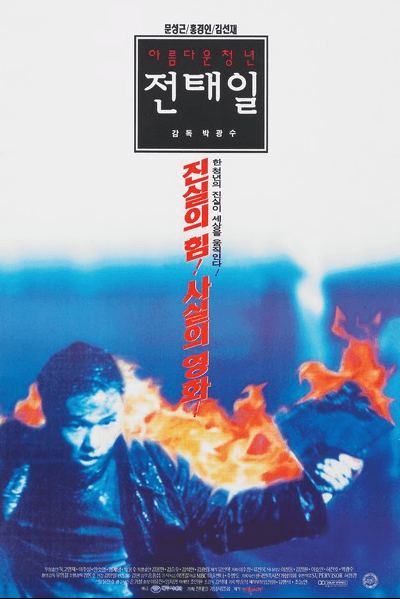
This masterpiece captures the burning spirit of Jeon Tae-il. Since public donations funded this film, it stands as a testament to Korea’s collective memory.
Human Stories: A Living Memory of Social Struggle
The story of A Single Spark (1995) is inseparable from the Korea of its time. While the “Miracle on the Han River” celebrated industrial achievement, ordinary workers remained in the shadows. Jeon Tae-il’s sacrifice represents a striking counterpoint: a young man whose courage demanded recognition for human dignity. The film captures this tension masterfully, using cinema to evoke lived experience rather than just recounting events.
Through Park’s lens, audiences feel both the anxiety of a country racing forward and the quiet grief of those left behind. By centering human experience over historical abstraction, the director created a cinematic bridge. This is a space where viewers can witness the personal dimensions of systemic injustice. It allows modern audiences to connect with universal themes of justice, sacrifice, and the weight of responsibility.
Memory as a Moral Compass
In the end, A Single Spark (1995) is more than a historical record. It is a meditation on memory, responsibility, and human empathy. Park Kwang-su reminds us that every societal advance can obscure individual suffering if we fail to notice. The film endures because it honors humanity over statistics. It reminds us that every historical event carries intimate human stakes.
It gives viewers the rare gift of inhabiting another life and understanding a different conscience. Even today, the burning spirit of Jeon Tae-il remains a living inspiration. The film proves that even a single spark—of courage, awareness, or empathy—can illuminate the darkest corners of a nation’s soul. It provides a moral compass for a world still grappling with inequality and ethical accountability.
For complete archival details, visit the Korean Movie Database (KMDb). This era of awakening led to the diverse storytelling we see today. If you enjoyed this journey, read our post on Whale Hunting (1984). Both films are essential pillars of the Hallyu Roots.
Related Articles