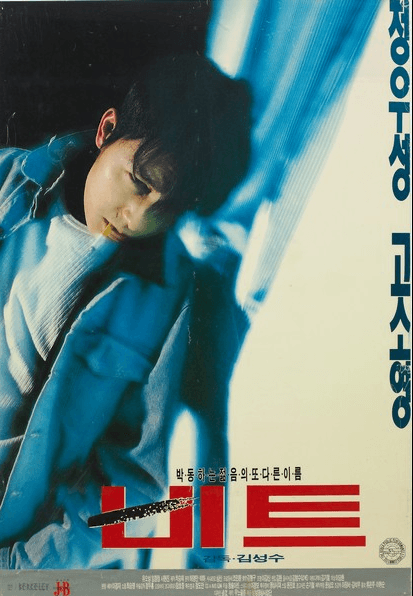
The Voice of a Restless Generation – Beat 1997
When Beat 1997 Korean Movie hit theaters, South Korea stood on the edge of the IMF economic collapse. Even before the crisis, young Koreans felt restless and adrift. Director Kim Sung-su and star Jung Woo-sung captured this mood with haunting clarity. This film doesn’t just entertain; it paints a vivid portrait of generational anxiety.
Historical Context: Seoul in the Mid-90s
The 1990s transitioned Korea from an authoritarian past to a democratic, consumer-driven present. Rapid urbanization reshaped Seoul while producing a sense of alienation. Beat 1997 emerged at this moment, observing youth culture with melancholy detachment rather than romanticizing rebellion.
Story and Themes: Masculinity and Urban Loneliness
The story follows Min (Jung Woo-sung), a high school graduate navigating friendship, violence, and a fractured family life.
- Masculinity in Crisis: Shared disillusionment forges the bonds between the characters in the film.
- Urban Loneliness: Motorcycles and dimly lit apartments symbolize the temporary spaces where young men constructed their identities..
The Iconic Style and Legacy of Beat 1997
Jung Woo-sung’s performance in Beat 1997 redefined leading-man masculinity. His quiet vulnerability and the film’s handheld camerawork created a grounded, realistic aesthetic. The soundtrack anchors the film in global youth culture by blending Western rock with Korean sensibility.
Production Insights and Global Reception
The creative energy of late-90s Korean cinema fueled the production of Beat 1997. Despite a modest budget, director Kim Sung-su utilized innovative camera angles and lighting to create a high-end noir atmosphere. The Korean Movie Database (KMDb) notes that the film established the “youth film” genre in Korea, which had remained dormant for years. While it became a massive domestic hit, Beat 1997 also captured international attention at various film festivals. It showcased the potential of South Korean directors to a global audience.
The Roar of the Phantom Bike
Did you know? The iconic scene where Jung Woo-sung rides his motorcycle with his hands off the handlebars became a national craze. Every young man in Korea tried to mimic him (often with dangerous results!), and the model of the motorcycle used in the film, the Honda CBR600F3, became a dream bike for an entire generation.
Why ‘Beat 1997’ Still Matters Today
Modern K-dramas that explore youth precarity (like Itaewon Class) echo themes first articulated in this film. It stands as an early exploration of uncertainty in a rapidly modernizing society, making it an essential piece of the Hallyu Roots.
Before the blockbuster era of Shiri 1999, this film defined the emotional landscape of the decade.
According to the Korean Movie Database (KMDb), the film played a crucial role in establishing the ‘youth film’ genre in Korea.
Related Articles