Hong Sang-soo Early Films: The Essential Watch Guide
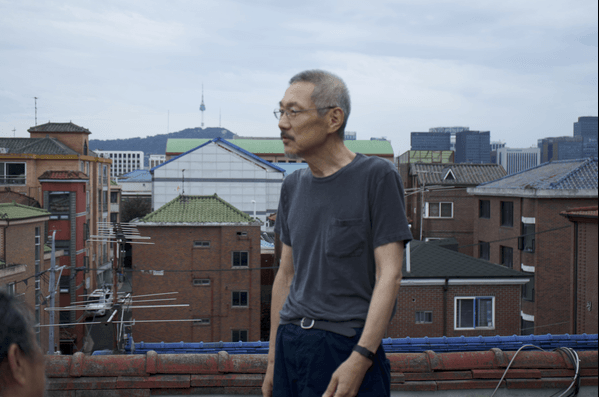
When we discuss the global rise of Korean cinema, images of high-octane thrillers or socially charged dramas often come to mind. Yet, to truly understand the intellectual and emotional core of Korean filmmaking, one must start with the Hong Sang-soo early films. Emerging quietly in the mid-1990s, Hong Sang-soo did not arrive with spectacle or grandeur but with a still, deliberate gaze that reshaped storytelling. His films observe, question, and reveal the hidden layers of everyday life, transforming the mundane into something profoundly human.
His debut in 1996 signaled a shift from conventional narrative structures to a breathtaking mastery of realism, crafting cinematic experiences where small, awkward interactions reveal deep truths about desire, loneliness, and the human condition. For cinephiles, critics, and curious audiences alike, understanding these works is not merely academic—it is an entry point into the emotional heartbeat of modern Korean cinema.
1. Historical Context of Hong Sang-soo Early Films: Korea’s 90s New Wave
A Nation in Transition: Post-Authoritarian Korea
The 1990s were a pivotal decade in South Korea. After decades of military rule, the nation transitioned toward democracy, a period characterized by political, social, and economic upheaval. Urban centers like Seoul transformed almost overnight: skyscrapers rose, nightlife boomed, and younger generations faced the exhilarating yet disorienting freedom of a rapidly modernizing society. This was the era of the Korean New Wave, with directors like Park Kwang-su and Jang Sun-woo tackling national history, social struggles, and collective trauma in their work.
Hong Sang-soo took a different path. Rather than focusing on society’s grand narratives, he turned inward, exploring the small, intimate failures of individual lives. His films observe the unnoticed struggles—the awkward pauses, the hesitation to connect, the repeated mistakes of daily existence. Through this lens, Hong created a humanist cinema, portraying the everyday with uncompromising honesty.
Urban Loneliness and Social Anxiety
Hong’s early works are particularly attuned to the psychology of urban life. Seoul is not merely a backdrop; it is a living, breathing entity that mirrors the emotional isolation of its inhabitants. Characters navigate a city bustling with people yet profoundly alone. Traditional Confucian hierarchies have begun to erode, leaving social interactions fraught with uncertainty. The genius of Hong’s early films lies in showing these transitions without didacticism, using long silences, static camera shots, and restrained dialogue to emphasize the emotional and social gaps between people.
The cityscape becomes a mirror for personal alienation, and the audience is invited to recognize themselves in the small humiliations, awkward encounters, and futile desires that populate Hong’s films—an experience rarely offered in commercial cinema.
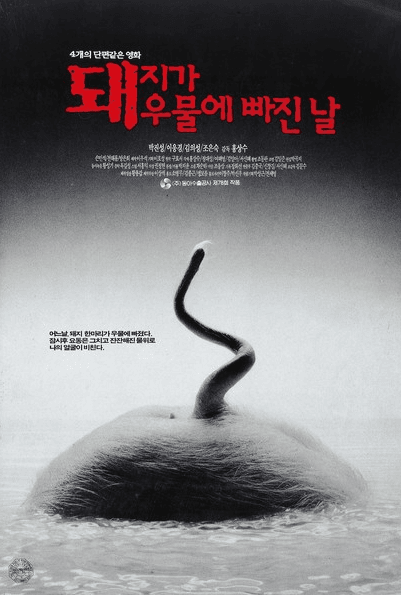
2. Hong Sang-soo Early Films: The Day a Pig Fell into the Well (1996)
Directorial Intent: Rejecting Cinematic Illusions
The Day a Pig Fell into the Well, Hong’s debut, boldly rejects the conventions of mainstream cinema. The film follows four intertwined lives—a struggling novelist, a married woman, her husband, and a ticket seller. Each is trapped in cycles of longing, embarrassment, and small betrayals.
Hong’s intent is clear: strip away cinematic artifice and confront viewers with the ordinariness of human desire. Love, ambition, lust—these are not dramatic peaks but repetitive, often pitiful patterns. The “shocking” aspect of the film is not spectacle but its brutal honesty.
The Architecture of Misery
The camera maintains emotional distance, rarely moving, rarely indulging in close-ups. Characters’ awkward interactions breathe; silences linger uncomfortably. This allows viewers to witness small humiliations and personal failures, cultivating a sense of intimacy through observation. Dialogue, often circling and self-deceptive, serves as action, highlighting psychological tensions over physical ones.
Audience and Critical Reception
The film won the Tiger Award at the Rotterdam International Film Festival, marking Hong’s international breakthrough. Critics praised its clinical precision, while audiences were unsettled by the intimate realism. Historically, the film represented a shift away from melodrama, inaugurating what became known as existential realism in Korean cinema.
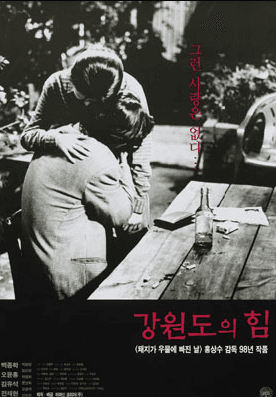
3. The Power of Kangwon Province (1998)
Directorial Intent: Life’s Repetitive Cycles
By his second feature, Hong experimented with narrative structure in ways unprecedented in Korean cinema. The Power of Kangwon Province follows a man and a woman visiting the same vacation spot at different times, showing how people experience the same environment in completely subjective ways.
Hong’s goal was to expose the gap between shared space and individual perception, revealing how ego, memory, and desire distort human experience.
Parallel Narrative: A Subtle Mastery
The split narrative highlights the nuances of human perception. Each half of the film presents similar settings differently, emphasizing the subtle variations in memory, emotion, and perspective. Audiences come to recognize the repetitive nature of life—making the same mistakes, hoping for different outcomes, and experiencing solitude despite proximity to others.
Nature versus Urban Life
Unlike films romanticizing rural retreats, Hong presents Kangwon Province as a site of continued banality. Characters carry their personal baggage everywhere. Nature is no escape; it mirrors internal stagnation and social awkwardness, reinforcing the social and historical significance of his early works.
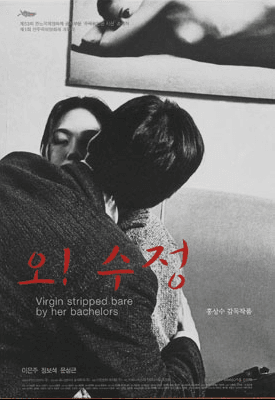
4. Hong Sang-soo Early Films: Virgin Stripped Bare by Her Bachelors (2000)
Directorial Intent: Memory and Subjectivity
At the turn of the millennium, Hong’s Virgin Stripped Bare by Her Bachelors represents the apex of his 90s experimentation. Divided into chapters, it recounts the same romantic encounter from multiple perspectives, highlighting the inherent unreliability of memory.
Black-and-White Cinematography: Emotional Precision
The monochrome palette is a deliberate artistic choice. By removing color, every gesture, glance, and pause gains weight. Emotional distance becomes tangible; audiences must interpret subtle cues, deepening their engagement with character psychology and the film’s nuanced social dynamics.
Audience and Critical Response
Audiences were captivated by the intellectual and emotional sophistication of the film, while critics praised its structural innovation. The chapter format interrogates causality and intention, perfecting the repetition-and-variation formula that defines Hong Sang-soo early films.
5. The Aesthetic Signature: Camera, Dialogue, and Silence
Long Takes and Static Frames
Hong’s early films are defined by stillness and observation. Long, static frames focus attention on details—the disorder of apartments, awkward gestures, hesitant movements—allowing audiences to notice the psychology within the ordinary.
Dialogue as Action
In Hong’s universe, conversations drive the narrative. Characters circle around truths, lie to themselves and each other, and reveal inner contradictions through subtle dialogue. These exchanges become the engine of the plot, emphasizing intellectual and emotional depth over spectacle.
The Ritual of Alcohol
Soju frequently appears as a motif. Characters’ true thoughts emerge while drinking, making these moments psychological crucibles. Humor, vulnerability, and social tension coalesce around these quiet, intimate gatherings.
The Anatomy of the Zoom: Why Hong Sang-soo Early Films Reject Professionalism
As a creator who values minimalist aesthetics, I find Hong Sang-soo’s use of the “Zoom” to be one of the most radical acts in contemporary cinema. In his early works, the camera is often static, but when it moves, it does so with a sudden, almost clumsy zoom.
- The “Handmade” Gaze: This is a deliberate rejection of the “Airy and Polished” look of commercial Hallyu. By using a zoom that feels like a home video, Hong creates a sense of “Transparent Sophistication.” It forces the audience to look closer at a character’s micro-expression exactly when they are lying or feeling embarrassed.
- Breaking the Fourth Wall: The zoom functions as a biological extension of the director’s curiosity. It tells the viewer, “Look at this specific moment of human awkwardness.” This technique is a primary reason why Hong Sang-soo early films feel so intimate—they don’t hide the camera; they use it as a witness to our shared imperfections.
The Anthropology of the Soju Table: Alcohol as a Truth Serum
In Hong Sang-soo early films, the dining table is not just a setting; it is a psychological battlefield.
- The Ritual of Green Bottles: Unlike the glamorous cocktail parties in Hollywood, Hong’s characters drink Soju in cramped, “Minimalist” bars. Here, the “Jeong” (connection) and “Han” (sorrow) of the characters are stripped bare.
- The “Liquid” Dialogue: Notice how the rhythm of the conversation changes as the bottles empty. Characters who were polite and distant become aggressively honest or pathetically vulnerable. This “Sobering Realism” through intoxication is a recurring motif that allows Hong to explore the gap between our public personas and our private desires. It is in these scenes that the social and historical significance of his work becomes most apparent—showing the raw underbelly of the polite Korean society.
The “Rhyme and Reason” of Repetition: Structure as Meaning
To a beginner, Hong Sang-soo early films might seem like they “nothing happens.” However, the genius lies in the Repetition and Variation.
- Mirroring Scenes: In Virgin Stripped Bare by Her Bachelors, we see the same date twice. One version might feel romantic, while the other feels cold and manipulative. This isn’t just a gimmick; it’s a philosophical statement on the unreliability of memory.
- The Aesthetic of the “Loop”: Life doesn’t have a grand climax; it has cycles. By showing characters making the same mistakes in different cities, Hong suggests that we are all trapped in our own patterns. This “Quiet Intensity” of everyday life is what makes his 90s works so hauntingly relatable even in 2026.
[Image showing the structural parallels between Part 1 and Part 2 of a Hong film]
The Minimalist Set: Why “Empty Spaces” Tell the Story
As a photographer, I am often struck by the “Visual Silence” in Hong’s early mise-en-scène.
- The Unadorned Frame: His sets are often messy, cramped, and unremarkable. There are no expensive props or dramatic lighting. This “Airy yet Heavy” realism forces the audience to focus entirely on the human interaction.
- The Power of the Static Frame: By refusing to move the camera, Hong creates a “Pressure Cooker” effect. The characters have nowhere to hide. They must inhabit the space and deal with the awkwardness of being seen. This is the breathtaking mastery of realism that solidifies his status as a global auteur.
6. The Philosophical Soul of Hong Sang-soo Early Films
Hong Sang-soo early films are mirrors of life itself. Unlike Hollywood films, which seek closure, Hong poses questions:
- Why do humans repeat mistakes?
- Why is true connection difficult?
- Is memory merely a self-serving story?
Through long takes and observational framing, viewers are invited to become witnesses, not spectators. The films provoke reflection, empathy, and recognition of our shared awkwardness, loneliness, and persistence.
7. Pro Tips for Your Hong Sang-soo Marathon
- Embrace Awkwardness: Silences, pauses, and mundane routines carry emotional weight.
- Notice Repetition: Recurrent gestures, conversations, and settings reveal subtle narrative structures.
- Pay Attention to Alcohol Scenes: Characters’ truths surface during drinking, revealing hidden tensions.
- Compare Perspectives: Memory and subjectivity are central—study differing viewpoints.
- Appreciate Stillness: The static camera invites intimacy and observation, rewarding patience.
8. Global Influence: From Seoul to Cannes
Auteur Recognition
By the late 1990s, Hong was compared to French New Wave directors like Éric Rohmer, yet his style remained distinctly Korean, reflecting post-IMF social anxieties. Festivals from Rotterdam to Cannes celebrated his breathtaking mastery of minimalism and humanist observation, solidifying his status as a Korean auteur.
Resonance with Contemporary Audiences
Today, Hong’s focus on human awkwardness and repetition resonates strongly with younger audiences navigating curated social identities online. The films’ quiet observation of human imperfection feels more relevant than ever, reminding viewers that beneath polished exteriors, we all struggle to connect meaningfully.
The Humanist Gaze: Why Hong Sang-soo Early Films Resonate in 2026
The Aesthetics of Imperfection: A Minimalist Rebellion
In an era dominated by high-budget blockbusters and AI-generated perfection, the Hong Sang-soo early films offer a refreshing “Minimalist Rebellion.” As a creator who focuses on minimalist aesthetics and the beauty of quiet things, I find Hong’s refusal to “beautify” reality to be his greatest strength.
His early works don’t use dramatic music to tell you how to feel. Instead, they use “Visual Silence.” By stripping away the layers of cinematic artifice, Hong allows the raw, unpolished truth of human nature to surface. This breathtaking mastery of realism is what makes his films feel like a “Boutique Experience” rather than a mass-produced product. For the modern viewer, this transparency is a form of “Transparent Sophistication”—a realization that there is profound beauty in our shared awkwardness and failed attempts at connection.
The “Jeong” of the Ordinary: Finding Connection in the Gaps
To understand the social and historical significance of Hong Sang-soo early films, one must look at how he portrays the Korean concept of “Jeong” (invisible bond). In commercial Hallyu, Jeong is often shown through grand sacrifices. However, in Hong’s world, Jeong exists in the “Gaps”—the long silences between a man and a woman at a cafe, or the shared breath after a heavy drinking session.
His films suggest that true connection doesn’t happen during big life events; it happens in the “Airy” moments of everyday banality. By observing these small interactions with clinical yet humanist precision, Hong teaches us that the meaning of Jeong is found in the patience to witness another person’s flaws. This is why his early 90s works continue to captivate audiences globally; they offer a mirror to our own lonely urban lives, validating our struggles through humanist observation.
The “Slow Cinema” Movement: A Digital Detox for the Soul
In 2026, where our attention spans are constantly fragmented by social media, watching Hong Sang-soo early films acts as a “Digital Detox.”
- The Power of the Static Frame: By forcing the audience to sit with a single, unmoving shot for minutes, Hong creates a space for “Mindful Observation.” You begin to notice the dust in the sunlight, the slight tremor in a character’s hand, and the shifting energy in the room.
- Intimacy through Observation: This technique creates an “Airy yet Heavy” atmosphere that rewards patience. It isn’t just about watching a story; it’s about inhabiting a space with the characters. For cinephiles seeking intellectual and emotional depth, this stillness is a rare gift that allows for true self-reflection.
The Legacy of the “Ordinary Masterpiece”
Ultimately, the genius of Hong Sang-soo early films lies in their ability to turn the “Mundane” into a “Masterpiece.” He proved that you don’t need a massive budget or a complex plot to create a world-class work of art. All you need is a camera, a few honest actors, and the courage to look at life without filters.
For anyone exploring Korean cinema or modern art, these films remain unmatched milestones. they remind us that the most profound stories are the ones we live every day—the ones filled with awkward pauses, repetitive mistakes, and fleeting moments of genuine grace. As we conclude this guide, remember that Hong Sang-soo doesn’t just show us a film; he shows us ourselves.
9. Conclusion: The Enduring Legacy
Why do Hong Sang-soo early films continue to captivate audiences globally? They offer a raw, unfiltered look at human experience, showing that life consists of repetition, small failures, and fleeting connections. Through awkward silences, subtle gestures, and psychological insight, Hong reshaped cinematic storytelling, creating works that are simultaneously intimate, philosophical, and universally relatable.
For anyone exploring Korean cinema, modern art, or reflective storytelling, these early films are essential viewing—a foundation for understanding not only Hong Sang-soo’s career but the evolving emotional landscape of contemporary Korea. They remain unmatched milestones in world cinema, demonstrating that the genius of observation, patience, and honesty can transcend language, culture, and time.
If you enjoyed exploring the satirical world of Bong Joon-ho 1990s: The Most Powerful Genius Beginnings Ever, you must experience the raw realism of Hong Sang-soo’s early career.
For more detailed information on his early filmography and rare archival data, visit the official Hong Sang-soo KMDb Profile
Related Articles
- 10 Best Korean Movies – Must-watch masterpieces of Korean cinema.
- Parasite Review – Hidden symbols and social commentary explained
- 90s Korean Movie Culture – The creative revolution that started Hallyu
- The Unique Storytelling Style of Korean Films – 5 narrative techniques that define Korean cinema