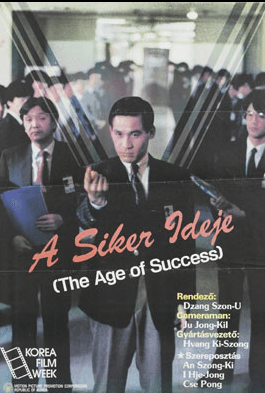
The Dark Side of The Age of Success (1988)
The Age of Success (1988), directed by Jang Sun-woo, is a sharp satire of capitalist greed. While many remember 1988 for the Seoul Olympics, it also marked the start of fierce corporate competition. At Dear, From K, we revisit this masterpiece to understand the roots of “Hell Joseon” and the frantic energy of 80s office culture. The Age of Success (1988) remains a vital archive of South Korea’s social transformation.
The Historical Landscape of The Age of Success
In the late 1980s, South Korea transformed into a consumer powerhouse. This era created a new social hierarchy led by the “Salaryman.”
- Corporate Warfare: The film mirrors the real-life “Sweetener War” between massive Korean conglomerates. It shows how corporate loyalty swallowed personal identity.
- Upward Mobility: The protagonist, Kim Pan-chok, represents the obsession with success. His name is a pun on “Sales Promotion” (Panchok). This signals that his job defines his entire existence.
Detailed Analysis: A Grotesque Masterpiece
Director Jang Sun-woo intended to strip away the glamour of the economic boom. He used a grotesque and surreal visual style to expose moral decay.
- The Vision: Jang wanted to show how capitalism turns humans into mechanical tools.
- The Style: He used fast-paced, MTV-style editing. This was revolutionary for 1988. The sickly colors of the office reflect the internal rot of the characters. Jang successfully turned a corporate drama into a dark, visual nightmare.
Trivia Behind The Age of Success and Ahn Sung-ki
- The “Nation’s Actor” Reimagined: Ahn Sung-ki practiced his intense “sales speeches” for weeks to achieve the perfect, terrifying rhythm. Director Jang designed the character’s mechanical movements to show how capitalism turns humans into tools.
- A Bold Critique of Capitalism: At the time of its release, the film was a massive risk. Criticizing the corporate dream during a period of economic celebration was seen as rebellious. However, it resonated deeply with the youth who were starting to feel the pressure of the rat race.
Critical Reception: Shocking the Nation
The film received a polarizing yet passionate response upon its release.
- Ahn Sung-ki’s Transformation: Known as the “Nation’s Actor,” Ahn Sung-ki shocked audiences. He shed his “nice guy” image to play a cold, manipulative salesman. Critics praised his terrifying, machine-like rhythm.
- Box Office Success: Despite its cynical tone, the film resonated with the public. It attracted over 150,000 viewers in Seoul alone. This was a significant achievement for a high-concept satire in the late 80s.
Historical Impact: The Blueprint for K-Noir
The Age of Success left a lasting mark on Korean cinema history.
- Breaking Taboos: It was one of the first films to openly criticize the “Korean Dream” during a period of national celebration.
- Influence: Its sharp social commentary laid the foundation for modern K-Dramas and films about class struggle. Works like Parasite and Squid Game share the cynical DNA first explored by Jang Sun-woo in 1988. It proved that cinema could be a powerful tool for social resistance.
Conclusion: The Eternal Relevance of Success
The Age of Success (1988) remains relevant today. As we look through the Dear, From K archive, we see how 80s struggles shaped modern corporate intrigue. It is a historical document of South Korea’s soul. If you want to understand 80s Korea, this film is the perfect visual archive.
If you want to see how the revolution of 1988 began, don’t miss our previous archive on Chilsu and Mansu (1988). It captures the raw spirit of the same era.
For more technical data and filmography, visit the Korean Movie Database (KMDb).
Watch the Full Movie: You can stream the complete version of https://www.youtube.com/watch?v=3DLNGgfbXfo for free on the official Korean Classic Film YouTube channel, curated by the Korean Movie Database
Related Articles