Introduction: The Emotional Core of 90s Korean Movie Music
Have you ever heard a melody that felt like a physical place? For many of us, 90s Korean Movie Music isn’t just a collection of songs. It is the sound of a specific rainy afternoon in Seoul. It is the hum of a desktop computer in a dark room. It is the “Quiet Intensity” of a heart learning to speak for the first time.
Long after the theater lights come up, these melodies linger. They stay with us—not as background noise, but as a living part of our history. In the 1990s, Korean cinema was finding its unique voice. That voice was deeply and unapologetically musical. This guide is a journey into the soul of 90s Korean Movie Music. It is a tribute to the era that birthed Hallyu. It taught the world how to feel the Korean “Han” (sorrow) and “Jeong” (affection). Each note reflected a heartbeat of change and a longing for connection in a rapidly shifting world.
The Cultural Landscape: Why 90s Korean Movie Music Changed Everything
1. Post-Censorship Freedom: The “386 Generation” and 90s Korean Movie Music
To understand 90s Korean Movie Music, we must look at the “386 Generation.” These were young filmmakers who grew up in the shadow of political struggle. When censorship finally lifted in the early 90s, they didn’t want to make grand political statements. Instead, they wanted to explore the small, fragile interior of the human heart.
These directors turned to Jazz, Rock, and Synth-pop to describe feelings that had been silenced for decades. For 90s Korean Movie Music, this meant absolute artistic freedom. Composers began experimenting with global genres to mirror the internal complexities of their characters. It was the sound of a country finally breathing freely. This newfound liberty allowed for a “Symphonic Maturity” that defined the entire decade.
2. Blue Screens and Blinking Cursors: The Digital Longing
Before the instant gratification of social media, there was the “PC Network” era. Services like Chollian and Hitel were the digital soul of the 90s. We fell in love with people we had never seen. We waited for minutes for a single image to load. This “Digital Longing” fundamentally defined the sound of 90s Korean Movie Music.
It was a sound of waiting. It was a sound of hoping. It was the emotional bridge between two glowing monitors in a vast, dark city. Every piano note felt like a typed letter sent into the dark void. This era of “Anonymous Romance” created a unique aesthetic. The music acted as the only physical evidence of these invisible connections. It was intimate, rhythmic, and deeply nostalgic.
3. From Prosperity to the IMF Crisis: The Soul of 90s Korean Movie Music
The decade began with the bright neon lights of economic success. South Korea was emerging as a modern power. The music was urban and sophisticated, reflecting a growing middle class. However, in late 1997, the IMF Crisis hit like a sudden, brutal winter.
This collapse broke the national spirit, but it made the music deeper. 90s Korean Movie Music shifted from outward confidence to inward reflection. The soundtracks became more soulful and introspective. Music became a sanctuary for a nation in pain. It proved that beauty could still exist even when the world was falling apart. This emotional resilience is why 90s melodies feel so “thick” with meaning even today.
1. The Game Changer of 90s Korean Movie Music: “The Contact“
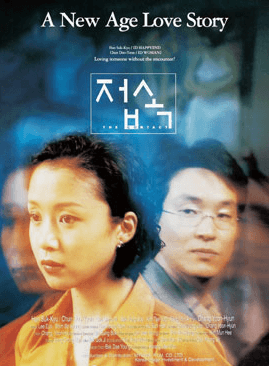
Historical Background: The Anonymity of 90s Korean Movie Music
The Contact was a social revolution disguised as a romance. It captured the loneliness of modern Seoul better than any film before it. In 1997, Korea was grappling with rapid urbanization. People felt like ghosts in a concrete machine. This film made that anonymity feel poetic. It told the story of two strangers who connect through music and text. It validated the feelings of thousands of lonely city dwellers who found solace in the digital blue light.
Director’s Intent: Curation in 90s Korean Movie Music
Director Chang Yoon-hyun did something genius for the era. He didn’t just use a score; he curated a “Compilation Soundtrack.” By choosing Sarah Vaughan’s “A Lover’s Concerto,” he gave Seoul a timeless quality. The light, rhythmic piano mimicked the sound of typing on a keyboard. He wanted the music to feel like a third character in the room. It was the first time 90s Korean Movie Music felt like a global language. It made the daily lives of Koreans feel cinematic and world-class.
Philosophical Deep-Dive: The Commercial Soul of 90s Korean Movie Music
The soundtrack sold 600,000 copies, proving OSTs could be standalone art. This success changed how producers viewed the power of sound. They realized a single song could define a film’s entire identity. In the world of 90s Korean Movie Music, this was the moment of commercial awakening. Philosophically, it represented the bridge between “High Art” and “Pop Culture.” It proved that a melody could be a bridge between a lonely individual and the vast world outside.
🎧 Listen on YouTube: Sarah Vaughan – A Lover’s Concerto
2. Emotional Vocals in 90s Korean Movie Music: “Christmas in August“
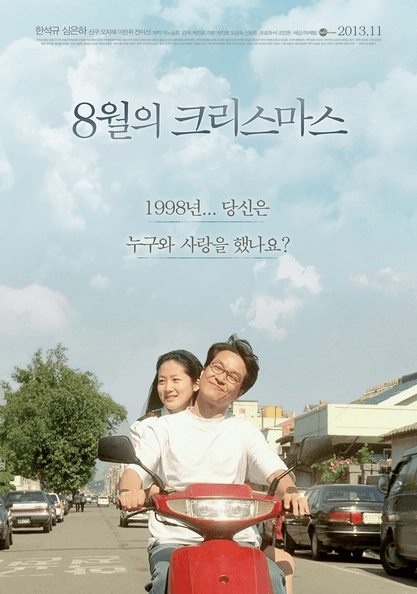
Minimalist Aesthetics: The Stillness of 90s Korean Movie Music
In a world that is always rushing, Christmas in August asks us to slow down. It is a story about a man who is dying with dignity. He accepts his fate with a quiet and heartbreaking grace. The music reflects this philosophy of absolute stillness. It does not beg for tears; it simply exists alongside the character. The cinematography and the music work in perfect harmony to capture the “transience of life.”
Director’s Intent: Authenticity in 90s Korean Movie Music
The decision to have actor Han Suk-kyu sing the title track was a masterstroke. He is not a professional singer, and that is why it works. You can hear his breath and the small tremors in his voice. In 90s Korean Movie Music, honesty was more valuable than vocal perfection. Director Hur Jin-ho wanted the audience to feel like they were eavesdropping on a private confession. His voice feels like a letter written by hand, full of imperfections that make it beautiful.
Philosophical Deep-Dive: The Sound of “Jeong” in 90s Korean Movie Music
Critics praised the film for its emotional restraint. It didn’t force the audience to cry with loud, dramatic violins. Instead, it used a gentle acoustic guitar and soft piano. This “Minimalist Aesthetic” became a trademark of the 1990s. It taught us that the most powerful emotions hide in the silence. This is the true definition of “Jeong”—a deep, sticky affection that doesn’t need words. Within 90s Korean Movie Music, this film represents the “Purity of Memory.”
🎧 Listen on YouTube: Christmas in August
3. The Youthful Energy of 90s Korean Movie Music: “Beat”
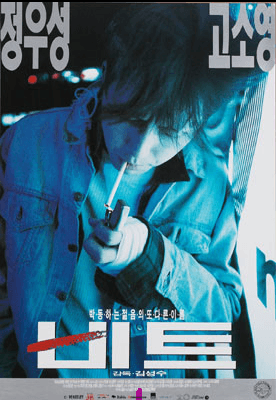
X-Generation Rebellion: The Energy of 90s Korean Movie Music
If you were a teenager in 1997, Beat was your cultural Bible. It captured the raw and messy energy of a generation that didn’t fit in. The image of a youth on a motorcycle with eyes closed was iconic. That image was fueled entirely by the aggressive yet melodic soundtrack. It represented the “X-Generation” of South Korea—young people who felt trapped between old traditions and a cold, modern future.
Director’s Intent: Sonic Contrast in 90s Korean Movie Music
The soundtrack shifts from aggressive rock to heartbreaking ballads like “Love.” This variety mirrored the unstable life of the 90s youth. One moment you are on top of the world; the next you are crashing. Director Kim Sung-su wanted the music to feel like a racing heartbeat. He chose tracks that growled during action and wept during quiet moments. It remains the ultimate “Youth Noir” in the history of 90s Korean Movie Music.
Philosophical Deep-Dive: Iconography and 90s Korean Movie Music
This film proved that music could create national cultural icons. It wasn’t just a movie; it was a fashion statement and a lifestyle. It showed the world that Korean youth had their own unique rage. This laid the groundwork for the “K-Cool” aesthetic we see today. Philosophically, it explored the “futility of rebellion.” The music suggests that even though the characters are doomed, their journey is beautiful because of its intensity.
🎧 Listen on YouTube: Beat OST
4. The Melancholy of the City: “No Sun” (1999)
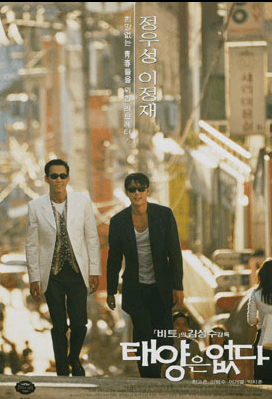
The Closing Era: Evolution of 90s Korean Movie Music
As the 90s ended, the music became more complex and ironic. No Sun (City of the Rising Sun) tells a story of two friends trying to survive in a big city. They are dreamers who constantly fail, yet they never stop trying. The music captures this bittersweet struggle. It reflects the atmosphere of 1999—a mix of Y2K anxiety and a desperate hope for the new millennium.
Director’s Intent: The Power of Contrast in 90s Korean Movie Music
Director Kim Sung-su used the happy song “Build Me Up Buttercup” during a dark scene of struggle. This irony was groundbreaking for the time. By using a cheerful melody for a sad life, he created a deeper emotion. It showed that 90s Korean Movie Music was growing up. It was no longer just reflecting a scene; it was commenting on the cruelty and beauty of life simultaneously.
Philosophical Deep-Dive: Resilience in 90s Korean Movie Music
The late 90s was a time of immense social pressure after the financial crisis. This film used music to highlight the resilience of the human spirit. It taught us that we can dance even when we are losing. This philosophical depth is why 90s Korean Movie Music remains relevant in 2026. It provides a sanctuary for those who are still struggling. It suggests that survival itself is a form of victory.
🎧 Listen on YouTube: No Sun OST
Why 90s Korean Movie Music Still Matters in The Legacy: How 90s Korean Movie Music Birthed Hallyu
The Technical Evolution: From Synth to Symphony
In the early 90s, soundtracks were often produced with limited budgets and synthesizers. By the end of the decade, the industry had matured. Orchestral arrangements and high-quality recording became the standard. This technical leap allowed 90s Korean Movie Music to compete on the global stage. It created a “Premium” sound that defined the early days of the Korean Wave.
Cultural Hybridity: Mixing the East and the West
The 90s was a laboratory for cultural mixing. Composers learned to blend Western pop structures with the Korean soul. They combined Jazz harmonies with the emotional depth of “Han.” This hybridity is the secret behind Hallyu’s success. It created music that felt familiar to global audiences but had a “secret flavor” they couldn’t find anywhere else. 90s Korean Movie Music was the blueprint for modern K-Drama OSTs.
The Critic’s Retrospective: A Golden Age of Sincerity
Critics often look back at the 90s as a “Golden Age of Sincerity.” Before the industry became hyper-commercialized, there was a raw honesty in the music. It wasn’t about “clicks” or “viral trends.” It was about the truth of the human experience. Film historians credit this era with establishing the “Creative Identity” of Korean cinema.
Why 90s Korean Movie Music Still Matters in 2026
A Sanctuary for Contemplation
In our era of short-form videos and constant digital noise, 90s Korean Movie Music offers a “Contemplative Space.” These songs don’t tell you how to feel. They give you a room to breathe and remember your own story. They are an invitation to slow down and listen to the rhythms of your own heart. In a world of fast-paced content, these melodies are a necessary slow-down.
The Purity of Analogue Emotion
There is a “Grain” to these old soundtracks. They feel like a physical object—a well-worn book or a favorite sweater. This analogue warmth is something digital perfection can never truly replicate. It is the sound of humans making art for other humans. This “imperfect beauty” is what people are searching for in 2026. It reminds us of a world that was still small enough to feel intimate.
The Foundation of the Modern K-Aesthetic
Every modern K-Drama or K-Pop ballad owes a debt to the 90s. The way a melody swells at just the right moment, or the way a singer breathes before the chorus—these techniques were perfected in the 90s. To love modern Hallyu is to, unconsciously, love 90s Korean Movie Music. It is the DNA of the “K-Vibe” that has conquered the world.
Conclusion: Melodies That Follow You Home
90s Korean Movie Music is more than just nostalgia. It is a testament to a time when we weren’t afraid to be lonely, weren’t afraid to be slow, and weren’t afraid to be real. These films and their sounds teach us that through the darkness of “Han,” we can always find the warmth of “Jeong.”
From the dark rooms of the 1990s to the global stage of the Oscars, Chungmuro has proved that cinema is a powerful tool for reflection. As long as we have stories that refuse to be simplified, the legacy of Korean filmmaking will continue to illuminate the silver screen. Some melodies don’t just play; they follow you home. They stay with you, quietly reminding you of who you were and who you might still become. The soul of the 90s is not dead; it is just waiting for someone to press “Play.”
Related Articles
- 10 Best Korean Movies – Must-watch masterpieces of Korean cinema.
- Parasite Review – Hidden symbols and social commentary explained
- 90s Korean Movie Culture – The creative revolution that started Hallyu
- The Unique Storytelling Style of Korean Films: – 5 narrative techniques that define Korean cinema
Source: Historical data via Korean Movie Database (KMDb)