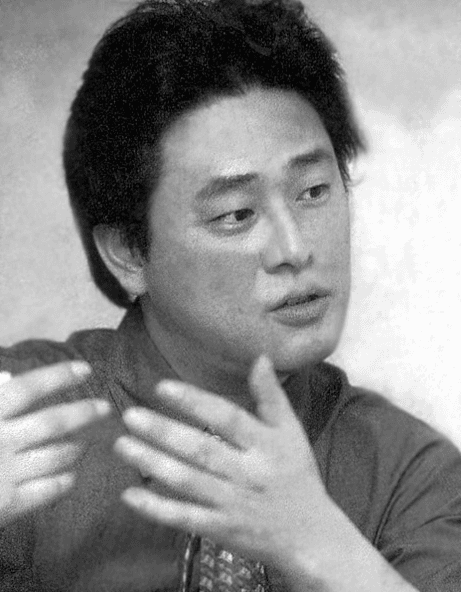
The Raw Ambition of Park Chan-wook 1990s: From Early Struggle to Global Mastery
Park Chan-wook’s 1990s mark one of the most turbulent and formative periods in modern cinema. During the 1990s, Park Chan-wook navigated a rapidly transforming Seoul, facing repeated failures and near invisibility in the mainstream film industry. This occurred long before he achieved global recognition with Oldboy and The Handmaiden. This harsh and overlooked decade became the crucible that forged his distinctive cinematic voice and laid the foundation for the emergence of the Korean New Wave.
To understand the modern “K-Aesthetic,” one must examine this quiet struggle. Every rejection and sleepless night of the 1990s shaped his vision for global cinema. He was not merely directing films—he was exploring human darkness with meticulous precision.
South Korea in the 1990s: A Fractured Cultural Landscape
Park Chan-wook’s 1990s experience was deeply tied to radical social upheaval. As South Korea transitioned from military rule to democracy, the film industry moved past decades of strict censorship. This “Creative Explosion” allowed filmmakers to explore previously taboo themes such as moral ambiguity and existential despair.
Seoul in the 90s served as a city of extreme contrasts. Neon signs of newfound capitalism emerged over crumbling, gray neighborhoods. For Park, these streets were more than mere locations—they functioned as living, breathing characters. His frequent walks through the narrow alleys of Jongno and Euljiro allowed him to observe a society on the brink of transformation with a keen, almost cynical eye. Such lived experiences later shaped the “Quiet Intensity” that would define his world-class cinematic style.
The 386 Generation: Defining the Cinematic Context
Park was a central figure of the 386 Generation, a group born in the 1960s who were politically active during the 1980s. Entering the film industry in the 1990s, this generation brought a cynical and intellectual edge to storytelling. They consciously rejected the simple moralism of previous eras.
Narrative Weight: Every frame carried the physical weight of thousands of hours spent in underground cinemas. This intellectual training allowed him to absorb the technical DNA of cinema in spaces like the ‘Yellow Sea’ cinematheque.
Genre Blending: Unlike his predecessors, Park successfully merged European cinematic knowledge with visceral, “pulp-noir” storytelling. This created a unique tension between high art and gritty violence.
Cinephile Rituals: Rather than simply watching movies, he dissected them with academic rigor. By studying Hitchcock’s suspense and Bresson’s minimalism, he learned to engineer emotional impact with the precision of a surgeon.
Why Did His Early Debuts Fail? The Moon Is… the Sun’s Dream (1992)
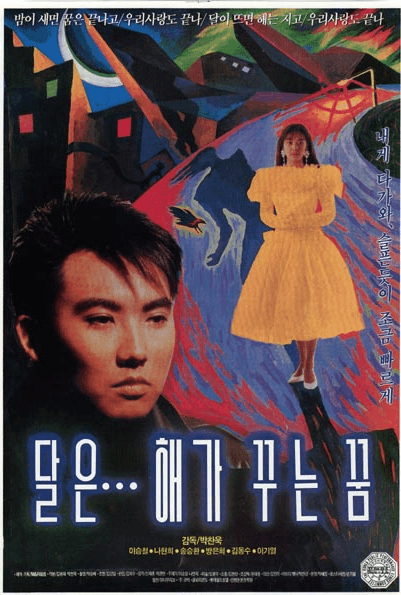
This film served as the professional entry point for the Park Chan-wook 1990s archives. While it remains a visually distinct noir, its release was met with significant public indifference.
Directorial Intent: Park sought to transplant the “Hard-boiled Noir” aesthetic into Korean urban spaces. By emphasizing high-contrast lighting and urban decay, he created a suffocating atmosphere. Meticulous framing was used to show characters trapped in their circumstances. Ultimately, his vision was to portray a gritty world where justice remained entirely absent.
Audience & Critical Response: Initially, the film was a commercial failure and was pulled from theaters within days. This left Park in a state of professional limbo. However, modern critics now recognize its audacity as the birth of stylized Korean noir. It proved that Korean cinema could be both genre-focused and intellectually demanding.
The Dark Comedy Experiment: “Trio” (1997)
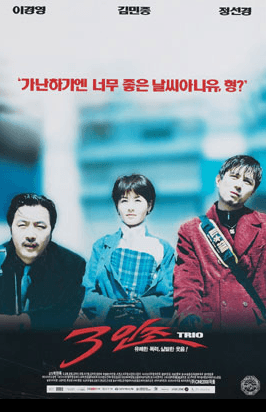
After a painful five-year hiatus, Park returned with Trio. This film is a cornerstone of the mid-Park Chan-wook 1990s aesthetic. He was determined to prove his artistic vision during this difficult production.
Audience & Critical Response: While it failed to find a mainstream audience, it gained a dedicated cult following. The film foreshadowed the dark wit and complex moral dilemmas of his future works. Through this project, he began to master the balance between shocking violence and deep human pathos. This was a crucial step toward his “Vengeance” themes.
Directorial Intent: In Trio, Park embraced chaos through a road movie structure. The messy and visually daring sequences were a deliberate rebellion against the polished, “safe” dramas of the time. By utilizing handheld cameras and frantic editing, he effectively mirrored the internal instability of his characters.
Historical Significance & the IMF Crisis: Released just before the 1997 IMF Crisis, Trio captured national anxiety. The streets of Seoul were filled with hurried pedestrians and desperate faces. It became a mirror for the frustration of the marginalized. The film functioned as a cinematic scream in a crowded room.
The Hidden Critic Years of Park Chan-wook 1990s
One of the most defining aspects of the Park Chan-wook 1990s period was his prolific work as a critic. He needed to survive financial droughts; thus, Park wrote sharp reviews for various magazines. He often used pseudonyms to keep his identity hidden from the industry.
These years functioned as his true “training ground.” By dissecting the invisible rules of storytelling in writing, he learned how to manipulate tension in practice. He studied the use of space in Hitchcock and the power of silence in Bresson. This academic rigor allowed him to transform from a “failed director” into a “master architect.” This period of solitary intellectual labor is the hidden engine behind the perfection of The Handmaiden. He wasn’t just waiting; he was sharpening his blade.
The “Cinephile-Critic” Identity: Survival Through the Pen
Before he mastered the camera, Park Chan-wook mastered the word. The most fascinating aspect of the Park Chan-wook 1990s era is his dual identity as a failed filmmaker and a feared critic. During the long gaps between his debut The Moon Is… the Sun’s Dream (1992) and Trio (1997), Park became a prolific writer.
He didn’t just write reviews to pay the bills; he used the page as a laboratory. By dissecting the “logic of suspense” in Alfred Hitchcock’s works and the “theology of the image” in Robert Bresson’s films, he performed a slow-motion autopsy on cinema itself. This academic rigor allowed him to develop a “mathematical precision” in his storytelling. While his peers focused on raw emotion, Park learned how to engineer a scene’s emotional impact by calculating the exact angle of a shadow or the duration of a silence. This intellectual labor during the 1990s is exactly why his later works, like Oldboy, feel so structurally bulletproof.
The “Guerilla” Aesthetic: Finding Beauty in Urban Decay
In the mid-1990s, Seoul was a city of “compressed growth,” where 500 years of history collided with hyper-modernity. Park utilized this friction to create his early visual language.
- The Hard-boiled Seoul: In his early works, Park treated the city not as a backdrop, but as a predatory entity. He focused on the “dampness” of the underground markets and the “clinical coldness” of the new office buildings.
- The 35mm Struggle: Operating on shoestring budgets, Park had to make every frame count. This scarcity forced him to prioritize meticulous framing over expensive special effects. He learned that a well-placed close-up of a trembling hand could be more violent than a hundred explosions. This “minimalist violence” became a cornerstone of his world-class aesthetic.
The Moral Gray Zone: Beyond Good and Evil
The Park Chan-wook 1990s archives reveal a deep obsession with the breakdown of traditional morality. South Korea was moving away from the black-and-white political narratives of the 1980s, and Park was the first to embrace the “Gray Zone.”
- The Protagonist as a Loser: Unlike the heroic figures of 80s cinema, Park’s 90s characters were often petty criminals, failed dreamers, or social outcasts. He explored the idea that “evil” is often born from desperation and boredom rather than pure malice.
- The Irony of Fate: Park began experimenting with the concept of “Tragic Irony”—where a character’s best intentions lead to their ultimate destruction. This thematic thread would later reach its zenith in the Vengeance Trilogy.
This obsession with moral ambiguity was reinforced during his time at the ‘Yellow Sea’ Cinematheque, where he studied international cinema and experimented with narrative form.
The “Yellow Sea” Cinematheque: An Underground Education
To understand the technical DNA of Park Chan-wook, one must visualize the smoky, cramped rooms of the 1990s cinematheques in Seoul. This was Park’s true film school.
- Global Influence: While Hollywood dominated the local box office, Park and his colleagues were absorbing the works of the French New Wave, Italian Neorealism, and Hong Kong Noir.
- Subversive Editing: He began to favor “clashing” edits—cutting from a moment of extreme beauty to a moment of grotesque violence. This tonal whiplash became his signature, keeping the audience in a state of constant, “airy yet heavy” anxiety.
The Financial Ghost: Living Through the 1997 IMF Crisis
The end of the Park Chan-wook 1990s journey coincides with the 1997 IMF Crisis, a national trauma that redefined the Korean psyche.
- A Cinema of Anxiety: The sudden economic collapse validated Park’s cynical worldview. The “unstable streets” he had filmed for years were now filled with a genuine, national despair.
- The Pivot to JSA: This climate of tension provided the perfect backdrop for Joint Security Area (2000). He took the technical experimentation of his “failed” 90s films and applied it to a story of national division. The result was a masterpiece that balanced commercial appeal with high-art precision.
The Evolution of the “Vengeance” Motif
While the world associates Park with revenge due to his 2000s films, the seeds were sown in the 1990s.
- The Futility of Action: In Trio, he explored characters who strike out at the world because they don’t know who to blame for their misery.
- The Physicality of Guilt: He started using the camera to look “inside” the characters’ guilt, often using extreme wide shots to show how small and insignificant they were compared to the cold, modern architecture of Seoul.
Conclusion: The Master Architect of Shadows
The Park Chan-wook 1990s era proves that mastery is rarely an overnight phenomenon. It is built on a foundation of “melodies of failure.” For Park, the 1990s were a decade of invisible growth. He was a tree growing its roots deep into the dark soil of human experience, preparing for the moment he would finally break through the surface and shade the entire world of cinema. When we watch his modern hits today, we are witnessing the fruit of those long, silent years of struggle
Themes and Visual Language in Park Chan-wook 1990s
The archives of the Park Chan-wook 1990s contain the seeds of his global genius. We can identify three core pillars of his early style:
- Technical Experimentation: The industry transitioned to digital editing in the late 90s. Park was a pioneer in using these shifts. He used non-linear storytelling to enhance psychological tension. He experimented with sound design to create a sense of unease.
- Visual Language: His early noir lighting laid the groundwork for future collaborations. He later worked with world-class cinematographers like Chung Chung-hoon. His use of the color green and deep shadows started here.
- Thematic Obsessions: Long before Oldboy, Park explored themes of guilt and revenge, delving into taboo desires and the moral ambiguity of human nature. He was fascinated by the idea that no one is ever truly innocent.
Transition to Success: Joint Security Area (2000)
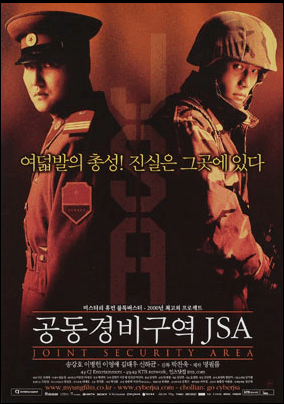
The struggle of the Park Chan-wook 1990s culminated in Joint Security Area (JSA) in 2000. This film changed everything for his career trajectory. Every lesson from his 90s failures was fully realized in this breakthrough. He mastered tension, framing, and character-driven narrative.
He finally reached the masses without losing his artistic soul. Early failures were not setbacks; instead, they were the essential, painful training grounds for a master. He learned how to communicate complex ideas through popular genres. From the ashes of the 1990s, a global legend emerged.
Final Thoughts: Why the Park Chan-wook 1990s Journey Matters
The Park Chan-wook 1990s era is essential for understanding the roots of Hallyu. These films reveal a director shaped by isolation and relentless ambition. They are profoundly human works, full of frustration but executed with cold precision.
Exploring the Park Chan-wook 1990s archives is more than a history lesson. It is a journey into the mind of a master. He turned his early “melodies of failure” into a great cinematic symphony. It reveals that long periods of silence and failure are often the hidden architecture behind cinematic mastery. For any aspiring creator, his story remains a beacon of hope.
Resources & Further Reading: > For the complete filmography and archival records of this era, visit the official Park Chan-wook KMDb Profile.
Related Articles
- 10 Best Korean Movies – Must-watch masterpieces of Korean cinema.
- Parasite Review – Hidden symbols and social commentary explained
- 90s Korean Movie Culture – The creative revolution that started Hallyu
- The Unique Storytelling Style of Korean Films: – 5 narrative techniques that define Korean cinema