The Man Who Measures the Air
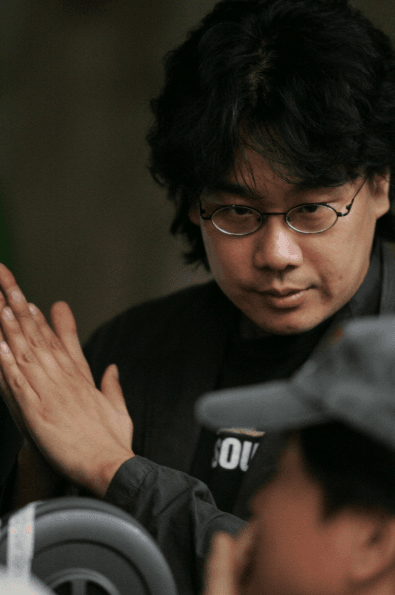
Beyond the Screen: The Sensory World of Director Bong Joon-ho
When we talk about South Korean cinema, one name stands above all: Director Bong Joon-ho. Within the industry, colleagues and critics call him “Bong-tail”—a nickname that blends his name with his legendary obsession for detail. While most directors focus on the actors, Director Bong Joon-ho focuses on the “vibe” of the air. Why did he spend thousands of dollars on a trash can? Today, we reveal the bizarre and hidden secrets of his filmmaking that even hardcore fans might not know.
The $2,300 Trash Can: Why “Parasite” Felt So Real
One of the most bizarre details in Parasite is the trash can in the Park family’s kitchen. Bong Joon-ho insisted on a specific German-made trash can that cost over $2,300 (approx. 2.5 million KRW).
- The Secret: The production team thought it was crazy. But Bong argued, “A family that rich wouldn’t have a trash can that smells or makes noise when it opens.”
- The Result: Even though the camera never zoomed in on it, that one prop created the “invisible atmosphere” of extreme wealth that made the audience feel the class divide subconsciously.
The Sociology of Props: How Director Bong Joon-ho Maps Class
Bong’s obsession isn’t just a whim; it is a clinical dissection of class. In Buddhist Philosophy, we often discuss the “illusion of form,” but Director Bong Joon-ho uses form to reveal the brutal reality of social stratification. The trash can represents a world where wealth sanitizes even the most mundane waste. In contrast, the Kim family’s semi-basement is a place where the “smell” of poverty—the damp, fungal air—is a constant guest. Bong understands that class is about sensory boundaries.
The Atmospheric Mastery of Director Bong Joon-ho
The “Rain Obsession” in Memories of Murder
In his masterpiece Memories of Murder, Director Bong Joon-ho refused to use “movie rain” from water trucks. He believed the droplets from a hose looked “fake” and didn’t capture the specific humidity of the 1980s. The entire crew waited for weeks just for the perfect natural rainfall. This obsession with “natural light and texture” is what makes his films feel like a documentary of a nightmare.
The Humidity of a Forgotten Era: A Director Bong Joon-ho Signature
The rain in this film is more than weather; it is a symbol of the suffocating political climate of 1980s South Korea. Director Bong Joon-ho waited for natural rain to capture the moral dampness of a military dictatorship. When the rain falls, it doesn’t wash away sins; it turns the soil into mud, swallowing evidence. This “historical texture” is what elevates his work from a simple thriller to a national monument of collective trauma.
The Bizarre Storyboard Secret: No Improvisation allowed
Most directors allow actors to move freely, but not Bong. He is famous for his “Shrek” style storyboarding.
- The Untold Story: Bong Joon-ho draws every single frame by hand, including where a glass of water should sit and exactly how many centimeters an actor should tilt their head.
- The Actor’s “Torture”: On the set of Snowpiercer, Director Bong Joon-ho’s precision stunned Chris Evans. Bong told him exactly where to step because “the CG team already built the world based on my drawing.” There was zero room for error. This is why his movies have zero “wasted” shots.
The Architecture of Fate: Why Every Centimeter Matters
Critics often debate whether Bong’s rigid storyboarding stifles creativity. On the contrary, it creates a “Clockwork Universe.” In Snowpiercer, the train acts as a linear prison. Director Bong Joon-ho controls the exact degree of an actor’s head tilt. This ensures that the set’s architecture dictates the destiny of every character.
This reflects a profound cinematic philosophy. We all move through economic, political, or social structures. These systems existed long before our arrival. The “Bong-tail” approach shows that in rigid systems, no movement is accidental. Every step toward the front of the train is a calculated defiance. It is a rebellion against a pre-drawn map.
Watch the Interview: Bong Joon Ho on Writing Parasite
Is Bong-tail a Genius or a Perfectionist?
These Director Bong Joon-ho details aren’t just for show. Director Bong Joon-ho uses these details to manipulate the viewer’s emotions. By controlling every pixel, he ensures that the audience feels exactly what he wants them to feel—whether it’s the “smell” of a basement or the “chill” of a rainy night.
The “Human Smell” in a Digital Age: Why Bong Joon-ho Matters Now
Director Bong Joon-ho’s cinema offers a defiant return to the “Human Smell” (인간적인 냄새). We live in an era where AI-generated imagery and flawless CGI dominate the box office. Yet, technology has its limits.
AI can calculate the perfect lighting. However, it cannot understand a creator’s soul. It fails to grasp why the sound of a lid closing on a $2,300 trash can matters. To Director Bong Joon-ho, that specific sound is not a detail; it is the heartbeat of the story.
Director Bong Joon-ho’s films excel because they grow from the Aesthetics of Endurance. His characters suffer, sweat, and struggle. We see this whether a monster emerges from the Han River or a father hides in a basement. These moments feel visceral and agonizingly real. This groundedness is his greatest gift to global cinema. He doesn’t just make movies; he archives the invisible vibrations of the human condition.
As we look back at his filmography, we realize that “Bong-tail” is not about being a perfectionist. It is about being a Humanist. It is about the belief that if you look closely enough at the moss on a stone or the rain on a window, you will find the entire history of the world.
The Anatomy of a Gaze: A Deeper Dive into Bong-tail’s Universe
The Socio-Political Ghost in the Machine
To understand Director Bong Joon-ho, one must look past the “Bong-tail” label and see him as a social historian. Critics often label his films as “genre-bending,” yet Director Bong Joon-ho more accurately maps human anxiety through his work. For example, in The Host (2006), the monster isn’t just a byproduct of chemical waste; it is a manifestation of South Korea’s complex relationship with foreign intervention and government incompetence.
The “Bong-tail” detail here isn’t the CGI of the creature, but the way the crowd reacts—the chaotic, messy, and often absurd nature of a public health crisis. This reflects the Aesthetics of Endurance we see in his protagonists; They are not superheroes. Instead, they are ordinary people fighting to survive within a system that fundamentally fails them. This grounded realism is what allows his films to resonate in a world where many feel like “semi-basement” inhabitants in their own lives.
The “Smell” of Class: A Sensory Revolution
In Parasite, the most devastating weapon is not a knife or a rock, but a smell. This is where Bong Joon-ho transcends traditional filmmaking. He managed to make the “invisible” visible. The “basement smell” (moist, old radish, the smell of people who ride the subway) is a recurring motif that triggers the film’s violent climax.
This sensory storytelling is a bridge to the Buddhist Philosophy of interconnectedness. In Bong’s world, no matter how high the Park family builds their mansion walls, the air—and the smells within it—escapes every barrier. This reality suggests that our social lives fundamentally intertwine. The luxury of the top floor rests directly upon the sewage of the basement. By focusing on the “human smell,” Bong forces the audience to confront the physical reality of inequality that we often choose to ignore in our daily digital “noise.”
The Technical Torture of Perfection: Light and Shadow
While many admire the $2,300 trash can, few discuss Bong’s manipulation of Natural Light. For Mother (2009), Director Bong Joon-ho captured the opening dance scene during a specific “magic hour.” He waited days in the golden field to seize that perfect natural light. He believes that artificial lighting can never replicate the “truth” of a mother’s desperate love.
This obsession extends to his collaboration with cinematographers like Hong Kyung-pyo. They don’t just light a scene; they “sculpt” it. In Parasite, a sickening, greenish fluorescent glow fills the semi-basement. Meanwhile, warm, golden rays of the sun flood the Park house. This visual dichotomy acts as a silent narrator. It constantly reminds the viewer of the class divide without a single word of dialogue. This is the “Bong-tail” method at its most sophisticated—using the physics of light to tell a story of human shadow.
The Global Impact: Beyond the Subtitle Barrier
Director Bong Joon-ho’s “1-inch tall barrier of subtitles” speech at the Golden Globes wasn’t just a witty remark; it was a manifesto. He proved that Hyper-Local stories are the most Universal. By being obsessively specific about Korean geography (the slopes of Seoul), Korean food (Chapaguri), and Korean social nuances (the concept of ‘Crossing the Line’), he created a global document of the human condition.
Critics and historians now view Bong not just as a director, but as a cultural architect who renovated the global perception of Asian cinema. Director Bong Joon-ho moved the conversation away from “exotic curiosity” toward “universal mastery.” His influence inspires a new generation of filmmakers. These creators now prioritize texture and social relevance over flashy, empty spectacle.
The Legacy of the “Bong-tail” Philosophy
Ultimately, “Bong-tail” is not about being a “control freak.” It is an act of Deep Respect for the audience. By filling every frame with meaning, Director Bong Joon-ho treats the viewer as an intelligent collaborator. He assumes you will notice the brand of the trash can, the texture of the rain, and the specific tilt of a head.
In a world increasingly dominated by AI-generated content that lacks “soul” or “intent,” Bong Joon-ho reminds us that art is a deliberate, human effort. It is the sweat of the brow and the patience to wait for the rain. This is the true “human smell” of cinema. It reminds us that behind every great shot, a person cared enough to perfect every single detail.
The Global Standard of Detail
Director Bong Joon-ho didn’t win the Oscar just by luck. He won because he cared about the things no one else saw. From high-end trash cans to the angle of a shadow, his “Bong-tail” approach has set a new global standard for cinema.
If you’re new to these masterpieces, don’t miss our guide on Classic Korean Movies for Beginners to understand the roots of this incredible cinema era.
The Verticality of Despair: Bong Joon-ho’s Architectural Psychology
One of the most striking elements of Bong’s filmography is his obsession with Verticality. While most directors view the screen as a flat canvas, Bong sees it as a ladder. In Parasite, the climb from the semi-basement to the Park mansion is a grueling physical journey that mirrors the impossibility of social mobility. But notice the “Bong-tail” in the stairs themselves—the way the lighting shifts from a sickly yellow at the bottom to a crisp, artificial white at the top.
This architectural psychology extends beyond Parasite. In Snowpiercer, Director Bong Joon-ho flips the verticality horizontally. However, the “levels” remain just as rigid. The engine is the “top,” the summit of a mechanical god, while the tail section is the “bottom,” a gutter of human waste. Bong uses these physical structures to trap the viewer in the same claustrophobia felt by his characters. He understands that humans don’t just live in houses; we live in hierarchies. By making the architecture a character in itself, he forces us to feel the weight of the ceiling and the coldness of the floor. This is the “Human Smell” at its most structural—the recognition that our surroundings dictate our spirit.
The Foley of Reality: Why You “Hear” the Class Divide
We have discussed the $2,300 trash can, but we must also discuss the Sound of Wealth. Bong Joon-ho is a master of “Atmospheric Foley.” In his films, the silence of a rich house is never truly silent; it is a pressurized, expensive quiet. It is the sound of high-end air conditioning, the soft thud of a heavy door, and the absence of street noise.
Contrast this with the soundscape of the poor. In Bong’s world, poverty is loud. It is the sound of a neighbor’s toilet flushing, the roar of a fumigation truck, and the constant hum of the city. Bong spent months perfecting the sound design of Parasite to ensure that the audience would “hear” the difference between the two worlds before they even saw it.
This attention to acoustic detail is why his movies feel so “heavy” and “real.” It is a rejection of the sanitized, “perfect” sound of modern blockbuster cinema. He wants you to hear the grit, the friction, and the “human smell” of a world that is constantly grinding against itself. This is Buddhist Philosophy in practice: the realization that everything, even a sound, is an expression of a deeper, underlying cause.
The “Bong-tail” and the Future of AI Cinema
As we move into an age where generative AI can create stunning visuals in seconds, the industry is facing an existential crisis. If a machine can draw a “perfect” scene, what is the role of the director? Bong Joon-ho provides the answer.
The “Bong-tail” is the ultimate defense against the mechanization of art. An AI can generate a trash can, but it cannot decide that the trash can must cost $2,300 to subconsciously affect the actors’ performances and the audience’s perception of class. AI lacks Intentionality. It lacks the “human smell” of waiting weeks for natural rain because the “soul” of the 1980s was humid and damp.
Bong Joon-ho’s legacy is a reminder that great art is a series of inefficient, obsessive choices. It is the decision to do things the “hard way” because the hard way is the only way to capture the truth. In the future, the films that survive will not be the ones with the highest resolution, but the ones with the highest “intent.” Bong has set a global standard that moves beyond technical perfection; he has pioneered a cinema of Deep Empathy and Radical Observation.
A Message to the Next Generation of Filmmakers
If there is one lesson to take from the “Bong-tail” philosophy, it is that nothing is too small to matter. Whether you film a short on your phone or a multi-million dollar epic, your choice of details determines the “air” of your film. More importantly, your obsessions shape that atmosphere.
Bong Joon-ho didn’t become a global icon by trying to please everyone. Bong Joon-ho didn’t become a global icon by trying to please everyone. Instead, his obsessive focus on specific culture, personal anxieties, and keen observations eventually touched something universal. This approach proved that the more “Korean” a film is, the more “Global” it becomes. Ultimately, high-end trash cans, natural rain, and a relentless, “human-smelling” search for truth pave the path to the Oscars.
Related Articles
- 10 Best Korean Movies – Must-watch masterpieces of Korean cinema.
- Parasite Review – Hidden symbols and social commentary explained
- 90s Korean Movie Culture – The creative revolution that started Hallyu
- The Unique Storytelling Style of Korean Films: – 5 narrative techniques that define Korean cinema
Source: Basic film information from Korean Movie Database (KMDb)