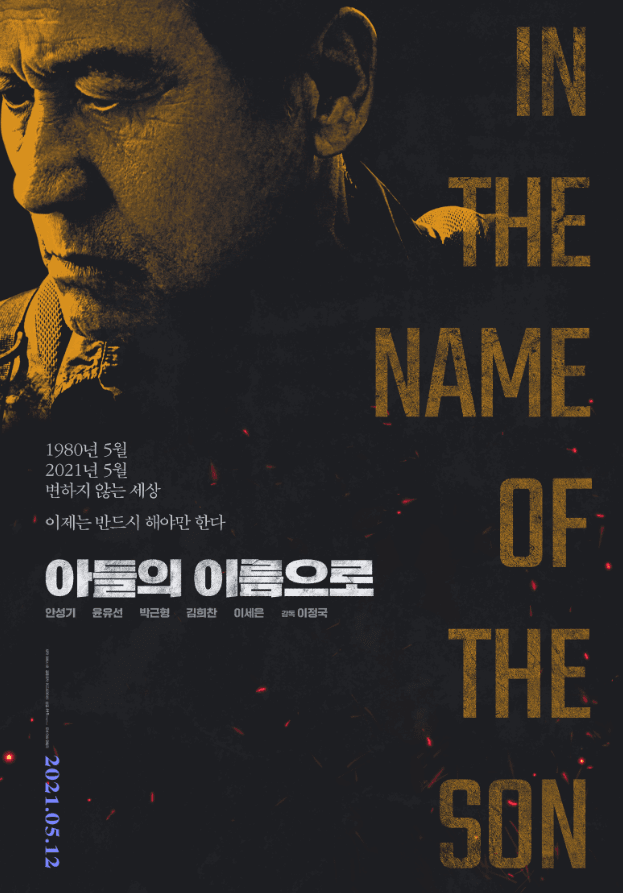
In the vast history of Korean cinema, one actor stands as a living monument of the industry’s evolution: Ahn Sung-ki. Known affectionately as the “National Actor,” he has consistently been the moral compass of Korean film for over six decades. His 2021 film, In the Name of the Son, is a profound testament to why he remains the ultimate Ahn Sung-ki Icon, even in the modern era of global K-content.
The Heavy Burden of History: In the Name of the Son (2021)
Directed by Lee Jung-gook, In the Name of the Son is a gripping drama. It confronts one of the darkest chapters in Korean history: the Gwangju Uprising. Ahn Sung-ki portrays ‘Oh Chae-geun,’ a man living with a crushing secret. Once a member of the elite paratroopers sent to Gwangju in 1980, he has spent decades haunted by the violence.
The film follows Chae-geun’s journey as he returns to Gwangju to fulfill a promise. However, his mission is not just a personal one. It is a desperate quest for atonement. He seeks out those responsible for the Gwangju Uprising who still live in luxury. He delivers a chilling message: “Those who do not repent do not deserve peace.”
Why the “Ahn Sung-ki Icon” Continues to Inspire
Why is this performance so significant in his filmography?
- A Performance of Silence and Rage: Unlike his more explosive roles in the past, Ahn Sung-ki uses silence and subtle facial tremors to convey a lifetime of guilt. Every wrinkle on his face tells the story of Korea’s turbulent transition from military dictatorship to democracy.
- Dedication Beyond Health: During the filming and promotion of this movie, Ahn Sung-ki fought through personal health challenges, yet his commitment to the role remained unshakable. This grit is what defines him as a true icon.
- The Call for Sincere Atonement: The film arrived at a time when Korean society was—and still is—discussing the necessity of truth and reconciliation. Ahn’s character acts as a surrogate for the collective conscience of a nation.
The Human Fragility of the Ahn Sung-ki Icon
To understand Ahn Sung-ki, one must look beyond the red carpets. We must look at the weary eyes of a man who has lived a thousand lives. In this 2021 masterpiece, the veteran actor does not just play a character. He inhabits the collective guilt of an entire generation. He portrays ‘Oh Chae-geun’ with a devastating “Tactile Precision.”
Lee Jung-gook and the entire crew relied on his ability to convey “Sobering Realism.” He captures this through a single, silent tear. He reminds us that the “Unpolished Truth” of history is written in wrinkles. This performance opens a space for reflection for a nation. It helps process the pain left by the Gwangju Uprising.
The Architecture of Atonement: Ahn Sung-ki Icon
In the world of the film, the physical environment acts as a silent witness. The movie utilizes “Architectural Storytelling” to contrast luxury homes with Chae-geun’s humble world. The Ahn Sung-ki Icon moves through these spaces like a ghost seeking a home. He shows how systemic oppression leaves scars on the human body.
He rejects the “Polished Spectacle” of modern action. Instead, he embraces a “Quiet Intensity” that demands our attention. By focusing on the “Flawed Common Person,” he ensures the message never loses its resonance. He maps the “Vertical Narrative” of power with grace. This is not just acting; it is a solemn tribute to those lost in the gears of the system.
The Auditory Minimalism of Regret: The Sound of Ahn Sung-ki’s Silence
One of the most powerful aspects of the Ahn Sung-ki Icon is his mastery of “Auditory Minimalism.” In In the Name of the Son, the loudest moments are often the quietest. The director emphasizes the sound of a heavy sigh or the rhythmic ticking of a clock in an empty room. This creates an “Intellectual Tension” that keeps the audience in a state of constant reflection.
Ahn’s voice, which has been the “National Voice” for decades, is now hushed and gravelly. It carries the weight of a “Lingering Injustice” that has been buried for too long. By stripping away unnecessary dialogue, he achieves a “Breathtaking Mastery” of the unspoken word. This “Visual and Auditory Innovation” allows the film to spark a “Global Social Dialogue” regarding truth and reconciliation. He proves that a “Healing Narrative” begins with the courage to listen to the silence of the victims.
Technical Sovereignty: The Legacy of a National Actor
The “Technical Sovereignty” of Korean cinema owes everything to pioneers like him. He provided the “Safe Space” for directors to perform bold critiques. Even in 2026, his influence remains a cornerstone of the industry. He carries the past. It does not leave him. What was once a site of shame becomes a theater of resistance. His dedication to “Visual Innovation” allowed later directors to achieve global success. The actor represents the “Intellectual Sovereignty” of a filmmaker who refuses the easy path. Whether he is battling health issues or taking on controversial roles, his storytelling remains unshakable. As we look at the long journey of Korean history, his filmography serves as our most reliable map.
The Scent of Humanity: Why He Stays Rooted in Reality
Why does he continue to resonate in the era of digital spectacles? It is because he carries the “Scent of the Earth.” He represents the truth of the Korean working class. He has spent his life portraying the common person with immense dignity. His storytelling is not about grand politics. It is about the “Micro-Realism” of a father’s love.
He utilizes “Auditory Minimalism” to let the silence carry the emotional weight. This quietly restores dignity to those who have been forgotten. He has spent over sixty years mapping the collective identity of our nation. He remains our most reliable compass. His legacy is a vibrant life dedicated to the struggle for peace. He is the bridge between our painful past and a more hopeful future.
The Aesthetics of Empathy: Why Ahn Sung-ki Icon Refined the Art of Listening
To truly understand the Ahn Sung-ki Icon, we must look at how he listens on screen. In In the Name of the Son, his character ‘Oh Chae-geun’ often remains silent while others speak. This is not a passive silence. It is a “Deep Auditory Empathy” that absorbs the pain of the victims. Ahn uses his “Physical Honesty” to show that listening is an active form of atonement.
He rejects the “Polished Spectacle” of traditional hero roles. Instead, he embraces the “Visual Friction” of a man who is falling apart from the inside. This “Humanistic Lens” ensures that his every movement feels grounded and real. He reminds the Dear, From K readers that the most powerful stories are told through the “Unpolished Truth” of a humble heart. His performance establishes a “Healing Narrative” that transcends the screen.
The Architecture of Redemption: Finding Hope in the Ruins of the Past
The Ahn Sung-ki Icon has always been a master of “Architectural Storytelling.” In his recent works, he moves through spaces that feel like the “Open Wound” of a nation. Whether it is a dusty old office or a quiet mountain trail, he treats the environment as a partner in his “Vertical Narrative.” He uses these spaces to deconstruct the “Hierarchy of the Elite” that attempted to hide the truth.
He proves that “Technical Sovereignty” in acting is not about grand gestures. It is about the “Tactile Precision” of a shaking hand or a heavy footstep. Ahn ensures that his “Intellectual Sovereignty” is never compromised by political pressure. He remains a “Social Mirror” for the marginalized and the forgotten. By centering his life on “Visual Innovation,” he has turned the “Architecture of Shame” into a site of profound redemption.
The Scent of Humanity: Why the National Actor Stays Close to the People
Why do we call him the “National Actor”? It is because the Ahn Sung-ki Icon smells like the earth and the rain. He has never placed himself above the audience. He treats every role as a “Universally Human” experience that belongs to everyone. His “Fearless Storytelling” is rooted in a sincere love for the common person.
He utilizes “Auditory Minimalism” to let the audience breathe between the lines. This creates a “Communal Resonance” that is rare in modern cinema. He has spent over sixty years mapping the “Unresolved Odyssey” of the Korean soul. He remains our most “Powerful Tool” for understanding who we were and who we are becoming. His legacy is not just a list of movies; it is a “Vibrant Life” dedicated to the dignity of every individual.
The Unwavering Integrity: Why Ahn Sung-ki Icon is the Moral Anchor
What makes a person an icon for over sixty years? For the Ahn Sung-ki Icon, the answer lies in his unwavering integrity. He has never been a “Star” who looks down from a pedestal. Instead, he has always been a “Neighbor” who walks beside us. In In the Name of the Son, his character ‘Oh Chae-geun’ reflects this grounded nature. Ahn uses his “Physical Honesty” to show the weight of a guilty conscience.
He rejects the “Polished Spectacle” of grand heroic speeches. Instead, he embraces the “Visual Friction” of a man who simply wants to do the right thing. This “Humanistic Lens” ensures that his every breath feels like a shared experience. He reminds the Dear, From K readers that true power comes from vulnerability. His performance establishes a “Healing Narrative” that invites the audience to reflect on their own lives. He remains a “Social Mirror” for a world that often forgets the value of sincerity.
The Architecture of Sincerity: Moving Through the Landscapes of Pain
The Ahn Sung-ki Icon possesses a unique “Tactile Precision” in how he occupies space. In his recent films, he moves through environments that feel like the “Open Wound” of a nation. Whether he is standing in a crowded subway or a lonely Gwangju cemetery, he treats the space with reverence. He utilizes “Architectural Storytelling” to show how our surroundings shape our internal struggles.
He proves that “Technical Sovereignty” in acting is about “Quiet Intensity” rather than loud outbursts. Ahn ensures that his “Intellectual Sovereignty” is never for sale. He remains a “Powerful Tool” for social justice by simply being present. By centering his life on “Visual Innovation,” he has transformed the “Architecture of Shame” into a site of communal healing. He maps the “Vertical Narrative” of power with the steady hand of a master craftsman. This is the essence of why we trust his face above all others.
The Scent of the Earth: Why the National Actor Stays Rooted in Reality
Why does the Ahn Sung-ki Icon continue to resonate in the era of digital spectacles? It is because he carries the “Scent of the Earth.” He represents the “Unpolished Truth” of the Korean working class. He has spent his life portraying the “Flawed Common Person” with immense dignity. His “Fearless Storytelling” is not about grand politics. It is about the “Micro-Realism” of a father’s love or a friend’s loyalty.
He utilizes “Auditory Minimalism” to let the silence carry the emotional weight. This creates a “Communal Resonance” that transcends generational gaps. He has spent over sixty years mapping the “Unresolved Odyssey” of our collective identity. He remains our most “Reliable Compass” in a rapidly changing world. His legacy is a “Vibrant Life” dedicated to the “Universally Human” struggle for peace. He is the bridge between our painful past and a more hopeful future.
Bridging the Past and Present for Dear, From K Readers
For those who have followed our previous posts on Sopyonje or Whale Hunting, In the Name of the Son serves as a modern spiritual successor. While Whale Hunting captured the wandering spirit and dreams of youth in the 80s, this film focuses on the individual’s heavy responsibility toward history.
Ahn Sung-ki Icon‘s legacy is built on these daring choices. He never shies away from difficult roles that force the audience to think. Whether he is a soldier, a beggar, or a grieving father, He remains the most trusted face in Korean cinema— a quiet witness to its past, and its conscience for the future.
To explore more of his legendary 160+ filmography, we highly recommend checking the Korean Movie Database (KMDb). Stay tuned to Dear, From K as we continue to archive the legends who built the foundations of the Hallyu we love today.
Related Articles
- 10 Best Korean Movies – Must-watch masterpieces of Korean cinema.
- Parasite Review – Hidden symbols and social commentary explained
- 90s Korean Movie Culture – The creative revolution that started Hallyu
- The Unique Storytelling Style of Korean Films: – 5 narrative techniques that define Korean cinema