The Uncompromising Vision of Bong Joon-ho 1990s

Bong Joon-ho was a young man with a sharp eye. Before Parasite, he wandered the streets of Seoul with a camera. The Bong Joon-ho 1990s era is a crucial period. It was a time of pure experimentation for him. Most directors focused on traditional melodramas. However, Bong quietly dissected the absurdity of the Korean middle class. His early works show a “Breathtaking Mastery” of satire. He proved that great directors understand their own reality.
Incoherence (1994): A Bold Debut by Bong Joon-ho 1990s
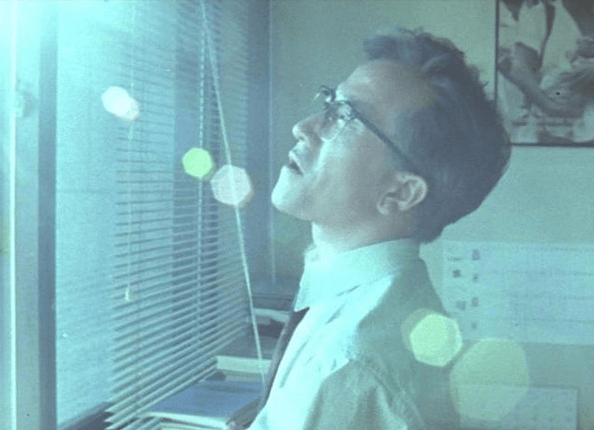
The Anatomy of Hypocrisy: A Triple-Layered Analysis of “Incoherence” (1994)
1. Bong Joon-ho and the “Yellow Box”: The Professor’s Hypocrisy
In the first segment of the Bong Joon-ho 1990s era, we witness a highly respected professor with a hidden obsession.
- The Philosophy of the Hidden Object: The “Yellow Box” (an adult magazine) is not just a prop. It represents the “Hidden Gravity” of human desire. Bong’s focus on this mundane object is a form of “Transparent Sophistication.” The professor’s frantic movements to hide the box create a “Visual Friction” against his dignified public image. This contrast is the core of Bong’s social critique.
- Architectural Storytelling: The University as a Moral Labyrinth
- Bong Joon-ho filmed the university hallway as a cold, clinical labyrinth. This “Airy” silence of the institution contrasts sharply with the “Heavy” guilt of the character. This “Breathtaking Mastery” of using space to highlight moral decay proves a vital point. It shows that the Bong Joon-ho 1990s period already obsessed over the “Architecture of Shame.”
- In these scenes, the camera follows the protagonist like a silent judge. It captures every bead of sweat with clinical precision. Instead of relying on dialogue, Bong uses the physical environment to interrogate the character’s soul. This early experimentation with space established the “Visual and Auditory Innovation” that would later define his global career.
2. The Lawyer and the “Jogging Path”: The Kinetic Energy of Guilt
The second episode follows a lawyer who engages in a shameful act during his morning jog.
- Tactile Honesty in Motion: Mapping Moral Depletion
- Bong uses the lawyer’s physical exhaustion to mirror his moral depletion. In this scene, the camera captures the sweat, the heavy breathing, and the frantic running with a “Sobering Realism.”
- This approach rejects Hollywood’s “Polished Spectacle.” Instead, it reveals the “Unpolished Truth” of an elite man reduced to his primal instincts. This visual choice effectively strips away the “Social Mask.” It reveals the raw, hidden vulnerability underneath the character’s prestigious exterior.
- The “Cinematic Void” and the Isolation of the Elite
- The empty park in the early morning represents the “Isolation of the Elite.” A sense of “Quiet Intensity” fills the air as the lawyer tries to maintain his social mask. He is literally running away from his own actions, yet he cannot escape his guilt.
- This deep focus on “Social Anxieties” forms the bedrock of the Bong Joon-ho 1990s narrative. It proves that even in wide, open spaces, characters remain trapped by their own choices. They constantly fear the gaze of society, showing that the “Cinematic Void” is as much a psychological prison as a physical one.
3. The Journalist and the “Staircase of Deception”
The final segment features a journalist who steals a neighbor’s milk, perfectly foreshadowing the class-based “Domestic Invasion” seen in later masterpieces.
- The Vertical Hierarchy: Staircases as a Social Map
- Bong Joon-ho utilizes the apartment staircase as a profound “Social Map.” The journalist’s descent to steal milk and his subsequent ascent to hide his tracks serves as a literal “Visual Metaphor.” It represents both the ambition of social climbing and the paralyzing fear of falling. This “Architectural Innovation” stands as the most powerful element of the Bong Joon-ho 1990s period. It successfully transforms a simple apartment building into a dynamic theater of class conflict.
- Communal Empathy: The Alternative to Sentimentality
- There is no warmth in this world. Instead, Bong establishes an “Unspoken Kinship” rooted in petty crimes. A shared hypocrisy binds these characters together in a fragile social web.
- This “Visual Deconstruction” of the middle class delivers a “Cynical Humor” that would later become a global phenomenon. The narrative suggests that these small, secret transgressions actually hold the entire social structure together. By avoiding traditional sentimentality, the Bong Joon-ho 1990s era offers a much sharper, more honest reflection of reality.
The Grand Finale: The Televised Debate as a “Social Mirror”
The brilliance of the Bong Joon-ho 1990s era culminates when these three men meet on a televised talk show to discuss “Social Morality.”
The “Heavy” Reality: The audience knows their “Shocking Secrets.” This “Visual and Auditory Innovation”—the contrast between their polished rhetoric and their filthy actions—is the “Breathtaking Mastery” of Bong Joon-ho. It creates a “Global Social Dialogue” that remains relevant today. This final irony is the “Powerful Legend” that Bong Joon-ho began writing three decades ago.
The “Airy” Facade: Under the bright, artificial studio lights, they speak with “Transparent Sophistication” about the decay of society. Their words are hollow, designed for public consumption.
The Anatomy of the “Bong-tail”: Precision as a Narrative Weapon
To understand the Bong Joon-ho 1990s era, we must dissect the origin of “Bong-tail.” This is not just about being a perfectionist. It is about using objects to tell a “Silent Story.”
- The Power of Props: In his 90s shorts, a simple yellow box or a discarded cigarette butt carries the weight of a character’s internal world. This “Tactile Honesty” is a hallmark of his early genius. As a creator who appreciates the beauty of quiet things, I find this focus on, I find this focus on “Micro-Realism” to be a form of “Transparent Sophistication.”
- Visual Friction in Tight Spaces: The Architecture of Suffocation
- Bong utilized the cramped architecture of 90s Seoul to create a profound “Quiet Intensity.” By placing characters in narrow hallways or small offices, he effectively forced the audience to feel their “Social Suffocation.”
- This “Architectural Storytelling” serves as the foundation of the Bong Joon-ho 1990s style. It proves that physical boundaries also function as psychological ones. Through this technique, Bong transforms mundane urban spaces into high-tension environments where the environment itself interrogates the characters. This early mastery of spatial pressure would later become a signature of his global cinematic identity.
The “Unresolved Cycle”: Why 90s Bong Joon-ho Rejects Hollywood Endings
The Bong Joon-ho 1990s period features the “Open Wound” narrative as a defining trait. Unlike Hollywood’s traditional “Resolution and Catharsis,” Bong’s early works cultivate a “Lingering Injustice” that haunts the viewer long after the credits roll.
The Absence of a Hero: Focusing on Flawed Common People
Bong rejects the concept of “Exceptional Individuals” in his 90s films. Instead, he presents “Flawed Common People” struggling against a vast social system they cannot change. This deliberate choice creates a “Sobering Realism” that resonates more deeply than any “Happy Ending” could achieve.
Communal Empathy: The Power of Shared Vulnerability
Instead of using traditional sentimentality, the Bong Joon-ho 1990s era utilizes “Unspoken Kinship.” In these stories, shared vulnerability and shared failure—rather than shared love—bind the characters together. This “Communal Resonance” makes his 90s works feel “Universally Human” and provides a “Global Social Dialogue” for modern audiences in 2026.
The “Glocal” Vision: How the 90s Prepared Him for the Oscars
How did a young man in the Bong Joon-ho 1990s era become a global icon? He mastered the art of being “Hyper-Local.”
- The Aesthetic of Honesty: Bong didn’t try to copy Hollywood’s “Airy” spectacle. Instead, he embraced the “Visual and Auditory Innovation” of his own reality. He captured the specific hum of a 90s television or the gray texture of a rainy Seoul street.
- Global Social Dialogue: Because he was so honest about the “Social Anxieties” of Korea, his stories became a “Mirror” for the world. The Bong Joon-ho 1990s works show that when you look through a microscope at a small village, you often find the truths of the entire planet. This is the “Breathtaking Mastery” that led to Parasite.
Technical Sovereignty: Bong Joon-ho and the Masterclass in Resourcefulness
The Bong Joon-ho 1990s decade represents a true “Masterclass in Resourcefulness.” During this era, Bong operated without the luxury of modern CGI. Instead, he relied heavily on the creative use of “Cinematic Shadows” and “Negative Space” to build tension.
The Sound of Silence: Enhancing Tension through Auditory Minimalism
Bong utilized “Auditory Minimalism” to enhance emotional and psychological tension. The simple sound of a heavy door closing or a distant siren created a sense of “Airy yet Heavy” realism.
These choices prove his “Breathtaking Mastery” of the medium even with limited budgets. This “Visual Innovation” through unique camera angles allowed Bong to deconstruct the “Hierarchy of the Elite.” It shows that a “Powerful Legend” requires only a sharp eye and a commitment to the “Unpolished Truth.”
The Visual Grammar of Bong Joon-ho 1990s: From Shorts to Feature Debut
The “Sobering Realism” of the Urban Landscape
In the Bong Joon-ho 1990s era, the director did not just film stories; he mapped the “Psychological Geography” of Seoul. Unlike Hollywood’s “Polished Spectacle,” Bong sought the “Unpolished Truth” of the city’s hidden corners.
- The Aesthetic of the Mundane: He focused on the flickering fluorescent lights of a university hallway or the damp, gray concrete of an apartment basement. This “Tactile Honesty” creates a “Visual Friction” that anchors the story in reality. It forces the audience to confront the “Quiet Intensity” of everyday life, a hallmark of the Bong Joon-ho 1990s style.
- Cinematic Shadows and Negative Space: Lacking the big budgets of established directors, Bong used “Negative Space” to represent internal isolation. This focus on the “Void” proved that a “Powerful Legend” could create a “Breathtaking Mastery” of tension with nothing but light and shadow.
Architectural Storytelling: The Staircase as a Social Weapon
The “Vertical Narrative” represents the most enduring legacy of the Bong Joon-ho 1990s period. Long before the mansions of Parasite, Bong already obsessed over how physical levels represent social class. He recognized that architectural layers could serve as a powerful “Social Map” for human hypocrisy.
The Descent into Hypocrisy: Climbing and Falling in 90s Shorts
In his 90s shorts, characters constantly move between levels—climbing up to maintain a facade or descending to hide a sin. This “Architectural Innovation” effectively transforms a simple building into a dynamic theater of social conflict. By utilizing these vertical movements, Bong creates a “Visual Metaphor” for the fragile nature of social status and the fear of moral collapse.
The “Airy” Facade vs. The “Heavy” Secret
Bong masterfully contrasts the “Airy,” clean public spaces of his characters with the “Heavy,” cluttered private spaces where they keep their secrets. This “Visual Deconstruction” of the middle class represents the quintessential Bong Joon-ho touch. He firmly established this thematic foundation during the Bong Joon-ho 1990s decade, proving that space itself can act as a narrative weapon.
The Alchemy of “Cynical Humor” and Social Critique
Bong Joon-ho’s early works are famous for their “Emotional Fluidity.” He uses humor as a “Trojan Horse” to deliver uncomfortable truths about society.
- Bong Joon-ho’s early works feature an unpredictable rhythm that creates a powerful “Tone-Shift.” A scene might start with a slapstick physical gag but end with a devastating realization about human nature. This specific technique keeps the audience in a constant state of “Intellectual Tension.”
- These early films prove that the Bong Joon-ho 1990s works represent more than mere student projects. Instead, they serve as sophisticated experiments in “Genre-Bending.” This refusal to stick to a single tone allows Bong to deliver his social critique with a sharper, more unexpected edge.
- Communal Resonance: Focusing on the Flawed Common Person
- Bong rejects the trope of the lone hero. Instead, he focuses on the “Flawed Common Person.” In these narratives, an “Unspoken Kinship” of shared frustration and failure binds the characters together. They do not rely on traditional sentimentality; instead, they find a connection through their shared struggle.
- This “Communal Resonance” makes his 90s films feel “Universally Human.” By highlighting these collective vulnerabilities, Bong allows his stories to reach a global audience in 2026. This focus on the common man established the “Visual and Auditory Innovation” that defines the soul of the Bong Joon-ho 1990s era.
Technical Sovereignty: Directing with a “Microscopic Eye”
The final pillar of the Bong Joon-ho 1990s era represents “Tactile Precision.” Bong gained the famous nickname “Bong-tail” because he obsessed over the smallest visual details. He understood that a director must control every element within the frame to build a cohesive world.
The Philosophy of the Object: Telling a “Silent Story”
In his 90s works, Bong utilizes mundane items like a discarded milk carton or a specific brand of cigarettes to tell a “Silent Story.” These objects carry the deep “Visual History” of the character. This focus on “Micro-Realism” creates a sense of “Transparent Sophistication” that remains rare in modern cinema. Instead of using dialogue, these physical props communicate the character’s internal state to the audience.
Auditory Innovation: Enhancing Tension through Sound
Bong relied on hyper-real sound design—the scraping of a chair or the echo of footsteps—to enhance emotional and psychological tension. This “Auditory Honesty” forced the audience to listen closely to the “Quiet Intensity” of the narrative. By prioritizing these subtle sounds, Bong successfully defined the soul of a master director during the Bong Joon-ho 1990s decade.
The Auditory and Chromatic Language of Bong Joon-ho 1990s
The Symphony of Anxiety: Auditory Minimalism in 90s Shorts
In the Bong Joon-ho 1990s era, the director understood a fundamental truth of cinema. He realized that what we hear is just as important as what we see on the screen. While Hollywood often relies on loud, orchestral scores to dictate emotion, Bong practiced a unique form of “Auditory Minimalism.”
This approach was not about a lack of sound. Instead, it was about the intentional selection of noise. By rejecting the traditional Hollywood “Wall of Sound,” he allowed the raw textures of the environment to speak for themselves. This created a new kind of “Intellectual Tension” for the audience.
The Sound of the Mundane: Achieving Auditory Honesty
He focused on the hyper-real sounds of everyday life during the late 90s. This included the rhythmic dripping of a faucet, the heavy echo of footsteps in a concrete stairwell, or the distant, muffled sound of a television.
This “Auditory Honesty” creates a sense of “Quiet Intensity.” It anchors the film in a “Sobering Realism” that feels authentic to the viewer. These mundane sounds are not mere background noise. They are active narrative tools that build the “Visual and Auditory Innovation” of the Bong Joon-ho 1990s style.
The Power of Silence as a “Cinematic Void”
In his early works like Incoherence, Bong uses silence as a powerful “Cinematic Void.” It is important to note that this silence is never truly empty. Instead, it is “Airy yet Heavy” with the unspoken guilt and hypocrisy of the characters.
By strategically removing music, he forces the audience to confront the “Unpolished Truth” of the scene. This refusal to “guide” the audience’s emotions with a score is a hallmark of his mastery. It represents the “Unresolved Odyssey” of human nature that defined the Bong Joon-ho 1990s foundation.
Chromatic Melancholy: The Visual Identity of Bong’s Early Era
A specific “Chromatic Melancholy” defines the visual identity of the Bong Joon-ho 1990s period. During this era, Bong did not seek the vibrant colors of commercial cinema. Instead, he embraced the “Visual Friction” of the urban landscape. He understood that a muted palette could communicate more depth than artificial brightness.
The Aesthetic of the Gray: Mapping Social Anxieties
Bong utilized the natural grays and browns of Seoul’s 1990s architecture—the weathered concrete of apartment complexes and the dim yellow of fluorescent lights. This “Tactile Honesty” represents the “Social Anxieties” of a generation caught between tradition and modernization. By focusing on these mundane textures, Bong reveals the hidden psychological layers of his characters.
[Image showing the desaturated color palette of 1990s Seoul in a Bong Joon-ho film]
Visual Innovation through Saturation and Intent
By desaturating certain scenes, Bong created a profound sense of “Intellectual Tension.” This represented more than just a stylistic choice; it signaled a clear directorial intent to deconstruct the “Airy” facade of the middle class.
The Legacy of Technical Sovereignty: A Cornerstone of Cinema
Bong Joon-ho’s “Breathtaking Mastery” of color theory confirmed his status as a “Powerful Legend” in the making. He showed a unique capability for turning a simple, mundane alleyway into a complex canvas of human emotion.
[Image: A high-contrast still of a 1990s Seoul alleyway illustrating Bong’s use of color theory]
This technical sovereignty firmly established the Bong Joon-ho 1990s era as a cornerstone of modern cinematic history. By deconstructing the “Airy” facade of the middle class, he created a new “Visual and Auditory Innovation.” This legacy continues to provide a “Global Social Dialogue” for audiences and filmmakers alike in 2026.
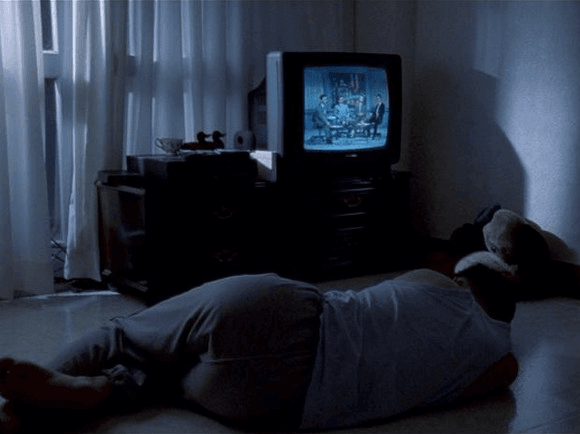
The “Glocal” Soundscape: Connecting Seoul to the World
Why does the sound of the Bong Joon-ho 1990s era resonate with global audiences in 2026? It is because these sounds are “Universally Human.” * The Shared Experience of Space: Whether it is the sound of a closing elevator door or the wind howling through a rooftop room, these auditory markers transcend language. They create a “Communal Resonance” that allows international viewers to feel the “Social Suffocation” of the characters.
- The Legacy of Precision: This early experimentation with sound and color was the literal “Essential Watch Guide” for his later success. It showed that “Transparent Sophistication” does not require a massive budget—only a sharp ear and a commitment to the “Unresolved Odyssey” of the human soul.
The Road to “Barking Dogs Never Bite” in the Late 90s

The Emergence of a Cinema Legend: Beyond the 90s
The film industry soon noticed this “Powerful Legend” in the making. Bong Joon-ho launched his feature debut, Barking Dogs Never Bite, in 2000. However, the soul of this debut still belongs to the late 90s. It carries the “Tactile Honesty” and “Visual Friction” that Bong perfected during his formative years in the Bong Joon-ho 1990s era.
Social Commentary: Capturing 90s Anxiety
Bong captured the raw anxiety of the 90s generation through a unique lens. He used a frustrated part-time lecturer to reflect the struggle of the common man. This character serves as a bridge between the academic elite and the working class, highlighting a profound social gap.
The brilliant blend of slapstick humor and deep tragedy makes this film an “Essential Watch Guide” for fans. It proves that a “Global Social Dialogue” can begin within the walls of a mundane apartment complex.
A New Kind of Thriller: Mundane Horror
Barking Dogs Never Bite represents a new kind of thriller. Instead of a typical killer movie, it focuses on the mystery of a missing dog within a crowded, repetitive apartment building. Bong turns the “Architecture of Shame” into a site of suspense and moral questioning.
This “Visual and Auditory Innovation” allows the audience to feel the claustrophobia of urban life. It confirms that the foundations laid during the Bong Joon-ho 1990s decade successfully created a new language for Korean cinema.
Why the 90s Defined the Bong Joon-ho Genre
The Bong Joon-ho 1990s period is fascinating because it was raw. He didn’t have polished perfection yet. He used limited resources to create something “Powerful.” He only needed his keen observation of human nature. This decade was the foundation of his empire. It shows that small stories can have a global impact.
If you want to explore more about the roots of Korean social realism that influenced the Bong Joon-ho 1990s era, check out our previous archive on Chung Ji-young Director: The Essential Watch Guide.
Related Articles
- 10 Best Korean Movies – Must-watch masterpieces of Korean cinema.
- Parasite Review – Hidden symbols and social commentary explained
- 90s Korean Movie Culture – The creative revolution that started Hallyu
- The Unique Storytelling Style of Korean Films: – 5 narrative techniques that define Korean cinema
For a complete filmography and detailed awards history of this cinema legend, visit his official profile on KMDb.