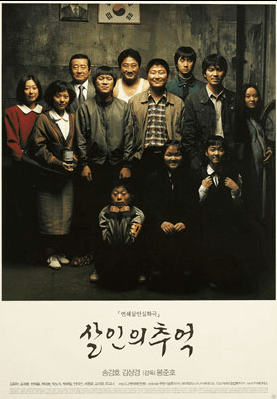
Introduction: Why Memories of Murder Still Haunts Global Cinema
There is no lingering sense of unease quite like Memories of Murder (2003). Directed by the Academy Award-winning Bong Joon-ho, this landmark Korean thriller is far more than a standard serial killer investigation. It is a haunting exploration of human failure, systemic injustice, and the terrifying limits of human understanding. When the film premiered in 2003, it didn’t just break box office records in South Korea; it redefined the global “procedural” genre.
Unlike Hollywood’s Se7en or Zodiac, which focus on the meticulousness of the hunter or the hunted, Memories of Murder focuses on the void left behind when justice fails. The central search for Memories of Murder ending explained represents more than a request for a plot summary; it is a desperate plea for closure in a narrative that systematically denies it. This guide provides an exhaustive, multi-layered analysis of the film’s conclusion and the cultural trauma embedded in every haunting frame.
1. The Chilling Reality: Behind the Hwaseong Serial Murders
A Nation in Fear: The True Crime Foundation of the Story
To truly understand the weight of Memories of Murder, one must dive into the harrowing details of the real-life Hwaseong Serial Murders. Between September 1986 and April 1991, the public discovered ten women murdered in a signature pattern within the rural region of Hwaseong. The victims ranged from a 71-year-old grandmother to a 14-year-old middle school student.
The killer left a disturbing “signature” at every scene; he used the victims’ own clothing—stockings, bras, or blouses—to bind and gag them. This psychological cruelty paralyzed the entire nation. At the time, South Korea’s police force focused its resources primarily on suppressing pro-democracy student protests in the cities. This left rural police stations understaffed and technologically primitive.
This environmental chaos forms the backbone of the Memories of Murder narrative. Director Bong Joon-ho masterfully portrays the “dampness” of the fields and the absolute darkness of a rural town without streetlights. These directorial choices transform the predator into a ghost that seemingly belongs to the land itself.
Chronological Analysis: Tracking the 10 Victims (1986–1991)
- 1st Incident (September 15, 1986): Local residents discovered a 71-year-old woman, Lee Wan-im, murdered in a pasture. This discovery marked the silent beginning of the national nightmare.
- 2nd Incident (October 20, 1986): Authorities found a 25-year-old woman, Park Hyun-sook, in a canal. During this attack, the killer began to display his chilling “binding” signature.
- 3rd Incident (December 12, 1986): The predator murdered a 24-year-old housewife, Kwon Jung-bon, while she waited for a bus. This tragedy highlighted the severe lack of safety in rural areas.
- 4th Incident (December 14, 1986): Only two days later, the community found another victim. The killer’s increasing speed terrified the local police force.
- 5th to 8th Incidents (1987-1988): These years saw the most brutal acts, including the “Peach” incident and the “Spoon” incident, which Bong Joon-ho depicted with chilling accuracy to honor the victims.
- 9th Incident (November 15, 1990): After a long silence, the killer returned, proving that time did not stop the monster.
- 10th Incident (April 3, 1991): The final confirmed murder by the Hwaseong killer before the case went cold for 30 years.
The 2019 Breakthrough: Identifying Lee Choon-jae
For nearly 30 years, the Hwaseong case was South Korea’s greatest cold case. However, in September 2019, Gyeonggi Nambu Provincial Police Agency announced a shocking breakthrough. DNA samples from three of the victims matched Lee Choon-jae, a man who was already serving a life sentence for the 1994 rape and murder of his sister-in-law.
Lee eventually confessed to all 10 Hwaseong murders, plus four others. This real-world resolution changed how audiences perceive the Memories of Murder ending explained. The “ordinary-looking man” at the end of the movie was no longer an abstract concept—he was a real predator hiding in plain sight within the prison system for decades. This section explores how the cold, relentless progress of science finally trapped the “monster,” arriving 30 years too late to save his victims. Instead of relying on human instinct, modern forensic investigators utilized advanced DNA technology to identify the killer.
Fact Check: Cinematic Symbols vs. Forensic Evidence
It is important to distinguish between historical facts and Bong Joon-ho’s directorial choices:
- The DNA Request: In the film, investigators send samples to the U.S. to symbolize Korea’s lack of forensic infrastructure. In reality, while forensic science remained in its infancy during the 1980s, the eventual identification of the killer in 2019 relied on decades of global scientific advancement. This breakthrough required more than a single overseas mail-in; it demanded the persistent evolution of DNA matching technology over thirty years.
- The ‘Peach’ and ‘Spoon’ Incidents: While based on the brutal nature of the real crimes, these specific details in the movie function as symbolic markers of the killer’s dehumanizing cruelty. They serve to heighten the audience’s revulsion and emphasize the detectives’ helplessness.
[Special Appendix] The Hwaseong Case Archive: Original News Reports & Transcripts
1. Archive: The Dong-A Ilbo Report (Dec 1986) – Translated
“The terror in Hwaseong continues. Last night, the fourth victim was discovered in a cold irrigation ditch. The police have deployed over 2,000 officers, yet the perpetrator remains a ghost. Local women are terrified to wear red, as a rumor spreads that the killer targets those in bright colors. The incompetence of local authorities is becoming a national scandal…”
2. Archive: The Chosun Ilbo Report (Nov 1990) – Translated
“After a long silence, the shadow has returned. A young student was found murdered in a pine forest. The brutality of the crime scene has left even veteran detectives in tears. The question remains: is this the work of one man, or is the land itself cursed? DNA technology from Japan has been requested, but the hope for a match is slim…”
3. The Lee Choon-jae Confession Transcript (2019)
“The fact that I avoided capture for so long still surprises me. Often, I walked right past the police officers who were searching for me. My daily life even continued near the very crime scenes I created. Throughout those years, I committed 14 murders and 30 sexual assaults.
Why did the authorities fail to catch me? During those moments, I believed I simply did what I had to do. Although I offer no excuses to the victims, I felt an uncontrollable urge to continue my actions. Even after watching the film, I experienced very little emotion. To me, the movie felt like a distant story rather than my own reality.”
2. Detailed Character Analysis: A Clash of Two Worlds
Detective Park Doo-man: The Failure of Shamanic Intuition
Detective Park Doo-man (Song Kang-ho) employs crude investigative methods to close his cases. He frequently utilizes physical torture, extracts forced confessions, and relies heavily on local myths instead of forensic evidence. This reliance on outdated tactics demonstrates the systemic failure of 1980s law enforcement.
His journey in Memories of Murder is a tragedy born of arrogance. Time and again, his so-called “shamanic eye” fails him, and the truth slips further into shadow. Detective Park embodies a generation that believed brute force could compel answers from the darkness. By the final scene, when he stares into the camera, he silently confesses that his intuition was an illusion. Over the investigation, Park sacrifices pieces of his soul to a mystery he never truly comprehended. The confident, aggressive man of the early scenes unravels, leaving behind a broken, ordinary civilian. His psychological collapse mirrors the broader failure of a legal system crippled by its own inefficiency and cruelty during that tumultuous era.
Detective Seo Tae-yoon: The Logical Descent in Memories of Murder
Seo (Kim Sang-kyung) is the antithesis of Park. A volunteer from Seoul, he relies on documents, scientific evidence, and logical deduction. He mocks Park’s brutality in Memories of Murder. However, as the murders continue and the bureaucracy fails him, Seo undergoes a terrifying transformation.
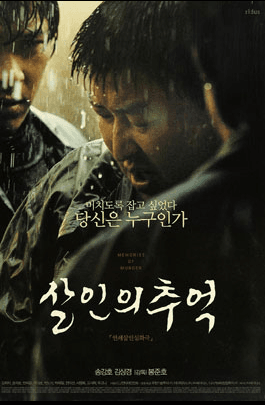
By the final act of Memories of Murder, the logical man is the one holding a gun to a suspect’s head in a rainy tunnel, ready to commit extrajudicial murder. Bong Joon-ho uses Seo to show that evil is contagious; even the most rational mind can be broken by the silence of an unsolved crime. His descent into madness is perhaps the most tragic element of the film, as he sacrifices his principles for a justice that never comes.
3. Memories of Murder Ending Explained: Decoding the Final Gaze
The Railway Tunnel: Where Science Meets the Void
Memories of Murder features its most discussed sequence during the haunting climax in the railway tunnel. Here, the detectives finally receive the long-awaited DNA results from the United States. Because 1980s Korea lacked the internal technology to process genetic evidence, investigators sent samples across the ocean—a move that symbolized the nation’s helplessness and its reliance on external powers for “truth.”
Once the document reads “Inconclusive,” it sounds the death knell for the entire investigation. Witnessing this failure, the suspect, Park Hyeon-gyu, walks away into the darkness. While he may not be the actual killer, his departure mirrors the detectives’ utter defeat. This scene perfectly encapsulates the film’s core theme: even when truth exists on paper, a broken system makes it unreachable. Ultimately, the darkness of the tunnel serves as a metaphor for history itself—absorbing the truth and leaving only the victims behind.
The 2003 Epilogue: The Meaning Behind the Fourth Wall Break
Fast-forwarding to 2003, we find Park living a mundane life as a businessman. During a nostalgic trip, he returns to the exact ditch where he first encountered the investigation’s horror. While he stands there, a young girl approaches and mentions a recent visitor to the same spot. Her casual remark—that she saw another man there just days ago—shatters Park’s hard-earned peace.
- Park: “What did he look like?”
- Girl: “Just… ordinary. Very ordinary.”
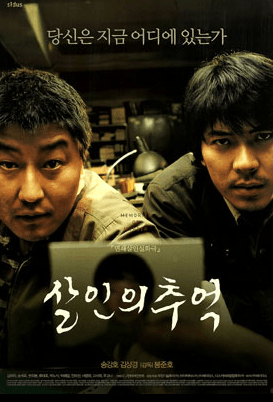
The Meta-Meaning: Director Bong Joon-ho famously stated that he believed the killer would watch the film. By having Song Kang-ho look directly into the camera, Memories of Murder creates a psychological trap. Park is looking for the killer in the audience. If the killer was sitting in the theater, he would have felt the detective’s eyes finally finding him. This is the definitive answer to the Memories of Murder ending explained. It suggests that the “monster” is not a supernatural entity, but a person who eats, sleeps, and watches movies among us.
4. Social and Political Subtext: South Korea’s Dark 1980s
Authoritarianism and the Inefficient State in Memories of Murder
To fully understand the Memories of Murder ending explained, one must understand the 1980s political climate. South Korea was under the military dictatorship of Chun Doo-hwan. The police were a tool of state violence, trained to beat confessions out of political dissidents, not to solve forensic puzzles.
Memories of Murder is a searing critique of this era. The frequent air-raid drills and blackout curtains are metaphors for a society that was “blinded” by its own government. The killer thrived in the shadows created by a state that was too busy fighting its own people to protect them. The film subtly points out that while the police were torturing innocent suspects, the real killer was free to strike again because the infrastructure of justice was cannibalizing itself.
The “Flying Kick”: A Symbol of Impulsive State Violence
The recurring “flying kick” performed by Detective Cho is often seen as dark humor in Memories of Murder. However, it represents the clumsiness of power. The police strike out violently at anything they don’t understand. This impulsive violence is exactly why the real evidence was often trampled and destroyed, a recurring theme in the Memories of Murder investigation. It is a physical manifestation of a system that prioritizes action over accuracy.
Bong Joon-ho’s Vision: Exclusive Behind-the-Scenes & Interviews
Bong Joon-ho on the Final Shot: “I spent a long time thinking about the killer. I believed he would eventually watch this movie. I wanted Song Kang-ho to stare directly into his eyes—wherever he was, in a theater or in his living room. That gaze was my message to him: ‘I know you are out there, and we are still looking for you.'”
Bong Joon-ho on the “Flying Kick”: “People laugh at the flying kick, but it is a tragic laugh. It represents the clumsiness of a state that tries to solve a complex human mystery with simple violence. It is the sound of a system failing its people.”
Bong Joon-ho on the ‘Ordinary’ Face: “The most terrifying thing I found during my research was that everyone described the potential suspect as ‘ordinary.’ Not a monster with horns, but someone who could be your neighbor or your father. That is the banality of evil that I wanted to capture.”
5. Directorial Brilliance: Bong Joon-ho’s Technical Mastery
The “Bong-tail” Effect: Secrets of the Visual Language
Bong is known for his “Bong-tail”—meticulous attention to every background element.
- The Sound of Rain: Rain in Memories of Murder is a harbinger of death. It washes away the DNA, the tracks, and the hope.
- Color Palette: The film moves from the vibrant gold of the fields (false hope) to the murky grey and blue of the final act (total despair).
- The Use of Long Takes: Bong uses long, choreographed takes to show the chaos of the investigation, forcing the audience to feel the frustration in Memories of Murder in real-time.
Genre-Bending in Memories of Murder: Comedy as a Weapon
Many Western viewers are surprised by the humor in the first half of Memories of Murder. Bong uses “Slapstick Tragedy” to make the audience comfortable before pulling the rug out. By making us laugh at the detectives’ incompetence, he makes us complicit in the tragedy that follows. This tonal shift is what makes the Memories of Murder ending explained hit so much harder—it turns the comedy into a haunting reminder of our own ignorance.
6. Comparative Analysis: A New Standard for Thrillers
The Banality of Evil: Memories of Murder vs. Zodiac and Se7en
While the antagonist in Se7en acts as a philosophical mastermind, David Fincher’s Zodiac presents the killer as a complex enigma of intelligence. However, Bong Joon-ho’s masterpiece takes a different approach by portraying the predator as purely “ordinary.” This shift in perspective introduces a much more terrifying concept to the audience. Such a portrayal suggests that evil avoids the need for high intelligence; instead, it simply requires a society too broken to notice its presence. Ultimately, the film refuses to “romanticize” the serial killer, maintaining his status as a faceless and mundane threat.
Embracing Nihilism: Why This Story Offers No Catharsis
Unlike most Hollywood thrillers that provide a “cathartic” ending, Memories of Murder offers zero catharsis. It leaves the wound open. This is why it is considered the more “honest” film in the genre and why the Memories of Murder ending explained remains a subject of academic study.
7. FAQ: Resolving the Most Persistent Mysteries
1. Was Park Hyeon-gyu the real killer in Memories of Murder? In the film, the DNA says no. However, he represents the “perfect suspect” that the broken system needed. Bong Joon-ho leaves this open to show that in a violent society, there are many potential monsters.
2. Why did the girl say the man was “ordinary” in Memories of Murder? This is the film’s most chilling line. It destroys the idea that evil looks like a monster. Evil looks like your neighbor or your coworker.
3. What is the significance of the “Peach” scene in Memories of Murder? In the real Hwaseong case, a victim was found with peach slices inserted into her body. Including this was Bong’s way of honoring the victims’ families by not shying away from the true horror.
Final Thoughts: A Gaze That Never Ends in Memories of Murder
The conclusion of Memories of Murder is an experience to be felt. It captures the sound of a father’s grief and a nation’s collapse. As you look back at that final frame—Detective Park staring at you—remember that the search for truth is a burden we all share. The “Ordinary” killer is still out there, hiding in the mundanity of everyday life.
Related Articles
If you enjoyed this analysis, you may also like:
For more detailed information on these classics, you can visit the Korean Movie Database (KMDb)
or check out the Korean Film Council (KOFIC) official website.
Some say the suspect in the tunnel was indeed the killer, while others believe he was just another victim of the era. What is your take?