At a press event for the series in early September 2025, Jo Yeong-min was asked about the forties version of Eun-jung, the woman at the centre of his Netflix series You and Everything Else. He became emotional. He said he had thought a great deal about how Eun-jung could send Sang-yeon off, and that through the whole shoot he had been grateful to Park Ji-hyun for playing Sang-yeon.
A little earlier in the same room, Kim Go-eun had wept when assisted death came up. She called it her “tear button,” and Park Ji-hyun took the microphone to speak for her. Two actors crying, a director too moved to finish his answer: it is an odd sight at a promotional event. It also says something about the set they had just left.
Park described that set herself. It was very quiet, calm and efficient, with nothing left out, and still full of laughter. She called this Jo’s “quiet charisma.” What kind of director makes a set like that, and what do his dramas have in common?
Spoiler notice: this article discusses plot points in Jo’s dramas, including the central turn of You and Everything Else.
Jo Yeong-min at SBS: A Short Drama and a New Writer
In the summer of 2019, SBS aired a two-part drama called 17세의 조건 (Everything and Nothing), written by Ryoo Bo-ri. Jo reportedly met Ryoo after she won SBS’s scriptwriting contest the year before. If that account is right, this small drama is where one of his most important working relationships began.
Jo Yeong-min spoke warmly about his young leads. He said Yoon Chan-young’s acting had an unexpected, raw, explosive quality. He said Park Si-eun read the script very well and showed the darker side of her character. Notice the praise. It is about comprehension and rawness, not polish, and Jo keeps coming back to that preference. He has also said that the works that come to him tend to be quiet ones, and that this suits him. It is a modest sentence, and it fits the dramas that follow: stories of people sitting close together and not quite saying the thing.
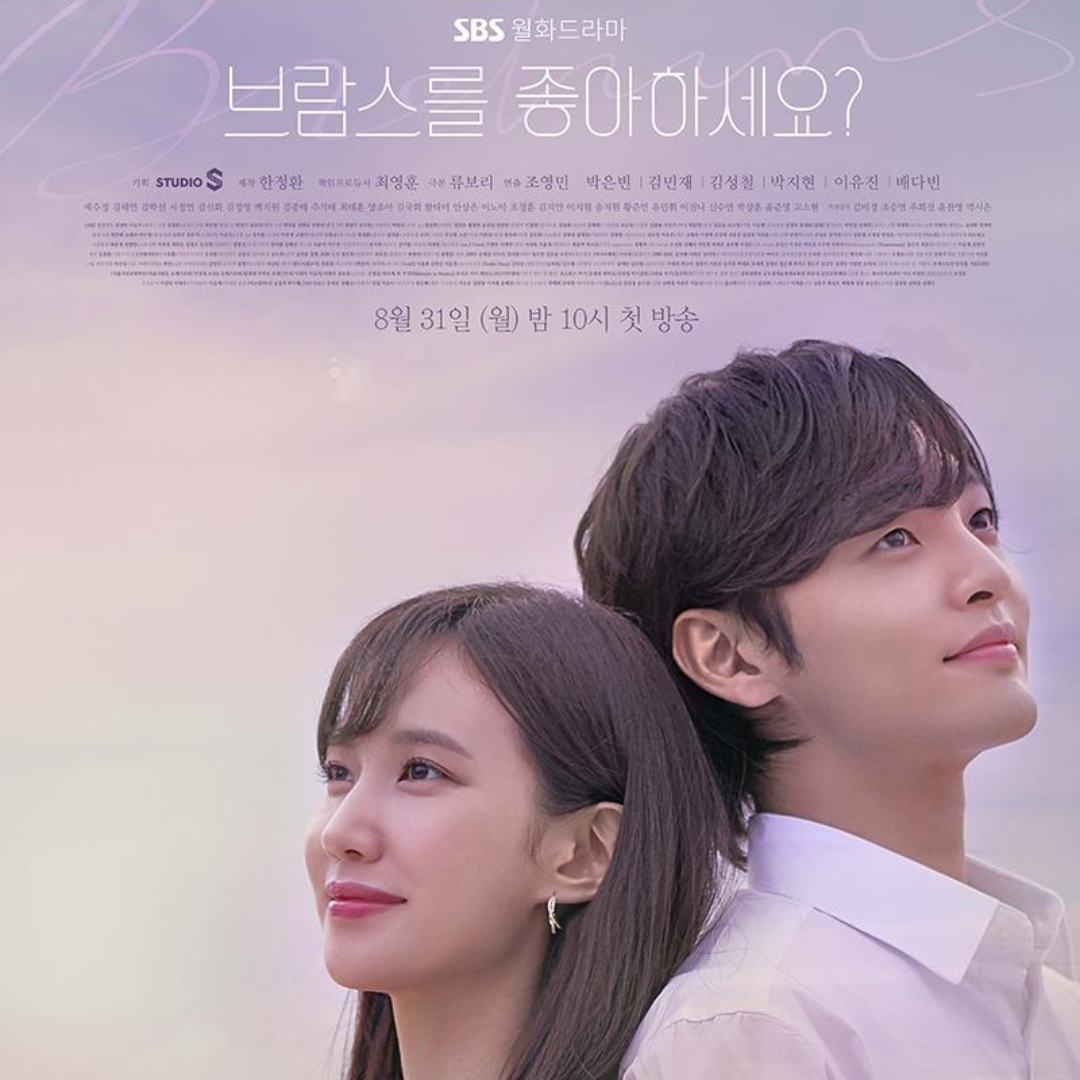
Do You Like Brahms? (2020): The First Notable Work
Jo Yeong-min’s next work with Ryoo Bo-ri was Do You Like Brahms?, sixteen episodes on SBS in the autumn of 2020. Park Eun-bin plays Chae Song-ah and Kim Min-jae plays Park Jun-yeong. Both characters are twenty-nine and caught between dream and reality, people who find their happiness in dreams and in love. Ryoo studied classical music, and the drama grows out of that background. It was a modest, music-soaked melodrama about the distance between what one wants and what one can have.
The Seed of a Later Series
Brahms matters for another reason too. Park Ji-hyun worked with Jo on it. From that experience he learned that she receives other actors’ emotional acting very well. Years later he trusted her with Sang-yeon, a character whose feelings are uneven and hard to hold.
Brahms is also the drama that led Jo to wonder, afterwards, whether he wanted to make another melodrama. That question leads to the next work.
The Interest of Love (2022–23): Four People and a Bank Branch
The Interest of Love ran for sixteen episodes on JTBC, running from the end of 2022 into early 2023. The writers were Lee Seo-hyun and Lee Hyun-jung, adapting a novel by Lee Hyuk-jin. Yoo Yeon-seok plays Ha Sang-su and Moon Ga-young plays Ahn Su-yeong. Keum Sae-rok plays Park Mi-gyeong and Jeong Ga-ram plays Jeong Jong-hyeon. The title plays on two Chinese-character words that sound alike in Korean: 利害, conflicting interests, and 理解, understanding.
Jo has said he hesitated after Brahms about making another melodrama. But the script was so enjoyable, and its love story so different and realistic, that he chose it.
A Workplace Where Everyone Is Watching
Jo’s own description of what makes the drama distinctive is about space. Four people share the narrow world of a bank branch and trade glances, and their feelings shift. The bank’s hierarchy tangles their relationships further. Nobody can step far away from anyone else.
The actors prepared for that world by doing it. Yoo Yeon-seok visited real bank branches and practised counting money and handling the equipment. Keum Sae-rok said that at her first meeting it was not yet decided she would appear, but after about ten minutes of talk the director proposed working together.
The shoot itself ran on trust. Moon Ga-young said many scenes were shot with only the situation discussed and no calculated blocking. She recalled several long-dialogue scenes done in a single take.
Why Viewers Called It Frustrating
Viewers nicknamed the drama 사랑의 노이해, roughly “Love No-Understanding,” a joke on the title. Yoo Yeon-seok said the frustration was part of its charm, and that the nickname spread through live chats and online communities. Moon Ga-young said she felt the reaction strongly, with strangers on shoots telling her they watched.
A drama in which four people keep failing to say the clear thing was always going to try some viewers’ patience, and Yoo Yeon-seok treated that as part of its charm.
A Friendship Told Across Thirty Years: You and Everything Else (2025)
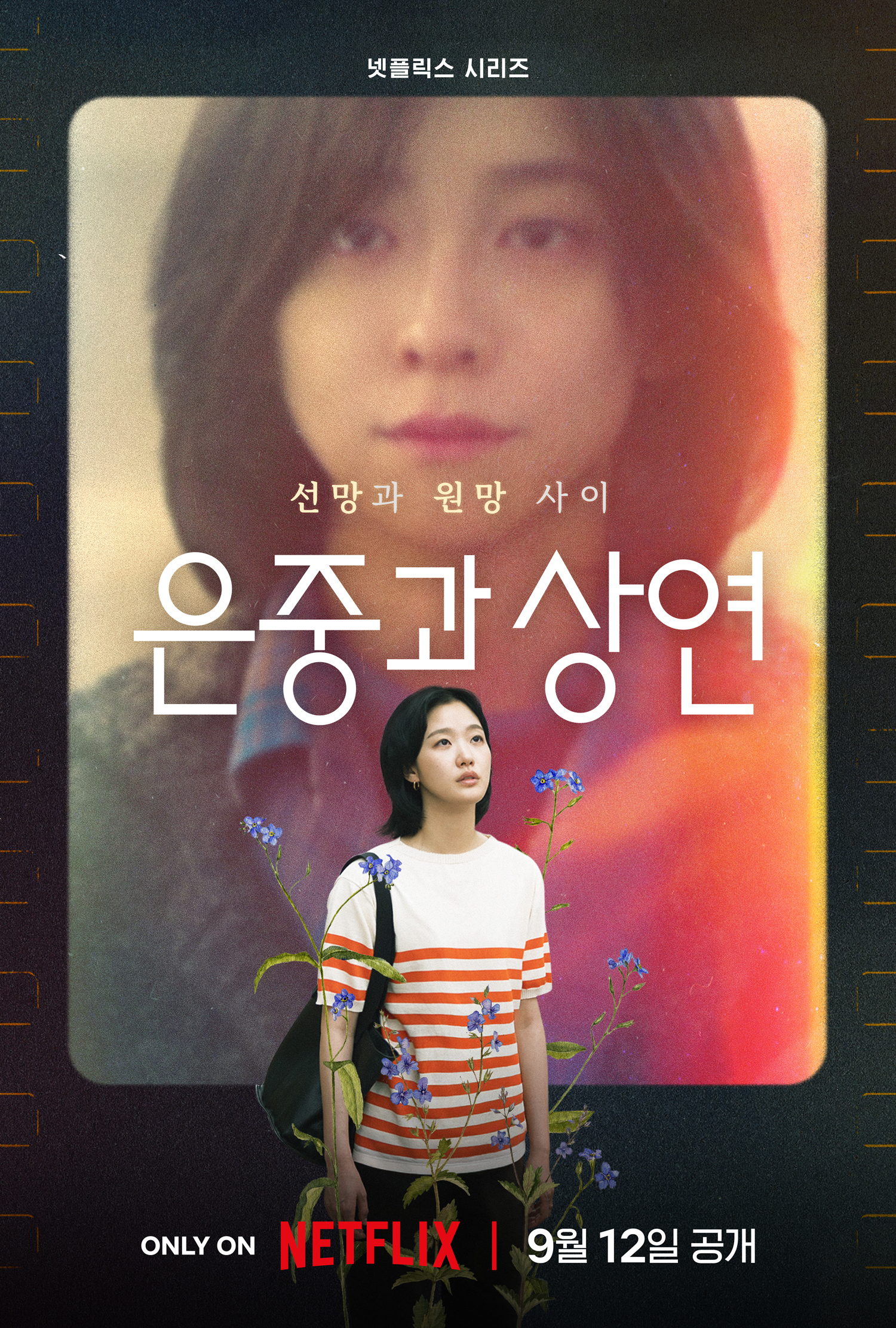
Netflix announced You and Everything Else in early 2024, pairing Jo Yeong-min with writer Song Hye-jin. The series arrived on Netflix in September 2025, in fifteen episodes. Kim Go-eun plays Ryu Eun-jung and Park Ji-hyun plays Cheon Sang-yeon.
The Story, With Its Central Turn
The story begins in the 1990s, when Sang-yeon transfers to Eun-jung’s school, and follows the two friends from their teens into their forties. In the forties storyline, the terminally ill Sang-yeon asks Eun-jung to accompany her to Switzerland for an assisted death.
Assisted death is a subject on which societies are divided, and this article takes no position on it. It is the premise the drama uses to ask what two people owe each other after thirty years.
Casting Two Childhoods
Jo Yeong-min has described how he handled time. He wanted one pair of young actors to play both the elementary-school and middle-school years, so he cast actors of an in-between age. He shot the elementary scenes first and the middle-school scenes last. In the six months between, the young actors grew, and school uniforms helped the change read naturally.
He also said he disliked “acting-academy” child acting. In a scene where young Eun-jung complains to her mother about school, he told Do Yeong-seo she could do as she pleased. She suddenly lay down on the floor. The actor playing her younger sibling ad-libbed “Stop it~” and Do answered, “Go away!” What stayed on screen is a child’s real sulk.
Not Yet Time to Cry
The production shot almost in chronological order. Park Ji-hyun found it easy to get absorbed in the forties scenes and often wept. In the scene where Sang-yeon confesses her cancer to Eun-jung, Park’s eyes welled up at every look at Eun-jung’s face. Jo told her it was not yet time to cry. Sang-yeon, he said, had to steel herself in order to say this at all.
It is a small correction with a large effect. Jo asks the actor to hold the feeling back until the character can no longer do so, and he explains it in terms of what the character is doing, not what the camera wants.
Jo Yeong-min has explained why the forties did not get a sudden makeover. In his own forties, he said, he felt little different from his twenties and thirties, so a dramatic jump in age would feel false. Kim Go-eun used a rounder face for the twenty-something Eun-jung and slightly changed her workplace voice in her thirties. Park Ji-hyun lost weight before the forties shoot, despite a tight schedule. The team also used different camera filters for each period and prepared props and settings so viewers could recall their own memories.
Snow, Cameras and a Street Full of Cheering
Two anecdotes from the shoot show how much the actors put in. In a snow scene, Kim Go-eun threw snow at Park Ji-hyun’s face. It was not in the script. Kim said she threw it accurately because getting it in one take was better. Park said she shook her head to clear the snow and ended up with a stiff neck the next day.
Kim also said that as a primary-school child she had wished she could cheer in the street like the university students during the 2002 World Cup. She got so absorbed filming that scene that she hyperventilated. Park said she bought a camcorder in an old-camera shop during filming and used it on set.
Why the Subject Mattered
Kim Go-eun has said she lost a close friend two years before the script reached her, and that it felt like fate. Park Ji-hyun studied the subject of assisted death through books and documentaries. Those are the actors’ own disclosures about their preparation, and they explain the tears at the press event.
When speculation arose that the series was a remake or based on a Chinese novel, Jo said it had its own distinguishing features, and that the title came from the two protagonists being the centre. Asked about Disney+’s Polar Star, released the same week, Kim Go-eun said she respected its director and writer but wanted to win. Jo said the colours were completely different and that his series is about “companionship.”
How Jo Yeong-min Works With Actors
Jo Yeong-min puts less effort into angles, art direction and shots than into creating situations in which actors can express emotion, and recording what happens. The scene of the two friends in their forties lying on a bed and talking shows it. He worked out the movement so Eun-jung’s emotional line continued when she left the bed, so the feeling did not stop at the edge of the shot.
The actors’ side of the story agrees. Park Ji-hyun said Jo’s directing has “soft charisma,” and that she joined the series partly because she respects him greatly. Moon Ga-young described scenes with only the situation discussed.
His casting follows instinct more than type. He said he likes Kim Go-eun so much that he wanted to work with her on anything. He saw Eun-jung as her most ordinary role, a chance to reveal an “ordinary person” side of her. For Kim Geon-woo, who plays Kim Sang-hak, he reasoned that after many strong-character roles a different colour might show new potential.
Taken together, this suggests a director who trusts actors to supply the feeling and casts them slightly against what audiences expect. That is the writer’s reading of his stated habits, not a method Jo has named himself.
Recurring Qualities in Jo Yeong-min’s Dramas
Three qualities seem to recur in Jo’s best-known dramas, and each is a reading, not a fact. The first is confinement: a bank branch where four people cannot get away from one another, a bed where two friends lie close enough to say the unsayable. The second is restraint at the point where a character would cry. The “not yet time” instruction on You and Everything Else is the clearest example, and The Interest of Love, with its glances and unfinished sentences, lives in the same register. The third is time handled through faces, filters and props instead of captions and announcements.
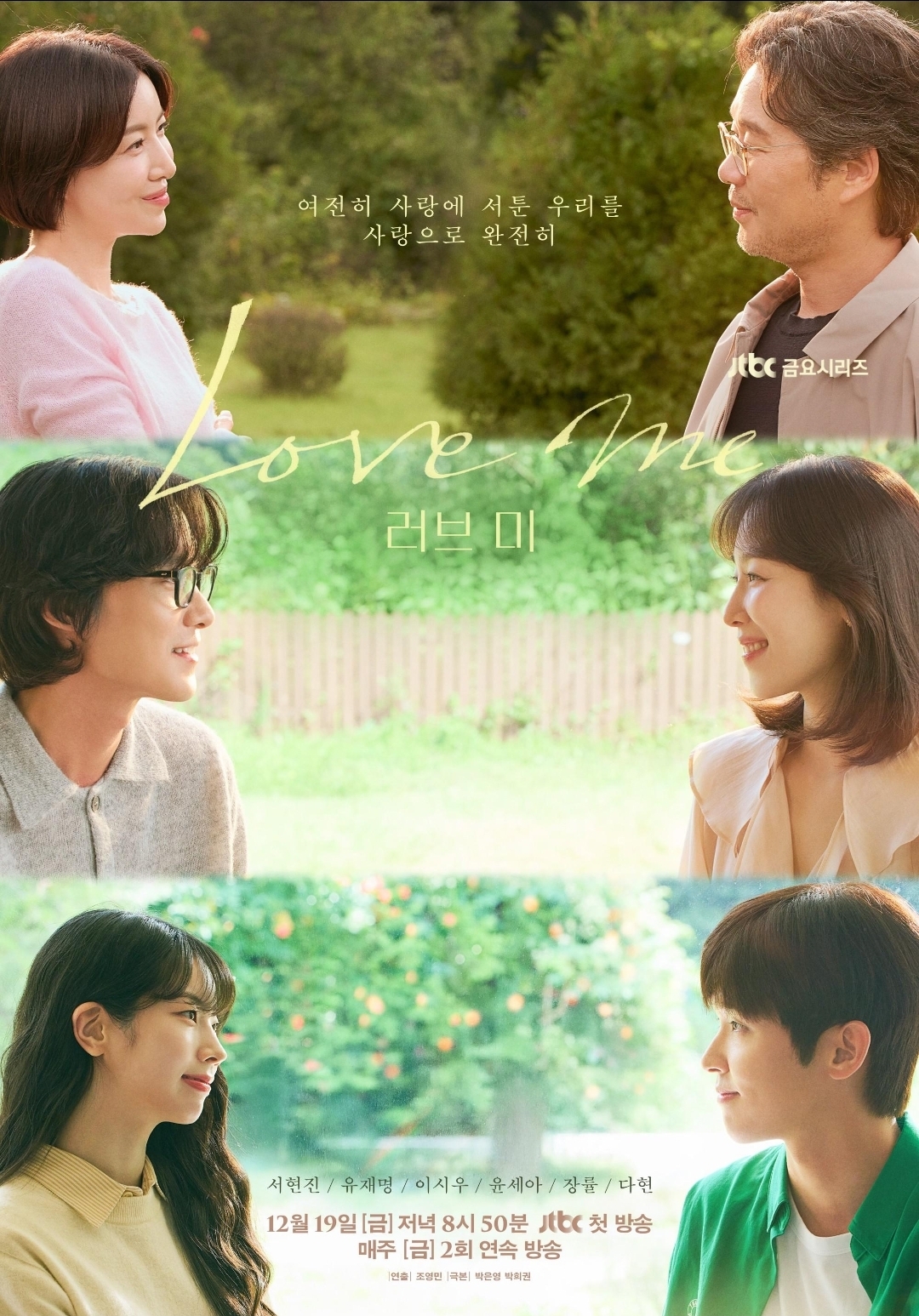
Love Me is the counterexample. Jo has said it is the work with the most humour among the dramas he has directed. Its official line describes an ordinary, slightly selfish family whose members each begin a love of their own and grow. Jo has said the title is closer to something each character says to themselves.
Recognition
A Korean film magazine named Jo Yeong-min its Director of the Year for 2025 for You and Everything Else, reportedly without dissent.
Where to Begin With Jo Yeong-min
If you want the full emotional weight, start with You and Everything Else on Netflix. It runs fifteen episodes and is the most openly moving of his dramas. If you prefer something quieter and more talkative, with romance driven by what people fail to say, try The Interest of Love. For his earlier, more openly melodramatic mode, Do You Like Brahms? is the place. For his lighter side, there is Love Me, which Jo has called the funniest of the dramas he has directed, and the series is best left for the reader to discover.
The Moment Before the Tears
Return to that press event. A director who is too moved to finish his answer thanks the actor who played the friend about to die. The same man, on set, told that actor it was not yet time to cry.
The two moments sit together. Jo Yeong-min’s own account of his method is to build the situation and then wait, and his best scenes tend to sit just before the feeling arrives. Eun-jung and Sang-yeon talk on a bed, the movement worked out so the feeling can go on after one of them stands up. The camera stays, and the tears come later.
Related Articles
- The 20 Best Korean Thriller Movies: You Will Love – Over the past two decades, South Korea has produced some of the best Korean.
- The 10 Best Korean Movies: Hidden 90s Gems You’ll Love – The 10 Best Korean Movies of the 1990s You Must Watch Discover the 10.
- A Single Spark 1995: The Most Powerful Symbol of Hope – Park Kwang-su and the Rise of Social Realism Park Kwang-su and the Rise of.
- Twenty-Five Twenty-One: Love and Loss in a Country in Crisis – Kim Tae-ri trained with sandbags strapped to her legs. The 2022 tvN drama Twenty-Five.
Source: Images: Netflix.