A woman in her forties stands at another woman’s door. They have not spoken for about ten years. She says she is terminally ill, and she asks the one who answers to travel with her to Switzerland and be there when she dies.
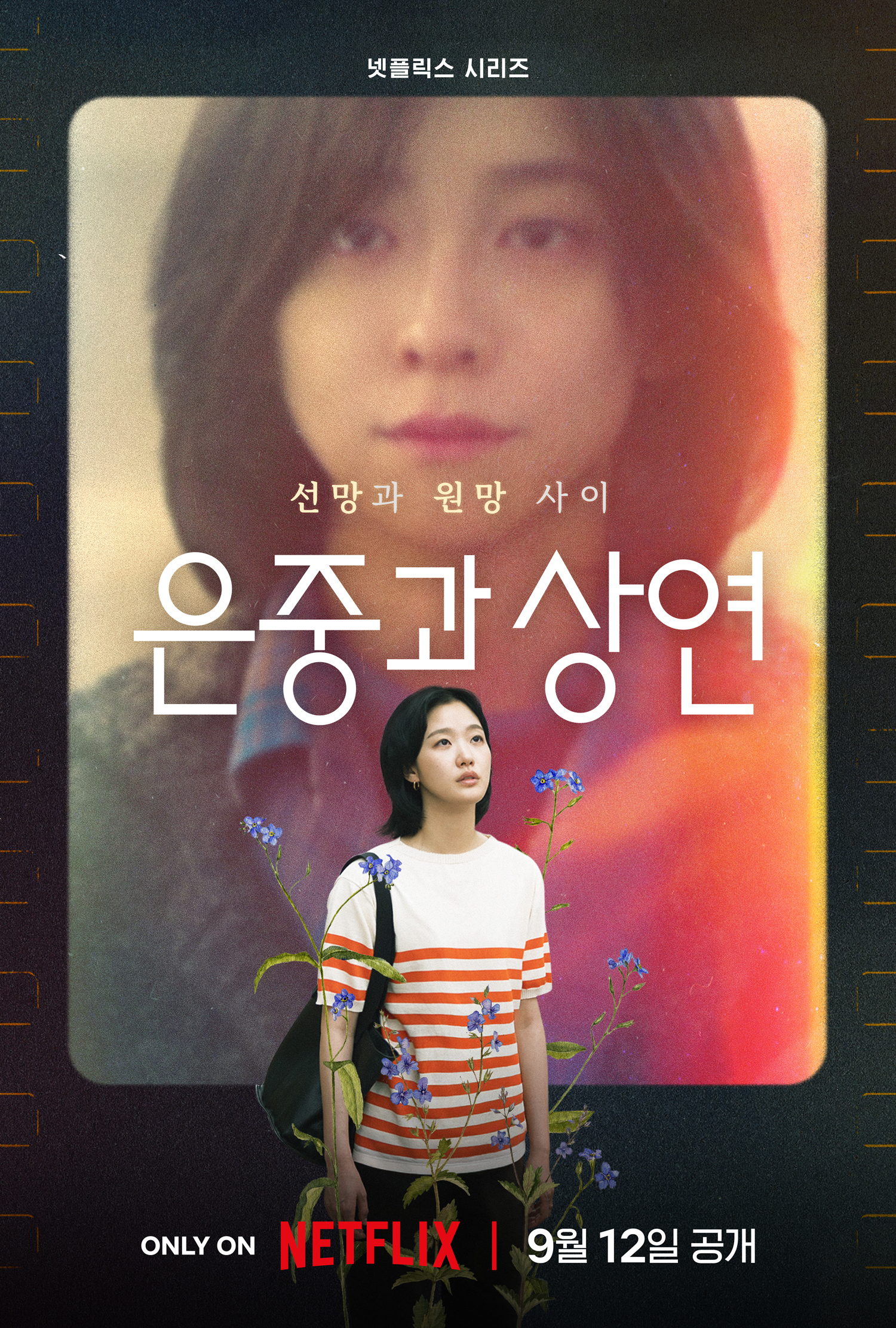
That is how You and Everything Else begins. Netflix released the fifteen-episode series in September 2025, directed by Jo Young-min from a script by Song Hye-jin. Sang-yeon (Park Ji-hyun) makes the request. Eun-jung (Kim Go-eun) has to decide what to do with it. Before the series tells us anything about how these two women came to this doorway, it asks the question the whole story answers: why would you ask this of someone you have not spoken to in a decade?
Spoiler notice: the first two sections give only the setup. From “How the Story Is Told” onward, this article discusses key plot points, including the ending.
At the series’ press conference in early September, Park described Sang-yeon asking Eun-jung to accompany her in death. Kim Go-eun covered her face and wept, and said, “This is my tear button.” It is a small moment, but it shows how close this quiet drama sits to the people who made it.
Two Girls, Two Kinds of Apartment: How the Friendship Starts
The story goes back to a school in a new-town suburb near Seoul. Eun-jung lives in a semi-basement with her mother. Sang-yeon arrives as a transfer student from a new apartment with two bathrooms. The series makes class visible through the layout of rooms before anyone says a word about money.
The new town and the semi-basement
For an outside reader, the setting carries weight. A Korean “new town” (신도시) was a planned suburb built around apartment blocks, and living in one signalled a settled, middle-class life. The semi-basement, by contrast, is a half-sunken flat, a home that sits partly below the street. Two girls from those two kinds of homes end up in the same classroom, and the series lets that gap hum under everything they do.
The two meet as schoolchildren in a new town near Seoul. What matters is what happens next.
Sang-yeon’s mother, Yun Hyeon-suk (Seo Jung-yeon), teaches in the next classroom. She comforts Eun-jung about her absent father. Eun-jung’s own mother, Jang Sun-yeong (Jang Hye-jin), is the one waiting at home in the semi-basement. These two mothers give the girls their first sense of how differently a childhood can be furnished.
The older brother and the camera
Eun-jung’s first love is Sang-yeon’s older brother, Cheon Sang-hak, who teaches her photography. Then the family moves away suddenly, and the two girls lose contact. Young Eun-jung is played by Do Young-seo and young Sang-yeon by Park Seo-kyung. Kim Go-eun and Park Ji-hyun take over as the adults.
Photography is the first image worth holding on to. A camera is a way of keeping someone, of deciding what is worth seeing again. It will return in the story.
How the Story Is Told: A Life Seen From After
The Forties First, Then the Beginning
The series opens in the forties and then goes back to the beginning. Jo Young-min has explained the choice. He felt that showing a forty-something scene first and then proceeding in order was right, because a story running from teens to forties with no sense of direction could feel loose.
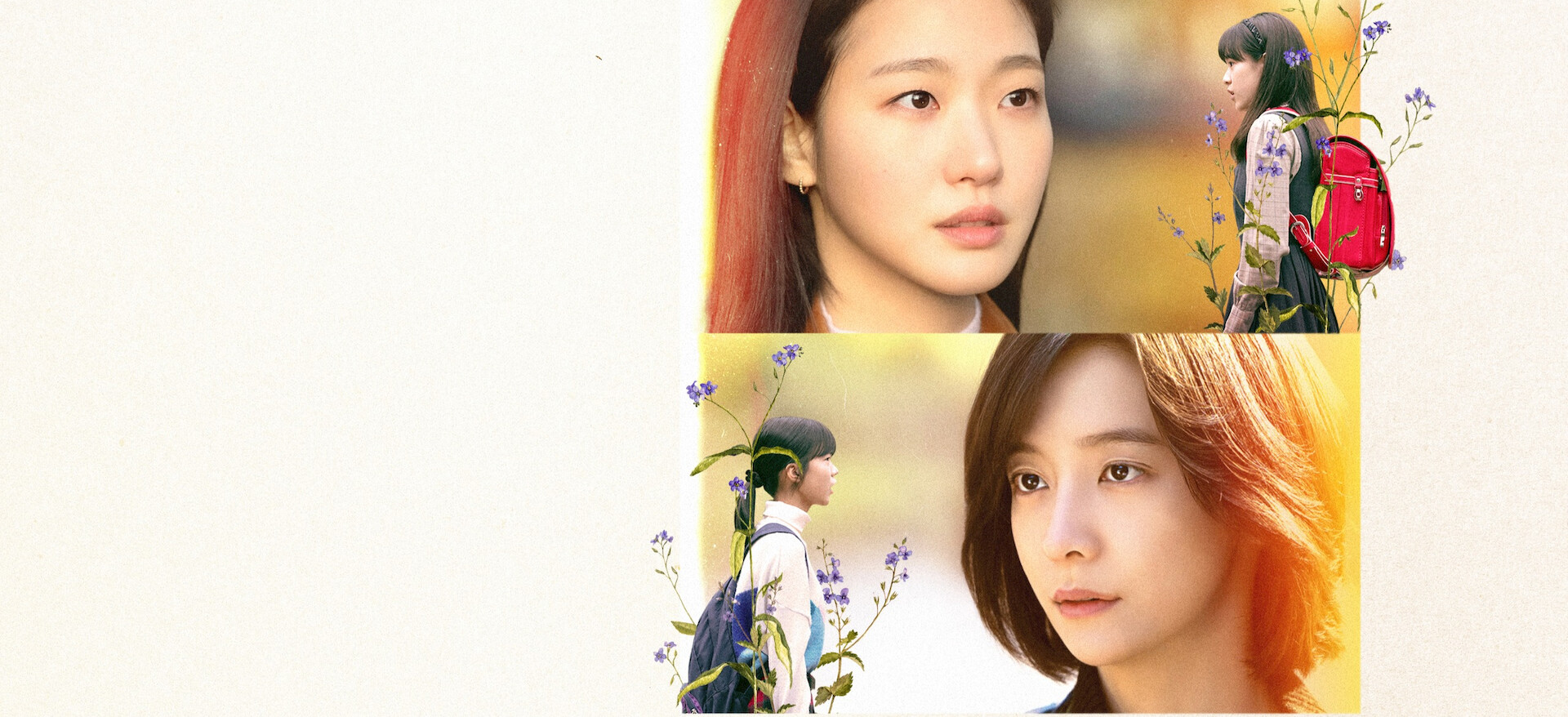
It also changes how we watch everything that follows. Eun-jung narrates, and a narrator who survives the story colours every scene before it. We are never inside a friendship that might go either way. We are listening to the person who remains, looking back. That matches something Song Hye-jin reportedly told Kim Go-eun when they first met: that the story could be about “the people who remain.” Kim thought about “the me who remains afterwards.”
Eras by lens
The series moves through roughly three decades, and Jo said the team used different lenses and filters for each period to tell the eras apart. Three cinematographers are credited: Eom Seong-tak, Shin Jae-hyeon and Yu Jae-won. Reviewers read the school interiors, the music and the props as evoking Korea in the 1980s and 1990s.
The 2002 World Cup street cheering appears as a time marker. For many Korean viewers of a certain age, it is a shared reference point, a summer when crowds filled the streets in red. In the series it is less a historical event than a place where two young lives intersect.
Three Scenes That Hold the Friendship
The camcorder and the cold: the young adults
The two women meet again in a university photography club. Sang-yeon’s parents have divorced, her mother has lost the will to live, and Sang-yeon lives alone in a one-room flat. Eun-jung’s boyfriend is Kim Sang-hak (Kim Gun-woo).
You and Everything Else could have made this a rivalry over a man. Jo said he did not want it to read as a typical triangle over Sang-hak. His point was that the story turns on the two women, not on the boy, who is a point of contact between them rather than the prize.
Behind the camera, the actors played with the same object. Park Ji-hyun filmed the set on a camcorder she had bought at an old-camera market during the shoot.
The theft and the silence
By their thirties, the friendship has turned. Sang-yeon becomes a recognised film producer by taking Eun-jung’s project and making it her own. Eun-jung becomes a drama writer. For ten years, there is no contact.
This is the hardest scene in the series to forgive, and it is the reason the opening request feels so strange. The viewer goes into the first scene thinking: she cannot possibly ask that of someone she wronged. The betrayal is what makes the request an act of nerve, or of something stranger than nerve.
Later, in the forties scenes, Eun-jung tells Sang-yeon that she is thankful rather than resentful. That line reframes the betrayal without cancelling it. A reading, then: the series suggests that a wound can sit beside gratitude for the person who inflicted it. Resentment and thanks are not opposites here. They are two ways of saying the friendship mattered.
The street cheering of 2002
Kim Go-eun has spoken about this scene. She was a primary-school pupil in 2002 and remembers envying the university students out in the street cheering. While filming the scene, she said, she nearly hyperventilated, and she described it this way: “I fulfilled the wish from back then.” A fictional memory carries a real one inside it.
The Ending: What Eun-jung Says at the Edge
Heavy spoilers follow.
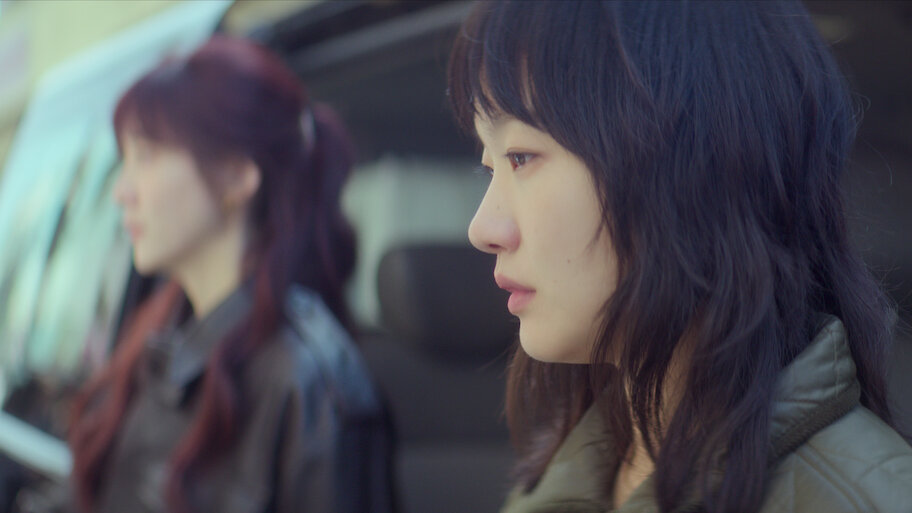
In Switzerland, Sang-yeon opens the valve herself. Eun-jung says 고생했어.
The phrase is simple. Basically, it means “you worked hard” or “you went through a lot.” In everyday Korean, it is what you say to someone at the end of an effort: a long shift, an exam, a hard trip home. Here it is said at the end of a life. That ordinary phrase, set against that moment, is the series’ most quietly devastating choice. It does not claim to understand. It simply acknowledges the work of having lived.
Kim Go-eun added another line at the death scene: “Sang-yeon, I love you.” It was not in the script. Park Ji-hyun has said it was something Sang-yeon had never heard from anyone, and that she kept hearing Eun-jung’s voice afterward. Kim has said that Eun-jung had promised herself not to cry while shooting in Switzerland, and that the shoot made that impossible.
A reading: the ending asks who is entitled to witness a death, and the series answers that it is the person you hurt. Sang-yeon does not ask a friend who stayed close. She asks the friend she lost. The series seems to say that being known by someone, even badly, even painfully, is a kind of company. The published script book reportedly explains who inherited Sang-yeon’s building.
The Two Performances and the Making
Park Ji-hyun’s body
Park Ji-hyun has said she fasted for two to three weeks while preparing to play a woman with cancer, drinking only water and Americanos, an account best read as hers alone rather than a method to follow. Her body thinned, but her face turned yellowish and swollen, and she cried hard before filming to look puffy. During the freezing midwinter sea shoot, she wore several layers of thermal underwear and a suit of thin electric heating pads powered by six batteries, so that her weight loss barely showed on camera.
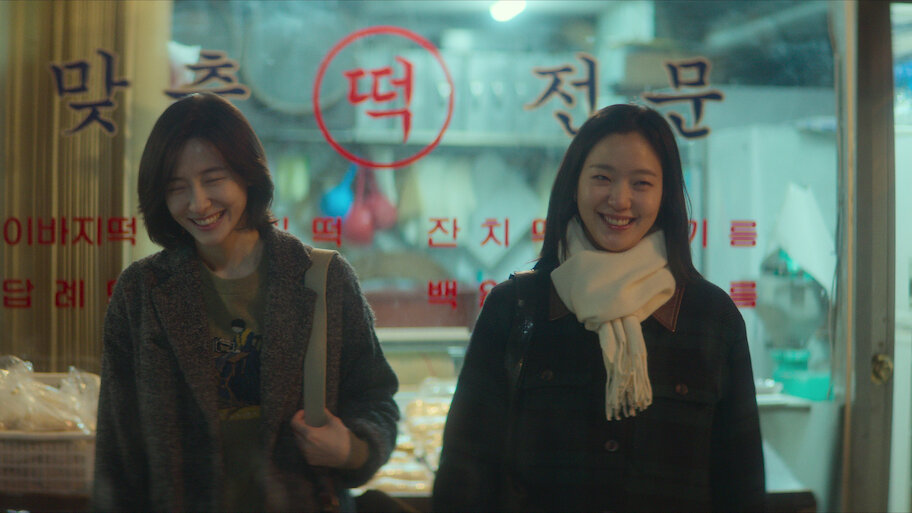
On set, Jo Young-min gave her a different kind of note. In the scene where Sang-yeon confesses her illness, Park teared up on seeing Eun-jung’s face, and Jo told her it was not yet time to cry, because Sang-yeon has to steel herself. Park said that in the forties scenes, every time she met Kim Go-eun’s eyes she wept, even though Sang-yeon is meant to be calm.
Kim Go-eun and the set
Kim praised Jo’s “gentle charisma” and said he created a set without hierarchy or chaos. Park called Kim “a big rock” and a mentor, and said that watching the finished work she felt she “couldn’t win.” Kim, for her part, said Park looked after her on set and once handed her fleece-lined thermal underwear in the cold, “like a boyfriend.”
The two actors also joked in public. Kim said at the press conference that she swells when tired while Park never does, so she felt resentful. Asked about Disney+’s Polaris, released the same week, she said she respects and loves its director and writer but “wants to win.” Jo said the same with a smile.
Small things happened that no script planned. A child actor playing Eun-jung’s younger sibling bumped into Do Young-seo and ad-libbed “Stop it~”. Do answered “Go away!” Neither line was in the script.
A three-volume script book includes a 100-page behind-the-scenes book. Song Hye-jin says Kim carefully edited Eun-jung’s lines, and that the director and actors tidied many lines on set. Jo’s earlier series include Do You Like Brahms? and The Interest of Love. Kakao Entertainment produced the series for Netflix.
A Subject Korea Has Not Settled
The series puts assisted dying at its centre, and it is worth being clear about what is reported rather than settled.
Assisted dying is illegal in Korea. A 2018 law legalised only the withdrawal of futile life-sustaining treatment, on the patient’s own decision. Kim Go-eun has said that everyone involved in the series tried to treat the subject carefully.
One report cites surveys showing that about eight in ten Koreans support assisted dying, and says roughly 300 Koreans were members of Swiss groups such as Dignitas, up from 107 in 2019.
On the legal side, lawyers have said that simply accompanying someone is unlikely to be punished as aiding suicide, though paying for tickets or encouraging could create liability. No companion has been prosecuted so far, they noted.
The head of the Korean Dignity Association said the drama was shot in a hotel actually used by Dignitas and that the process is depicted fairly realistically. Some viewers found the final stretch felt like an assisted-dying documentary because of its detail about the Swiss trip.
Park Ji-hyun said she studied documentaries and books for the role. She gave a cautiously supportive personal view: people facing death, she said, should be given the chance to choose. These are her words, and other people in Korea hold other views. The series presents Sang-yeon’s choice as a story. It does not settle the debate, and neither does this article.
What “You and Everything Else” Leaves Behind
Jo Young-min has said his keyword for the series is “companionship” (동행). The word means walking together, going along with someone. It is a gentle word for a heavy trip. A reading: the English title’s “and everything else” sits well beside it. Between two people, there is “you,” and then there is all the rest: the school, the brother, the betrayal, the years of silence. The series suggests that company is what survives when the rest falls away.
Reception ran warm. You and Everything Else reached Netflix’s top five within a day through word of mouth, despite a modest budget by Netflix standards, and an industry source said works like this would be hard for domestic broadcasters to fund. It went on to top Netflix’s series list in Korea. A television review offered a counter-voice: fifteen episodes is not a fashionable length, and clichés may hamper immersion, though the actors earned credit.
Recognition followed. At the 62nd Baeksang Arts Awards, You and Everything Else won Best Drama in the television category, and Song Hye-jin won Best Screenplay. It reportedly also took the Korea Broadcasting Writers Award.
You and Everything Else begins with a request made at a door after about ten years, and everything it goes on to say about forgiveness, envy, love and the people who remain unfolds from that first scene.
Related Articles
- Twenty-Five Twenty-One: Love and Loss in a Country in Crisis – 2022 tvN drama set in 1998 Korea's financial crisis, exploring friendship and loss across a decade.
- Christmas in August: The Most Powerful Mastery of Romance – 1998 film exploring love and death without melodrama, examining how relationships persist through absence.
- One Fine Spring Day: The Poetic Beauty of Fading Love – 2001 film about two people meeting through work, exploring subtle emotional connections and memory.
- Chung Ji-young Director: The Most Powerful Watch Guide Ever – The Master of Visual Friction: Chung Ji-young Director and the Aesthetics of Despair The.
Source: Images: Netflix.