On a quiet street in Jeonju, there is a small wooden bench outside a shop that sells nothing. The shop is a rebuilt set, the bench is a replica, and fans come to photograph it. In the story, this corner belongs to Ahyeon-dong, a neighbourhood in Mapo-gu, Seoul. In real life, the Twenty-Five Twenty-One filming locations sit mostly in a southern city with a hanok village and a river.
That gap between the Seoul of the story and the Jeonju of the shoot is the subject of this guide. It follows the places, and the food, that make up the drama’s version of 1998.
Twenty-Five Twenty-One in Brief
Twenty-Five Twenty-One (스물다섯 스물하나) aired on tvN from February to April 2022, in 16 episodes. Jung Ji-hyun and Kim Seung-ho directed, and Kwon Do-eun wrote it. Kim Tae-ri plays Na Hee-do, a high-school fencer. Nam Joo-hyuk plays Baek Yi-jin, a young man whose family was ruined by the crisis. He delivers newspapers and works in a comic-book rental shop. The story begins in 1998, in the wake of the IMF financial crisis, and reaches forward to 2021.
The crisis disbanded Hee-do’s school fencing team. It ruined Yi-jin’s family too. That shared backdrop explains why the places in this guide look modest and a little worn.
This guide covers the real streets, schools and beaches behind those scenes. Then it turns to the food, and to how to visit without becoming a nuisance. Places change and close, so treat everything here as a starting point and check current information before you travel.
Twenty-Five Twenty-One Filming Locations in Jeonju: The City That Played 1998 Seoul
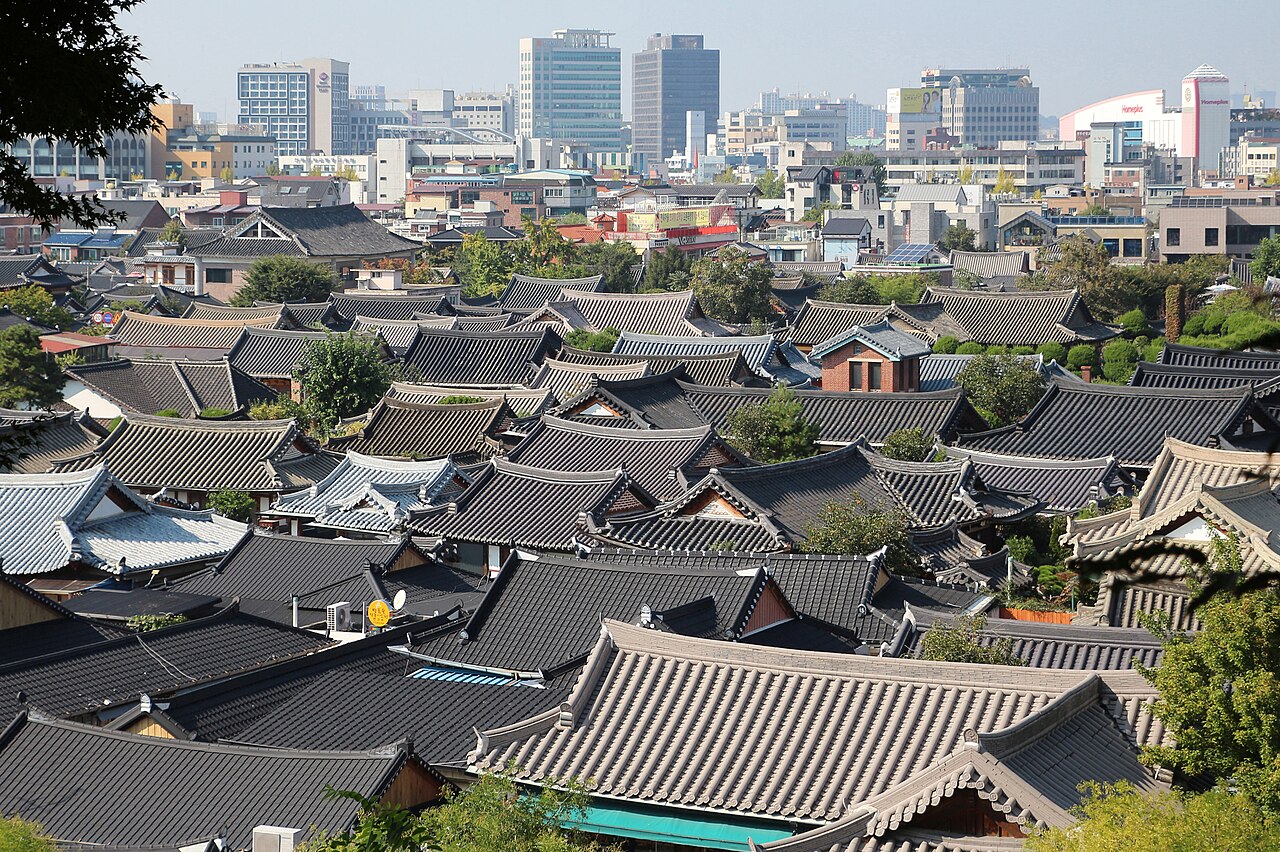
The production recreated a Seoul neighbourhood largely in Jeonju. The city has a hanok village and narrow alleys. It is easy to see why it passed for a corner of Seoul that development had never reached. The drama’s retro-sentimental look, built from props, fashion and locations, leans on exactly that quality. Nothing in these streets announces the present.
Jeonju Hanok Village and the 4.2 km walking route
Korea Tourism Organization (KTO) published a walking itinerary of roughly 4.2 km. It strings together several places below: Hanbyeok Tunnel, the Ahyeon Supermarket set, Veteran Kalguksu and Hee-do’s house. The route suggests the sites sit close enough to walk between.
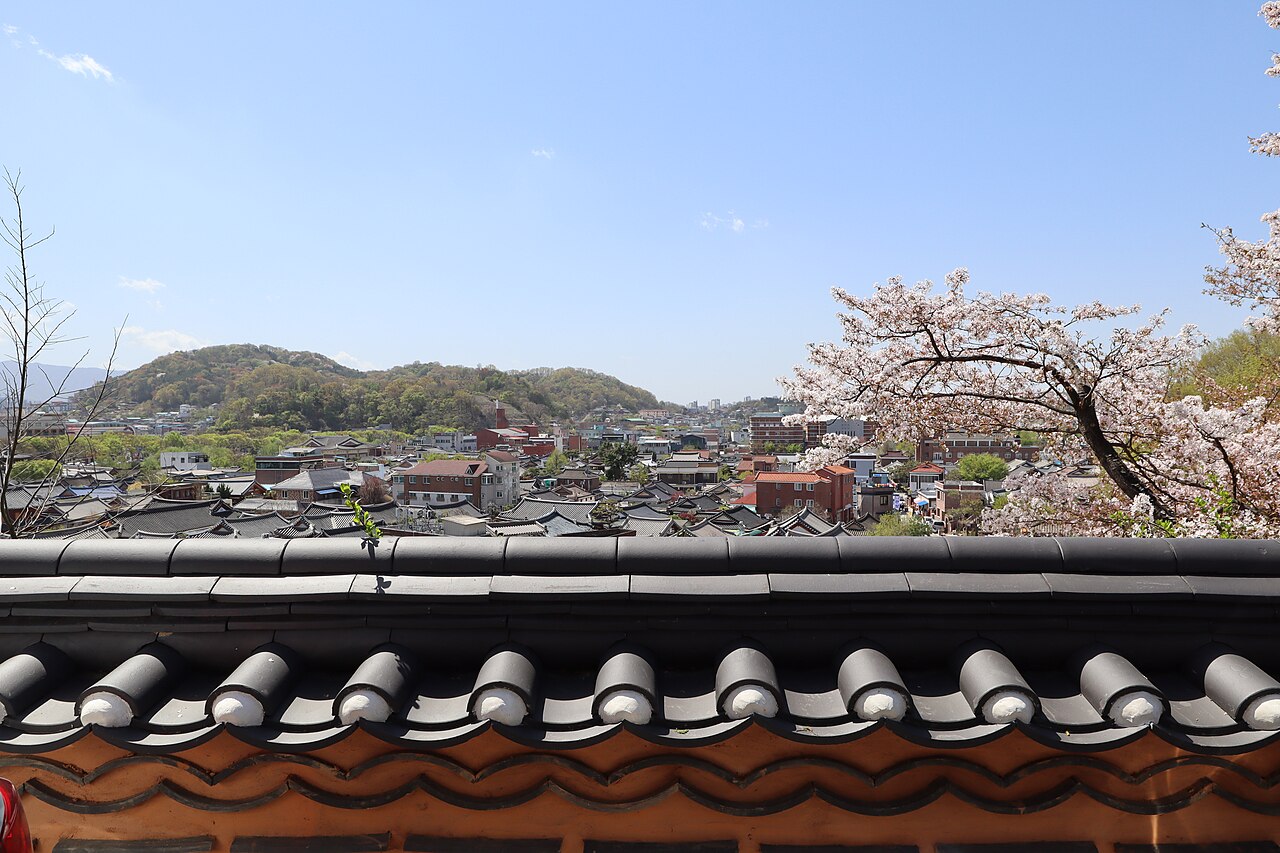
After the finale, the Ministry of Culture, Sports and Tourism launched a travel product around these locations. It offered itineraries, accommodation and rental vouchers. Local follow-ups came too. A 2022 package from the city and a travel agency has most likely expired. It included a hotel and hanbok rental. More recently the Jeonju Tourism Foundation tested a walking programme called “Jeonju Time Travel.” It pairs drama alleys with food and heritage.
Hanbyeok Tunnel: The Sixty-Metre Confession
Hanbyeok Tunnel (한벽터널) is about 60 metres long and stands near the Hanok Village. In the drama, it is where Hee-do and Yi-jin encourage each other, soothe each other’s pain and confess feelings. Spoiler notice: it is also where they part at the very end.
Kim Tae-ri has named the ending of episode 2 as her favourite scene. In it, Hee-do comforts Yi-jin with the lines, in translation, “Let’s be happy for a moment where no one can see… this is our secret.” Kim Tae-ri called it a perfect scene in which everything came together. Her interview does not tie that scene to the tunnel. Still, a tunnel suits that kind of line, because two people can be briefly out of sight of the world. The story comes back to it in the confession scenes and in the final break-up.
The place itself is open 24 hours and free to enter. A path called Baramssoeneun-gil, the “Windy Road,” leads to the tunnel from the Jeonju Eco Museum. The breeze along the way gives it its name. One Korean report adds that the tunnel once belonged to a railway line from the colonial period, with a painful history of exploitation. That is worth knowing. The tunnel in the drama carries tenderness, but the tunnel itself carries older and heavier memories.
Ahyeon Supermarket (아현슈퍼): A Shop That Is Really a Stage
The neighbourhood supermarket where the two characters sit and talk over slush was a set. According to one Korean travel report, the crew built it inside a converted empty house, with a quiet trail around it. The crew took it down after filming. After the drama’s success, KTO says, it was rebuilt. The replica now includes a wooden bench for fans to photograph.
So the Ahyeon Supermarket is now an attraction rather than a working shop. You cannot buy slush there. What you can do is sit on the bench and look at the alley. That is the part of the scene the camera cared about anyway.
Seohak-dong Art Village (서학동예술마을): Alleys, a Library, a Former School
Seohak-dong is about a ten to fifteen minute walk from the Hanok Village, toward the stream. It has quiet alleys and an artists’ atmosphere, and it appears across the drama. The production dressed the music studio Sori Bangayjan (소리방앗간) as the comic-book rental shop. Yi-jin works there, and Hee-do borrows Full House from it. The shop signs reportedly stayed up until the drama finished airing. The village library also served as a location, and Hee-do’s former school is nearby.
Because this is a living neighbourhood, the most respectful way to see it is slowly and quietly. The alleys are the point, and the residents are not part of the attraction.
Hee-do’s House and the Water-Tap School
Hee-do’s house was filmed at the Crossing Guesthouse (크로싱 게스트하우스). One Korean report says it is closed, though the exterior and the “bed-wetting boy” statue seen in the drama remain. Separately, KTO lists a private guesthouse called “2521” (이오이일) in the Hanok Village. Fans often identify it with Hee-do’s house.
Jeonju First High School (전주제일고등학교) hosted the scene in which Hee-do turns a water tap into a fountain. She does it to show Yi-jin something beautiful. It is a working school, and fans were asked to observe it from a distance.
Making-of footage shows Kim Tae-ri and Nam Joo-hyuk soaked and laughing at an outdoor tap. The footage does not say it is the school’s. Fencing was a different kind of work. She trained with a gold medallist for five to six months before shooting. At a press conference in February 2022, she called fencing fun and also “misery-making.” In the making-of footage she did her own stunts. She caught a falling newspaper and speared a thrown apple with a fencing sword over several takes, with no stunt double.
Twenty-Five Twenty-One Filming Locations Beyond Jeonju: The School, the Sea, the Fortress
Taeyang High School in Nonsan
Taeyang High School in the story is Nonsan Girls’ Commercial High School (논산여자상업고등학교), which remains a working school. A report from April 2022 described the cast laughing through cold-weather shooting. The four “Taeyang” friends posed together in the school’s hideout. The warmth is on screen, but the weather was not.

The School-Trip Beach
In the school-trip sea outing, four of the teenagers run into the water while Yi-jin watches from the sand. Reports say the crew filmed it at Samcheok Galnam Beach (삼척 갈남해변). Reports describe two rock islets, two lighthouses and a haenyeo resting hut modelled on Jeju’s. One Korean travel guide also names Goseong Sampo Beach (고성 삼포 해수욕장) for school-trip scenes. The two reports do not settle which scene used which beach. If you only have time for one, Galnam is the better-documented choice.
In the story, they splash each other in the shallows. The production side said all five actors were in high spirits there. Nam Joo-hyuk later named the sea-gazing scene at the end of that episode as his most memorable. The pork-belly party on the same trip was reportedly filmed at an oceanview pension in Gangneung.
Donghae Mukho
Mukho in Donghae offers a lighthouse village called Nongol-damgil and a hill where fish are dried. It also has a breakwater with a red lighthouse, and a fish market. One report ties the breakwater to the split-screen voice-recording scene in which Yi-jin and Hee-do reach each other across distance. There is also a small trivia point. The story says Yi-jin settles in Pohang, but the shoot was in Mukho, with Pohang-style dialect added.
Suwon Hwaseong
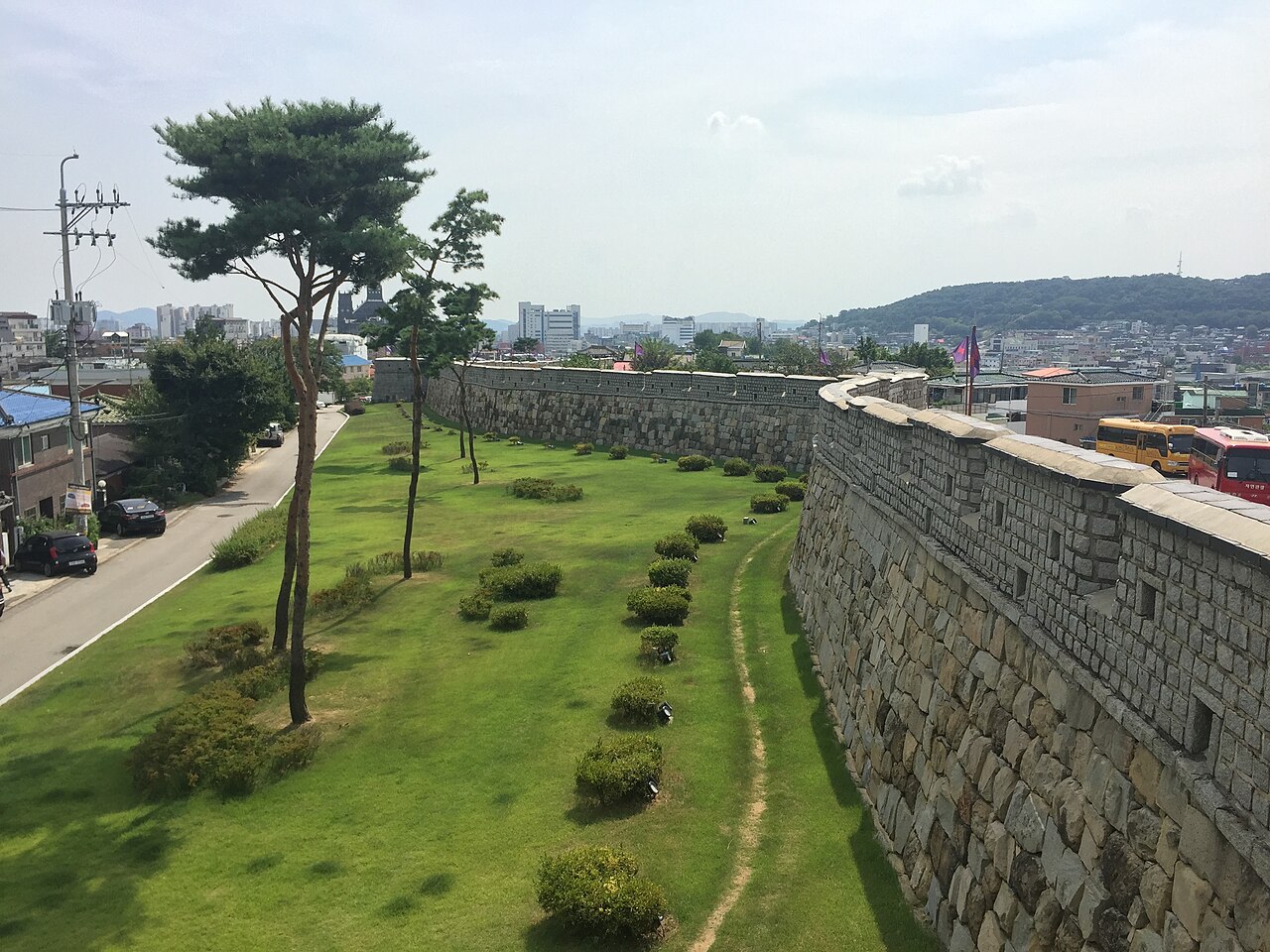
The Haenggung-dong area around Suwon Hwaseong Fortress also appears in the drama. The old bus stop and kiosk from the series no longer exist. You will find the fortress district but not those details.
What They Eat in Twenty-Five Twenty-One: Noodles, Slush and Pork Belly
Kalguksu (칼국수): The Bowl Kim Tae-ri Finished
Kim Tae-ri visited Veteran Kalguksu (베테랑칼국수) during her vlog shoots, and KTO says she enthusiastically finished her bowl. The restaurant sits in the Hanok Village area and has been in business for almost 50 years.
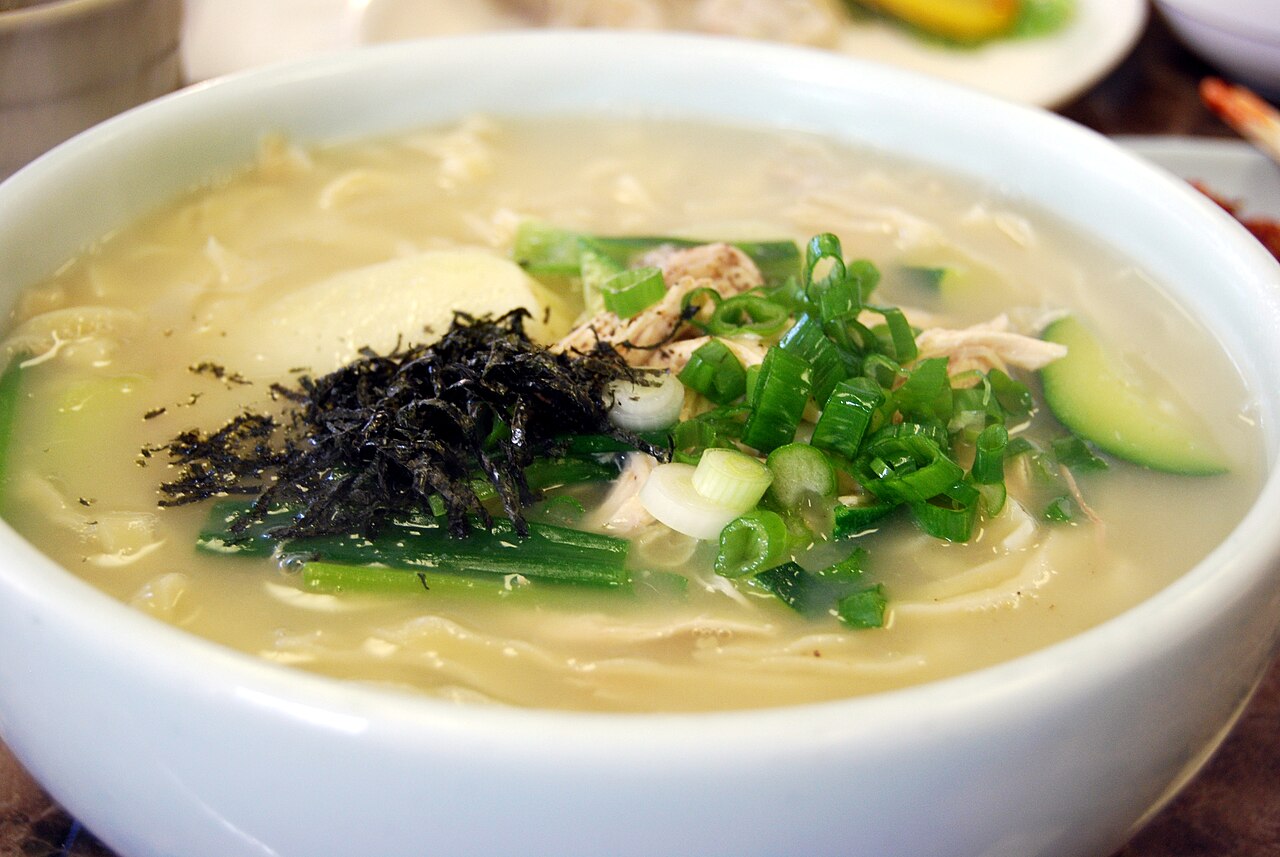
Kalguksu means “knife noodles.” The noodles are cut by hand and served in a hot broth. The broth can be built on sesame, meal, eggs, anchovy, beef bone, chicken or seafood. Veteran’s version uses sesame, meal and eggs, and its noodles are cut much thinner than at other restaurants. It is an everyday dish, not a special-occasion one. It is the kind of lunch a hungry person orders without thinking much.
KTO listed the hours as Monday to Friday 1 to 8 p.m. and Saturday and Sunday 11 a.m. to 8 p.m., closed Thursdays. Those details may have changed, so please check before going, as popular places can be busy.
Slush, Pork Belly and the Drinking-Table Scenes
The food in this drama mostly marks belonging rather than appetite. Slush at the Ahyeon set is what the two leads share while they talk. Pork belly, samgyeopsal, is what the friends grill on the school trip.
In a later drinking scene, the group plays games around the table. The actor Lee Joo-myung described how the scene came about. The script only said that they enjoy drinking games. They had to play about three games, including a Korean consonant (choseong) game. The game kept going round without anyone calling cut.
None of this is a menu to follow. In Twenty-Five Twenty-One, a meal is usually the evidence that someone has a place at the table.
Visiting the Twenty-Five Twenty-One Filming Locations With Care
Most of these sites are not attractions in the usual sense. Many sit in residential streets, one is an active high school, and another is a neighbourhood of working artists. A few practical points follow.
- Keep your voice low in the alleys, and do not photograph residents or enter private property.
- Observe the schools from a distance. Fans were specifically asked to do this at Jeonju First High School, which is a working school.
- Avoid late hours in residential areas.
- Check current conditions. The Ahyeon set has been rebuilt, the guesthouse has closed, and the Suwon bus stop is gone.
- The Hanok Village and Seohak-dong sit about a ten to fifteen minute walk apart. The east coast sites are a long way from Jeonju, so plan them as a separate trip.
KTO and the Jeonju city tourism pages are the best places to confirm what is open before you go.
Closing: A Bench Outside an Empty Shop
It would be easy to call the whole thing an illusion. The Seoul in the story is Jeonju, the shop is a set, the bench is a copy. But the drama was never really about the addresses. It was about two people who had lost something. It was about the way a place can hold them for a moment before life moves on.
In an April 2022 interview, Kim Tae-ri said she spent seven months running hard on the shoot. That is separate from her five to six months of fencing training.
Go slowly, then, and leave the street as you found it. The replica bench outside the rebuilt shop is still there. Sit for a minute, and then let the next person have it.
Related Articles
- Twenty-Five Twenty-One: Love and Loss in a Country in Crisis – The drama itself: Kim Tae-ri's fencing training and the 1998 financial crisis backdrop.
- 10 K-Drama Locations: Discover the Stunning Magic of Korea – Guide to K-drama filming locations across Korea for fans planning visits.
- 7 Secrets of Korean Food in Movies: Hidden Meanings – How Korean food appears in films and what it reveals about character and culture.
- How to Visit Cheongnyeongpo: 5 Heartbreakingly Beautiful Tips – A Journey into "The King's Warden": A Travel Guide to Cheongnyeongpo In 2026, the.
Source: Images: “Jeonju Hanok Maeul 02” by Bernard Gagnon, CC0, Wikimedia Commons, “Korean.noodle-Kalguksu-01” by by jslander, CC BY 2.0, Wikimedia Commons, “Jeonju Hanok Village 20230408 003” by Mobius6, CC BY-SA 4.0, Wikimedia Commons, “Suwon Hwaseong 4” by YKJJ, CC BY-SA 4.0, Wikimedia Commons.


