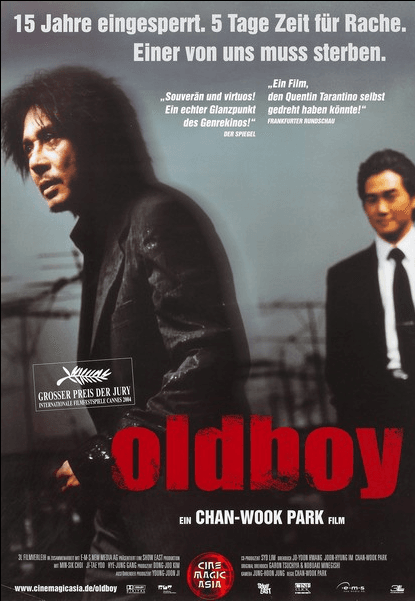
Oldboy Ending Explained: Why This Korean Film Still Haunts My Memory
Few films stay with you long after the credits roll. Oldboy is one of them. Directed by Park Chan-wook, this 2003 Korean masterpiece is not just a thriller—it’s an emotional experience that leaves you unsettled, disturbed, and strangely reflective.
I still remember the first time I watched it. It wasn’t the famous hallway fight or technical brilliance that lingered—it was the suffocating silence after the screen went black. I felt an uncomfortable weight in my chest for days. I felt as if I had shared a secret I should never have known. It was a visceral reaction to a tragedy that felt far too real.
So, what makes Oldboy so powerful even after two decades? And more importantly—what does the Oldboy ending explained actually reveal about our deepest fears, our hidden shames, and the devastating price of a single word?
The Man in the Room: 15 Years of Solitude
At its core, Oldboy tells the story of Oh Dae-su (played by the legendary Choi Min-sik), an ordinary, perhaps even obnoxious, salaryman. One night, an unknown force suddenly and violently erases his entire life.
- The Kidnapping: One rainy night in 1988, a mysterious group snatches Dae-su off the street. He was just a father trying to get home with a birthday present for his daughter.
- The Prison: His captors lock him in a small room that looks like a cheap motel. He receives no explanation and has no human contact. For 15 years, he eats nothing but fried dumplings (Gummandu) while a television serves as his only link to a world that has forgotten him.
- The Transformation: During his imprisonment, Dae-su watches the world change through the screen—the fall of the Berlin Wall, the death of kings, the birth of the internet. Madness and survival drive him to shadowbox against the walls, hardening his body and sharpening his teeth for a revenge he hasn’t even been assigned yet.
- The Release: Just as suddenly as his capture, a suitcase on a rooftop releases him into the world. 15 years have passed. He is a ghost in a suit, carrying nothing but a cell phone and a hunger for the truth.
But here is the thing: Oldboy isn’t a story about imprisonment. It is a story about what happens after. Isolation “formats” the man, only to throw him back into a world that has moved on without him. This terrifying reality is the true engine of the film.
Oldboy Ending Explained: The Truth That Destroys
As Dae-su searches for his captor, he finally faces the mastermind, Lee Woo-jin (Yoo Ji-tae). This is where the film transcends the “revenge” genre and becomes a Greek tragedy. The confrontation doesn’t happen in a dark alley, but in a sterile, hyper-modern penthouse—a place of “quiet intensity” and chilling minimalism.
The Seed of Revenge: A Single Word
Years ago, a young Dae-su witnessed a private moment between Woo-jin and his sister at their high school. It was a forbidden, incestuous relationship. Dae-su didn’t plan a murder; he didn’t even mean to be cruel. He just talked. He whispered a rumor to a friend, and that gossip spread through the school like a virus. Unable to endure the overwhelming “shame,” Woo-jin’s sister took her own life at a dam.
The Cruel Mirror: The Ultimate Taboo
Most revenge stories end with a bullet. But Woo-jin designed a revenge that was far more poetic and far more monstrous. He didn’t just want Dae-su to suffer; he wanted Dae-su to become him.
Through years of meticulous manipulation and hypnosis, Woo-jin arranged for Dae-su to fall in love with a young, empathetic chef named Mi-do. The horrifying truth in the Oldboy ending is that Dae-su falls for his own daughter. Woo-jin engineered their meeting, their romance, and their physical connection to force Dae-su to repeat the same “sin” that destroyed Woo-jin’s life. He didn’t just kill Dae-su; he killed his soul.
The Mythological Echo: Oedipus in Modern Seoul
To truly understand why the Oldboy ending explained continues to shatter audiences, we must look beyond the gritty streets of Seoul and toward the ancient amphitheaters of Greece. Park Chan-wook didn’t just direct a thriller; he constructed a modern Oedipus Rex. In the classic myth, Oedipus kills his father and marries his mother, blinded by a fate he tried to outrun.
In Oldboy, Oh Dae-su’s “fate” is not dictated by gods, but by a man who acted like one. Lee Woo-jin spent 15 years playing the role of a vengeful deity, weaving a web of coincidences so tight that escape was impossible. The tragedy here is doubled: Dae-su is guilty of a “sin” he didn’t know he was committing (incest), just as he was guilty of a “crime” he didn’t know he had caused (the rumor). This layer of predestination makes the final revelation feel like a physical blow to the stomach.
The Culinary Prison: Why “Fried Dumplings” Matter
For 5,475 days, Oh Dae-su ate nothing but Gummandu (fried dumplings). While this seems like a quirky plot point, it serves as a profound psychological anchor.
- The Erasure of Identity: By limiting a human being to one flavor for 15 years, the captor erases the prisoner’s sensory world. Dae-su’s identity is stripped down to the basic biological function of survival.
- The Clue in the Taste: Notice how Dae-su finds his captor not through high-tech tracking, but through the “memory of a flavor.” He visits every “Blue Dragon” restaurant in the city, tasting dumplings until he finds the specific spice profile from his cell. This “culinary investigation” is a masterstroke of minimalist storytelling—using a mundane object to drive a high-stakes narrative. This small detail underscores the theme of sensory erasure and identity loss.
The Hallway Fight: A Masterclass in Two-Dimensional Violence
We cannot discuss the legacy of this film without analyzing the legendary four-minute, single-take hallway fight. From a directorial standpoint, this scene is “airy yet heavy.”
- The Side-Scrolling Perspective: By filming the fight from a lateral, 2D perspective (resembling a video game), Park Chan-wook dehumanizes the violence. It becomes a rhythmic, exhausting struggle.
- The Weight of Exhaustion: Unlike Hollywood action scenes where the hero is invincible, Dae-su gets stabbed. He pants. He falls. He struggles to stand. This “visceral realism” makes the audience feel every punch, showing how 15 years of bottled-up rage finally explodes. This scene exemplifies how physical exhaustion mirrors psychological torment.
The Aesthetics of Taboo: Minimalism as a Shield
As a creator who appreciates minimalist aesthetics, I find Park’s handling of the “incest” theme to be revolutionary. Most directors would lean into the “gross-out” factor. Instead, Park uses “Quiet Intensity.”
- The Penthouse as a Temple: Lee Woo-jin’s home is a monument to order. The clean lines, the glass walls, and the “airy and transparent” lighting contrast sharply with the “messy” human emotions unfolding within.
- The Contrast of Colors: The purple of the box, the green of the digital displays, and the blinding white of the snow. These primary colors separate the characters from reality, making the film feel like a dark fairy tale or a nightmare from which they cannot wake.
Choi Min-sik: The Method of Madness
The performance of Choi Min-sik is the heartbeat of the film. To prepare for the role, Choi reportedly trained physically to mirror Dae-su’s transformation and insisted on eating a live octopus (four of them, in fact) to capture the primal, raw hunger of a man who had been denied life.
- The Eyes of a Beast: Look at Dae-su’s eyes when he first tastes the sushi after 15 years. It isn’t joy; it is a terrifying, animalistic realization of existence.
- The Final Transformation: In the snow, Choi’s face undergoes a subtle, haunting shift. He must portray a man who has successfully deleted his own memory but whose body still remembers the weight of the sin. It is one of the most complex acting feats in cinematic history.
The Philosophy of the “Single Word”
“Be it a grain of sand or a rock, in water they both sink.” This quote from the film summarizes The terrifying butterfly effect of our actions is captured perfectly: Dae-su’s casual remark was a ‘grain of sand,’ while Woo-jin’s revenge became a ‘rock’—both sinking into the ocean of human suffering.
- The Weight of Gossip: Dae-su’s casual remark was a “grain of sand.” Woo-jin’s revenge was a “rock.” But in the ocean of human suffering, both led to total destruction.
- The Responsibility of Speech: Oldboy serves as a grim reminder that our words have lives of their own. Once a secret is whispered, it no longer belongs to you. It belongs to the world, and the world can use it to destroy you.
Why We Still Watch in 2026
In an era of CGI-heavy blockbusters and predictable tropes, Oldboy remains a “visceral experience.” It doesn’t treat the audience like children. It demands that we look into the abyss alongside Oh Dae-su. Whether it’s the Oldboy ending explained or the sheer technical brilliance of the direction, the film survives because it touches on the one thing that never changes: the human capacity for both immense love and unspeakable cruelty.
Expert Insight: The Minimalism of Pain and “Airy” Horror
As a creator who values minimalist aesthetics and “quiet intensity,” I see Oldboy as a masterclass in visual storytelling. It is a film that uses space and silence to amplify horror.
- The Power of Negative Space: Notice the framing in the final scenes. The vast, empty snowy fields represent the absolute desolation of Dae-su’s soul. There is nowhere to hide in that whiteness.
- Airy yet Heavy: Park Chan-wook applies a “less is more” philosophy to psychological trauma. He uses “airy and transparent” lighting in the penthouse. The clean lines and expensive furniture suggest a world of order, which makes the dark, messy truth of incest feel even more visceral.
- The Tongue as a Symbol: When Dae-su cuts off his own tongue in front of Woo-jin, he performs the ultimate minimalist act of atonement. He destroys the very instrument of his sin—his speech—to silence the truth and protect Mi-do from the knowledge that would destroy her.
Why the Oldboy Ending Still Haunts Us
The twist is shocking, but the reason it stays with you is the psychological weight of words. It forces us to realize that a simple sentence, a casual rumor, can have the same destructive power as a weapon.
The Final Scene: Is He Free or Still Trapped?
The ending of Oldboy doesn’t offer closure; it offers a haunting question. Dae-su seeks a hypnotist to erase his memory of the truth. He wants to separate the “man who knows” from the “man who loves.”
In the final shot, he stands in the snow and embraces Mi-do. He smiles. But look closer. There is a flicker of pain in his eyes. A shift in his expression suggests that the “monster” who knows the truth is still there, lurking beneath the surface.
- Theory A: The hypnosis failed, and he now lives in a self-imposed prison of silence, pretending to be a father/lover while carrying the weight of the truth.
- Theory B: The hypnosis worked, but his soul still carries the “vibration” of the trauma. He is free, but the cost was his own humanity.
A Korean Perspective: Shame over Justice
There is something deeply Korean in this story that global audiences feel instinctively. It’s not just the setting; it’s the emotion of Shame (체면, Che-myeon).
The Terror of Exposure: In many Western films, the focus is on “Justice.” But in Oldboy, the focus is on Shame. The director confronts the primal terror of exposure, the crushing weight of social boundaries, and the lethal fallout when someone shatters them. * The 1988 Connection: The film starts in 1988, the year of the Seoul Olympics. It was a time when Korea rapidly modernized while hiding its past scars under a bright, global spotlight. Dae-su’s 15-year isolation mirrors the country’s own struggle to reconcile its traditional roots with its modern ambitions.
Why Oldboy Still Matters in 2026
Even after 20 years, Oldboy stands out because it refuses to be “easy.”
- It doesn’t glorify revenge: It shows that the avenger and the victim end up in the same grave. Woo-jin chooses suicide because he built his entire life on a void, even after completing his mission.
- It embraces silence: The most powerful moments aren’t the screams, but the quiet realizations.
- It asks uncomfortable questions: Can guilt ever truly disappear? What is the price of a secret? And perhaps the haunting question remains: if past sins are hidden, can they ever truly be undone?
Where to Watch Oldboy (An Honest Guide)
You can find Oldboy on several major streaming platforms for rent or purchase. Whether you watch it on a 4K screen or a laptop, the emotional impact remains the same. Note: This guide is provided for your convenience. We do not use affiliate links or receive commissions for these mentions.
Final Thoughts: Something You Carry
Oldboy refuses to let you simply watch and move on. It grips you. It wraps a Greek tragedy inside a visceral thriller and writes a haunting poem in blood and snow. Even after you leave the theater, the film follows you home.
It reminds us that our past never truly stays in the past. If you haven’t seen it yet, prepare yourself. If you have, you know exactly why we still discuss the Oldboy ending explained even two decades later.
Related Articles
If you enjoyed this analysis, you may also like:
For more detailed information on these classics, you can visit the Korean Movie Database (KMDb)
or check out the Korean Film Council (KOFIC) official website.